
Tag Archives: travel tips

La Rambla, Barcelona, Spain

Barcelona Airport Layovers: How to Make the Most of Them

An airport layover doesn’t have to mean that you’re stuck in the airport. In this series, local experts in the world’s most popular hub cities recommend sightseeing itineraries for every time frame.


If you’re flying through Barcelona-El Prat airport (BCN) and have a layover, you’ll probably be tempted to try to duck into the city and look around. The good news is that as long as you have at least seven hours, you can do it. We talked to Paul Bennett of Context Travel—our Trusted Travel Expert for short, cultural experiences in cities worldwide—for tips on how make the most of your Barcelona airport layover:

How to get out of the airport:

Taxis: Taxis are plentiful at the airport. A taxi to central Barcelona should run about 25 to 35 euros. The journey should take 20 to 30 minutes, depending on the time of day..

Train: There is train service from the airport to the station Barcelona-Passeig de Gràcia in central Barcelona. The train line is the R2 Norte Aeropuerto – Sant Celoni / Maçanet Massanes. This train runs every 30 minutes for most of the day, and the journey takes approximately 30 minutes. You can purchase your ticket at the airport station before boarding. Finding your way to the train from the airport is easy—it’s clearly marked. The station Barcelona-Passeig de Gracia is in the heart of the Eixample district, where many of Gaudi’s works are located.

Bus: Try the Aerobus. There are two options—one leaving from Terminal 1 and the other from Terminal 2. The buses come frequently, every 5 to 10 minutes. They are affordable (about 10.80 euros per round-trip ticket), comfortable, and fast (35 minutes). You purchase your ticket from the driver while boarding or sometimes there is a person selling tickets at a kiosk by the bus (they are legit). The bus makes a few stops at various spots in the city—its terminus is Plaza Catalonia, which is ideally located just between the Gothic Quarter and Eixample district and is served by several metro lines. Its website is very easy to navigate. Don’t be alarmed if your bus is full when you arrive and you can’t get on, just remember that another one will come very shortly. It’s also very easy to find the Aerobus at the airport—it should be very well marked.

Note: The aerobus is generally easier to navigate than the train, as it’s designed for tourists. But if your time is very limited, or you have a very specific destination in mind, a taxi might be worth the extra cost.

What to do with your luggage: There is a left-luggage office in Terminal 1, on the first floor (Spanish floor 0) and it’s possible to leave luggage there for up to 30 days (fee per 24-hour period). If you’re arriving into Terminal 2, Terminal 1 is a short walk away. There is also a free shuttle bus that runs 24 hours a day. The charge for all or part of each 24-hour period depends on the size of your luggage: large locker (50x80x90 cm), €5.80; medium locker (35x80x60 cm), €5.10; small locker (35x80x45 cm), €4.50.

Boqueria Market, Barcelona, Spain

Boqueria Market, Barcelona, Spain. Photo: mertxe iturrioz/Flickr

If you have a 7-hour layover:

 Allot four hours for travel to and from the city in order to be back in time (two hours in advance) for an international flight. That will give you a nice three hours in the city, which is enough to get a feel for Barcelona’s medieval Gothic Quarter and its more gritty sister, the El Raval neighborhood.

Start with a quick look at La Rambla, the city’s ancient thoroughfare, which was once a stream located outside the city walls. (In fact, a “La Rambla” street exists in many cities and was derived from the Arabic word ramlah, meaning riverbed). If you’re hungry, head to the Boqueria to see the sites and smell the smells. It’s a tourist haven, sure, but it is a historic market worth taking in, with many authentic vendors and locals doing their shopping. Pinotxo bar is one of the best stands for regional specialties; try the bacalao (dry salt cod), which is ubiquitous. After a bite, wander briefly through the Gothic Quarter’s narrow streets, staying especially attuned to the neighborhood’s ancient Jewish Call (the Jews were expelled from Spain in 1492 but there are still traces, however slight, of their existence in Barcelona). Then head over to El Raval, on the Boqueria side of La Rambla. It’s an area that was once grazing land for the walled city and has undergone great transformation over the centuries. The last century was hard on the area (it became the red-light district); however, in the 1990s the city poured money into developing the Raval, and it’s now a bohemian center. It’s home to the Richard Meier–designed Museum of Contemporary Art but still a haven for trendy artistic types (check out the street art).

For those interested in learning about the Raval’s history with an expert, you could skip the stroll through the Gothic Quarter and consider Context Travel’s three-hour history seminar of the neighborhood: Revealing the Raval.


If you have an 8-hour layover or longer:

Take a taxi to the top of Montjuïc hill for a spectacular view of the city and a bit of exploration. The area is home to a 17th-century fortress (the Montjuïc castle, Carretera de Montjuïc); two Olympic stadiums (1936 and 1992); the International Exposition (World’s Fair) of 1929; the Palau Nacional (built for the World’s Fair and intended to be a temporary structure, but now the Museum of Catalan Art; a museum dedicated to the work of Catalan artist Joan Miró; and quaint secret gardens along the hill’s side. Later, board the cable car (near the Funicular de Montjuïc’s Miramar station; walk about a half mile along Avinguda de Miramar in the direction of the sea (east), or take the #50 bus, for a thrilling ride down to the port, where you can stroll along the seaside promenade and stop for a relaxing drink or bite to eat in the sun. After this break, depending on how much time remains, explore the area of Barceloneta just next door. It’s a neighborhood created in the 18th century to provide housing for families who were displaced by the construction of the citadel in the Ribera neighborhood. Many of Barceloneta’s original 18th-century, two-story houses exist today, and its comparatively wide streets are a bright alternative to the dark and narrow alleyways of the Gothic Quarter. Stop in at the lively neighborhood tapas restaurant La Bombeta for some great snacks before taking a taxi back to the airport.

For those looking for more structured time, try Context Travel’s three-hour Montjuic, Conquering the Mountain walk or the three-hour Barcelona and the Sea tour.


If you don’t have time to leave the airport:

There are a number of VIP lounges that are free for business-class ticket holders and open to other ticket holders for a small fee (26 euros per adult/12.50 euros per child). These lounges usually have food and beverage service, television, Internet access (sometimes even computers for use), newspapers, and books. The Joan Miró VIP Lounge in Terminal 1 is open to travelers flying only to non-Schengen countries and even has showers and a leisure area with pool tables.

Terminal 1 also has several air rooms, air showers (30 minutes; includes towel, gel, and slippers), and an air wellness program (read: massage). These should all be pre-reserved on the website.

There are a few play areas for children spread out around both terminals. They can be found on the interactive airport map.

The airport offers 15 minutes of free Wi-Fi to every traveler. Beyond that, it must be purchased.


More Layover Solutions:

Amsterdam Airport Layovers: How to Make the Most of Them

Beijing Airport Layovers: How to Make the Most of Them

Great Paris Hotels for an Airport Layover at Charles de Gaulle

London Heathrow Layover: Great Hotels for a Stopover at LHR

Madrid Airport Layovers: How to Make the Most of Them

Tokyo Airport Layovers: The Best Way to Spend Them

Be a smarter traveler: Use Wendy’s WOW List to plan your next trip. You can also follow her on Facebook and Twitter @wendyperrin, and sign up for her weekly newsletter to stay in the know.

Scott Mayerowitz AP airlines reporter

How an Airlines Reporter Travels: Meet the AP’s Scott Mayerowitz

Scott Mayerowitz knows airlines. He’s been reporting on them at the Associated Press for five years, and before that was a travel editor and business reporter with ABC News. So he’s not just any old travel writer—he’s an investigative journalist with chops. However, this self-described #avgeek is not so serious that he’d turn his nose up at the chance to go sky diving on a cruise ship or to share a good Throwback Thursday selfie.

His Twitter and Instagram feeds are must-follows for any traveler—not only for the airline and travel news he provides, but also for a window onto the world of frequent fliers and mileage junkies (he is one himself), and for a humorous peek at his own life too.

Most memorable travel moment:

Visiting Iceland in summer, it was still light enough after a late dinner to play a round of golf with my dad. It wasn’t the best course or the best performance on our part, but there was something very unique about teeing off that late at night.

Most embarrassing travel moment:

Ordering food at foreign restaurants. Anywhere. My Spanish, French, German, Italian, Portuguese—frankly any language skills—are atrocious. Even when reading something off a menu, I horribly mispronounce it. I always try, and I want locals to correct me so I can learn, but it’s embarrassing to me and my travel companions.

Name one thing people would be surprised to find in your travel bag:

Pacifiers. Hey, I’ve got an infant daughter. I’m still kind of surprised at the things I now travel with.

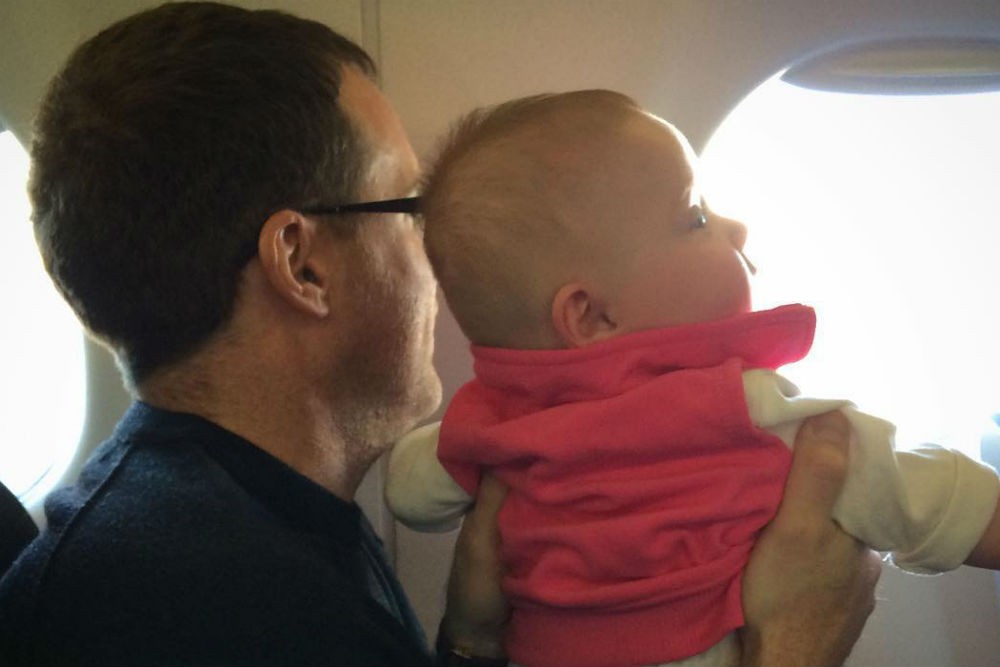
Scott takes his future avgeek along for the flight. Photo: Scott Mayerowitz/Instagram

Scott takes his future avgeek along for the flight. Photo: Scott Mayerowitz/Instagram

Touristy spot that’s actually worth it, and the trick to doing it right:

The museums and monuments of Paris are surely packed with tourists but not the least bit touristy. The one trick to avoiding the masses is to buy the Paris Museum Pass. Yes, it can save most first-timers money. But the real value is saving time by skipping lines at sites like the Louvre, Musée d’Orsay, and Versailles. Simply visit one of the less-crowded museums first to buy the pass.

Non-touristy spot people might not know about but should add to their must-visit list:

Most folks now know that Bruges is a popular place to travel outside Brussels, but Ghent, which is lesser known, was really cool. The city isn’t as postcard-pretty but is more vibrant; it’s filled with unique stores and restaurants and isn’t catering mostly to tourists.

Name two indispensable apps you use when you travel:

Google Maps (now with an offline feature that is perfect for overseas travel) and FlightAware, which updates me about flight delays, inbound aircraft, and the filed flight time.

The travel gadget or gear that has saved your life…or your mind:

My portable battery charger—well, chargers. I normally travel with two iPhones, an iPad, and my laptop. The laptop gets first priority for any spare electrical outlets. So that’s where the battery chargers come in; they ensure that my iPad will survive a long flight or that my phone has enough juice left upon landing to be productive.

Choose any two travel-world bloggers and tell us the most important thing you’ve learned from each.

It’s so hard to single out one or two folks. I’ve learned way too much about miles, points, and gaming the system from the scores of bloggers out there. I’ve also found tricks to making my travels easier from people like Wendy Perrin. And then there is Brett Snyder at CrankyFlier.com, who spells out exactly how things work in the industry.

Related:  The Airlines’ Biggest Shortcoming, According to The Cranky Flier

Whose Tweets do you find the most useful and entertaining when you see them in your feed?

I find Brian Sumers offers some of my favorite geeky, airline news. Then there is my awesome co-worker David Koenig, who is on top of every bit of industry news you would ever need to know.

Name one way the travel industry can do better.

A lot of websites will sell you a package vacation with air, hotel, and car rental. But none of them seamlessly ties all of that together. It’s the same thing with hotels and airlines. Travelers might be treated like royalty at a great hotel, but then that magic of the vacation disappears at the airport check-in counter. Luxury hotels and airlines need to find ways to better partner to have that service seamlessly carry over throughout the entire trip. For us, it is one journey, and travel providers need to start thinking about the trip from our perspective.

Look into the future and describe one aspect of travel that you think will be different in 20 years:

The personal interaction will be gone from all but luxury travel. We already check in for flights (and a handful of hotels) with our mobile phones. We can order room service on an app. And forget the city walking tour. There’s now a podcast for that. Sure, this does help empower some independent travelers, but we also risk a homogenized travel experience and miss out on those tiny interactions that give us a sense of place and uniqueness.

You’ve said the points/miles game will either go away completely or change drastically. Can you speak to that?

I have a confession: I am a points-and-miles addict. But I am getting closer and closer to getting out of the game. Or at least changing my strategy. Unless you are an elite flier, loyalty doesn’t pay. And even there, the real benefits don’t kick in unless you do 50,000 miles a year. The same for hotels. The top-tier folks are treated great, but otherwise the leisure traveler doesn’t see giant benefits. Still sign up for programs and collect your points, but maybe it is time to rethink those credit cards. A two-percent cash- back credit card will probably suit most travelers best. Especially if you just fly domestically in coach and are happy with a clean, safe hotel room. Plus you aren’t married to one airline or hotel chain. That said, I’m finding it personally very hard to break the habit. I still am getting value out of luxury hotels and international business-class flights, but it is getting harder and harder.

Related: The Best Credit Cards for Travelers

Most effective thing you’ve ever said or done to get an upgrade or a special perk while traveling:

Airline upgrades for special occasions are a thing of the past. But hotels still have much leeway in who they upgrade and why. I’ve had good luck on my honeymoon and even one night when my wife and I escaped for a kid-free night. I usually reach out in advance with my confirmation number, explain why this is an important stay, note any status I have, and ask if there is anything they can do to make it special for my wife.

To make friends, I always carry:

Airline drink coupons

Overrated:

Theme parks

Underrated:

National parks

If you were in my car during a road trip, you’d hear me singing:

The wrong lyrics to whatever’s on the radio.

The airplane movie that, unexpectedly, made me bawl was:

500 Days of Summer

When I travel, I’m not afraid of:

Getting lost

But I am afraid of:

Losing perspective.


Follow Scott:

Twitter @GlobeTrotScott

Instagram @GlobeTrotScott


Be a smarter traveler: Follow Wendy Perrin on Facebook and Twitter @wendyperrin, and sign up for her weekly newsletter to stay in the know.
Geneva Airport flightboard Nov 14, 2015

5 Reasons Not to Panic About the Worldwide Travel Alert

The State Department has issued a worldwide travel alert and, in my opinion, some people are overreacting. First, such an alert isn’t new: The State Department has periodically issued worldwide travel cautions since shortly after September 11, 2001. Second, the State Department is not advising us to stay home—it’s advising us simply to be vigilant, which is smart on any trip.

Third, why is anyone surprised? When you look at a list of terror attacks since 9/11, it’s clear that anything can happen anywhere at any time. Most travelers I know have, in the years since 9/11, grown accustomed to that fact and learned to live with it. We’ve adapted to the new normal. We know that—as I point out in 7 Keys to Traveling Without Fear Despite Terrorist Attacks—the risk that we’ll become the victim of a terrorist incident while traveling is very small.

The more you’ve traveled, the more direct experience you have that is at odds with what you see on television news or hear about on talk radio, so you’re not overly influenced by the media noise that foments fear. I’ve traveled in many a country at times when a State Department Travel Warning was in place, and there were no signs whatsoever of any problem.

I actually think high airfares may be doing more to keep people from traveling than terrorists are. After 9/11, travelers were convinced that certain swaths of the world were deadly dangerous…until airfares and cruise fares were chopped in half, at which point they pounced on the deals.  Every traveler considering a trip does a risk-benefit analysis. When the benefit is great, they play down the risk; when the price drops low enough, they’re suddenly willing to travel.

I’ve been studying travelers closely since long before September 11, 2001. I’ve watched hundreds of them cancel trips for no good reason, lose a lot of money, and miss out on what could have been wonderful memories. I’ve also watched hundreds forge ahead with trips and tell me afterward how glad they were to have done so.

As you wrestle with whether to make or quash travel plans while the worldwide travel alert is in place (it expires on Feb 24, 2016), here are five things to consider:

1. The State Department is not advising you to stay home. 

It has issued a Travel Alert, not a Travel Warning. A Warning is for “when we want you to consider very carefully whether you should go to a country at all.” Travel Alerts are “for short-term events we think you should know about when planning travel to a country.” The problem with the worldwide travel alert—and, in my opinion, a reason why some people are panicking—is that it does not provide tangible steps of advice that are easy to follow. But I’ve done so here.

2. State Department advisories have always erred on the side of caution.

If you were running the State Department, would you want to be in a position where a terrorist incident occurs and you hadn’t warned people? No. You’d want to avoid blame. The State Department has nothing to lose by issuing an Alert. It also has nothing to lose if the Alert is not followed by an attack. (That’s because the spin can be that the authorities’ beefed-up vigilance is working.)

3. Other English-speaking governments have not issued worldwide travel alerts. 

It’s wise to get a second opinion by checking out other English-speaking governments’ advisories, such as Canada’s, the United Kingdom’s, and Australia’s.

4. If the Alert leads to fewer people traveling abroad, the warmer the welcome the rest of us will get.

There’s no reason to expect to encounter unfriendliness toward Americans abroad. It’s been my experience that there are at least three reasons why most people in most foreign countries are friendly toward Americans (at least, toward those of us who don’t behave like “ugly Americans”).  First, locals who depend on tourism are happy to see us, especially when tourism is down (and at a time when the Chinese, European, and Russian economies are flat). Second, Americans tip more than anyone else. As long as we continue to tip the way we do and the rest of the world doesn’t, we’ll be welcome. Third, I’ve found that locals differentiate between an individual traveler and his/her government; they don’t hold you responsible for your government’s policies any more than you would hold them responsible for their government’s policies.

5. The Alert will probably lead to travel deals. 

History has shown that special offers will be on the way. When enough people stay home, deals arise. I’ve already signed up for low-fare alerts from AirfareWatchdog, and I’ll look for hotel deals on TripAdvisor. FIve-star hotels and other luxury travel suppliers won’t want to lower their rates publicly because they fear devaluing their product; instead, they’ll share unadvertised deals with their favorite travel agents behind the scenes (including my Trusted Travel Experts).

Of course, each of us has his or her own comfort level for travel right now, and we must each do our own risk-benefit analysis. Nobody knows you better than you, and you’ve got to do what feels right for you. As for me, I’m going to watch out for good travel values and report them here. Watch this space.


Be a smarter traveler: Follow Wendy Perrin on Facebook and Twitter @wendyperrin, and sign up for her weekly newsletter to stay in the know.
The Best Airport Restaurants in the U.S.

When you’re stuck in the airport, as is likely to happen this time of year, one of the tried-and-true ways to kill time is to eat something. Happily, airport restaurants have improved so much in the past few years that you might just wish you had more time to dine before taking off.

Inspired by the list that The Daily Meal just released, compiling its editors’ picks for the 35 best airport restaurants in the world, we asked our readers—frequent and sophisticated travelers that they are—for their expert opinion on the matter.

We narrowed the field to restaurants in U.S. airports, because other countries recognized the value of quality airport cuisine long before our own did, and so it’s simply too easy to ask for the best airport restaurants in the world.

Here’s what your fellow travelers named as the best airport restaurants in the U.S. Bookmark this page—you’re likely to need it if you’re traveling over the next few months.

Atlanta Hartsfield International Airport (ATL)

“One Flew South. They fly in their sushi fresh every day! It’s located in the International Terminal and feels like a real restaurant with funky decor. It’s amazing!”
—Lissa Harnish Poirot, Editor-in-Chief, FamilyVacationCritic.com

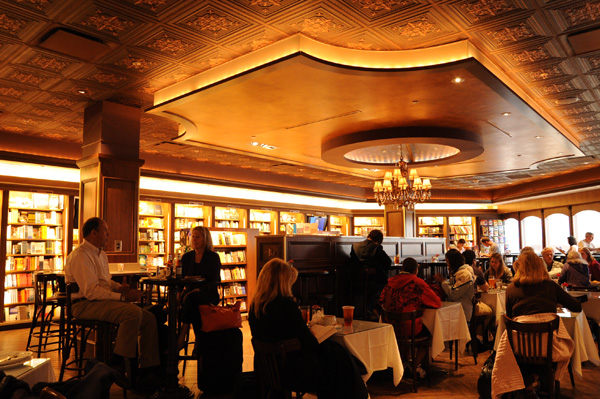
Cafe Intermezzo at ATL airport

Grab a book with your meal: Cafe Intermezzo at ATL is a restaurant and a bookstore. Photo: Cafe Intermezzo

“Cafe Intermezzo ATL. Both of my favorites in one place: great salads, and the tables are surrounded by a book store!”
Beth Aton Stewart

“Ecco in Terminal F. It’s a Midtown Atlanta restaurant that now offers an airport outpost. Wonderful Mediterranean cuisine and a respectable wine list.”
—Marshall Jackson, MJ on Travel

“Fresh to Order is fantastic. All fresh, light, and healthy menu selections at affordable price points. Refreshing to see in an airport!
—Laura Faust, Ciao Laura

Austin-Bergstrom International Airport (AUS)

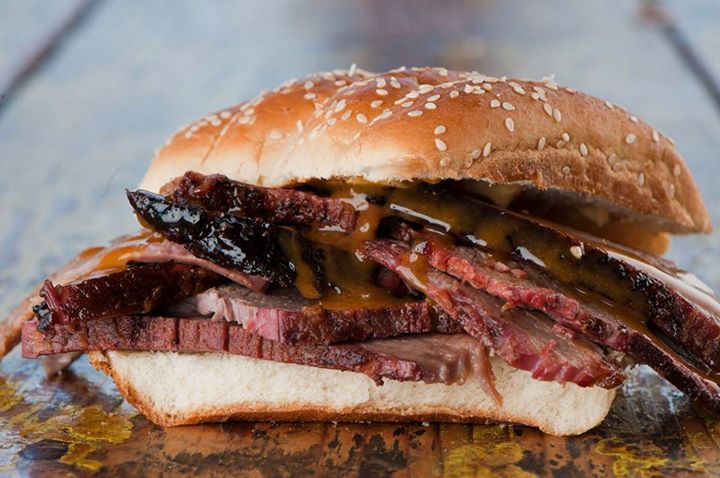
“The Salt Lick has the BEST BBQ at an airport I have ever had. The brisket was amazing! And I am from Texas, so I should know! They have one at DFW too.”
—Cacinda Maloney, Points and Travel

Boston Logan International Airport (BOS)

“Legal Sea Foods—there is more than one, and some have that ‘airport’ feel, but Legal is very fussy about quality, and you can get some of the best, freshest seafood in Boston.”
Go See It Travel

Charlotte Douglas International Airport (CLT)

“Bojangles’ Famous Chicken ‘n Biscuits! I used to live down south, now I’m in Pittsburgh. I try and make all my flights connect through CLT, and I will run from one end to the other for my chicken biscuits!”
Tasha Heckla

Chicago O’Hare International Airport (ORD)

Rick Bayless's gourmet Mexican dishes—and margaritas—are fan favorites at Chicago O'Hare. Photo: Tortas Frontera

Rick Bayless’s gourmet Mexican dishes—and margaritas—are fan favorites at Chicago O’Hare. Photo: Tortas Frontera

“Tortas Frontera is SO good. Delicious sandwiches, locally sourced ingredients, and a killer margarita. For about the same price as other airport options, you can get a little bit of gourmet (Rick Bayless knows his stuff). I actually look forward to this airport meal!”
Kelly Ratliff

“Always make the rounds of Garrett’s popcorn, Vosge’s chocolates, and Tortas Frontera sandwich with margaritas!!!”
Katherine Montgomery

Dallas/Fort Worth International Airport (DFW)

Texas favorite Salt Lick BBQ has an outpost at DFW location. Photo: Salt Lick BBQ/Facebook

Texas favorite Salt Lick BBQ has an outpost at DFW location. Photo: Salt Lick BBQ/Facebook

“Salt Lick BBQ gets my vote. Being a Texan, this gives me the taste of home even if only passing through. And yes, Texas BBQ is the BEST!”
Charles Wolfe

“Cousins Bar-B-Que @ Dallas. D’lish!”
Lisa Ringler

“DFW Pappasitos, Mexican.”
Leslie Kaminski

Detroit Metropolitan Airport (DTW)

“Max & Erma’s: A taste of typical Midwest always makes me happy to be home! Their cheesy tortilla soup and warm, freshly baked chocolate chip cookies are sure to cheer and warm up any wintery blues. Also would vote for National Coney Island, a Michigan classic.”
—Jessica Seba, Journey Mexico

Indianapolis International Airport (IND)

“Harry and Izzy’s is a great spot to sit down and have their famous shrimp cocktail and a drink.”
Midori Fujii

New York’s LaGuardia Airport (LGA)

“Delta’s terminal at LGA offers a wealth of modern café options. Last time flying through I made extra time to pop into Crust. Fresh coal-oven pizzas and quiet atmosphere. Love the iPad order system. Swift service, darkened lighting, and a location just footsteps to the gates make this a perfect dining spot.”
—Sharon Pomerantz Strelzer, Pomerantz PR

Miami International Airport (MIA)

“Cafe Versailles totally gets you in the mood of Miami—hot, sizzling, tropical. You want to do the salsa while ordering your Cuban sandwich. When you can speak Spanish to the staff while you are still in the U.S., it’s like you’ve taken a ‘little trip’ to another country, and that’s priceless!”
Robyn Webb

“At MIA, La Caretta is terrific authentic Latin cuisine.”
Marcy Gross Schackne

Louis Armstrong New Orleans International Airport (MSY)

“Ye Olde College Inn—fantastic food!”
Lucie Thornton

Newark Liberty International Airport (EWR)

“At EWR, Jersey Mike’s subs are the best.”
Leslie Kaminski

New York City’s John F. Kennedy International Airport (JFK)

“At JFK, The Palm has fabulous burgers. (Would you expect anything else?)”
Marcy Gross Schackne

Philadelphia International Airport (PHL)

“I like Cibo Wine Bar at PHL. Great wines, nice Italian food, and an ambience that makes me forget I’m at an airport.”
—Lissa Harnish Poirot, Editor-in-Chief, FamilyVacationCritic.com

Portland International Airport (PDX)

“Do food trucks count? PDX has the popular Pok Pok food truck now, and LAX terminal 4 has Roy Choi’s Kogi BBQ.”
—Arnette, founder, Round The World Girl

Phoenix Sky Harbor International Airport (PHX)

“I love Le Grand Orange at PHX—maybe because LGO was also in my Phoenix neighborhood. I’d often stop to get carry-out to take home from the airport! I love their salads, their pizza is delicious, and they offer a gluten-free chocolate cookie that is delectable.”
—Micheline Maynard, Editor in Chief, Curbing Cars

Washington, D.C.’s Reagan National Airport (DCA)

Legal Sea Foods clam chowder

A cup of clam chowder or a lobster roll? Or maybe a crab roll? Legal Sea Foods serves all its signatures at various airport locations. Photo: Legal Sea Foods/Facebook

“Bowl of clam chowder at Legal Sea Foods. Also, Boudin Bakery in SFO for fresh sourdough bread. They would be great together!”
— Charles McCool, McCool Travel


Be a smarter traveler: Follow Wendy Perrin on Facebook and Twitter @wendyperrin, and sign up for her weekly newsletter to stay in the know.

The Travel Innovation We’re Building at WendyPerrin.com

Welcome, new readers! Especially those finding me from Town&Country, where the Dec 2015/Jan 2016 issue profiles me (“The Travel Whisperer”) and reveals what we’ve been building for travelers here at WendyPerrin.com.

“When Wendy Perrin shares her secrets, it’s as close as you can get to vacation perfection,” says Town&Country. Well, what my team and I have built does more than just share my secrets. We’ve dreamed up a way to save you from mediocre trips.  It’s a whole system—one that’s never existed before in the history of the world, and one that consumers have needed for decades—whose goal is to deliver to you the trip of your dreams.

If you click over to our Plan A Trip section, you can read about how we’ve created a WOW system that connects you with the best destination specialists out there and then optimizes the interaction between you and them so as to help you get the best trip possible at the greatest value for your dollar.

I began compiling a list of best destination specialists two decades ago, when I was at Condé Nast Traveler. First published in the year 2000 as “Wendy’s Rolodex,” it was the first list of its kind back then, and I’ve continued to refine and grow my “rolodex” every day since, road-testing and monitoring those on it to ensure that they remain the best. Now I’ve created a Trip-Monitoring Service too:  For two decades at Condé Nast Traveler, I studied the problems travelers have with travel agents, intervened to rectify the issues that cropped up, and advised readers how to avoid these pitfalls. My Trip-Monitoring Service is designed to ensure you benefit from that advice; it zaps common problems before they impact a trip.

How does it work?  If you know where you want to travel, go to The WOW List, find the right Trusted Travel Expert, click on the black CONTACT button below the Trusted Travel Expert’s entry, and fill out the “Let’s Create an Extraordinary Trip!” form. That way you’ll be recognized as a WendyPerrin.com VIP traveler, you’ll be entitled to the best pricing and service that each Trusted Travel Expert can offer, and you’ll get my advice along the way and my Trip-Monitoring Service. If you can’t find your destination on The WOW List, go to this abbreviated version to see all the locations in an easy, at-a-glance format.

If you have no destination in mind and need suggestions, click over to Ask Wendy. I’ll do my best to reply personally with recommendations or refer you to the right generalist travel agent.

No matter how you connect with me—here on the site, on Facebook, or on Twitter—rest assured I’m doing my utmost to put the best travel-planning tools of all kinds, human and digital, at your fingertips. What I’ve built here is my small way of doing my part to contribute to the greater good: The more people enjoy eye-opening and transformative trips, the more often we will travel, the more stamps we will collect in our passports, the more global citizens there will be, the better we will all understand one another, and the more of the world’s problems we can solve.

Happy travels!


Be a smarter traveler: Follow Wendy Perrin on Facebook and Twitter @wendyperrin, and sign up for her weekly newsletter to stay in the know.
Best Ways to Spend Delays in 17 U.S. Airports

For many of us, Thanksgiving and Christmas mean too much time spent in airports: The holiday crowds require you to get there early, messy weather can mean delays, and planes are so packed that, if your flight is cancelled, it can be untold hours before you get a seat on another flight. But some airports are far more tolerable than others. In some cases they’re even enjoyable. You already know the best way to spend a layover in 10 of the biggest U.S. hubs. Here, a selection of savvy globe trotters—from travel experts to my Facebook followers—share the best U.S. airports to get stuck in, and their favorite way to pass the time there.

Atlanta Hartsfield International Airport (ATL)
“ATL – One Flew South – sushi.”
—Willis McKee, reader

Austin-Bergstrom International Airport (AUS)
“If I had to choose one airport, it would be Austin, Texas, for the great local restaurants, including several that often have live bands.”
Scott Mayerowitz,  Executive Editorial Director, The Points Guy

Charlotte Douglas International Airport (CLT)
“Relax in the charming white rocking chairs scattered throughout the airport. Makes me think ‘Southern Hospitality’.”
—Kathy Belden, reader

Centurion Lounge in Miami International Airport

The Centurion Lounge

Dallas/Fort Worth International Airport (DFW)
“I’ve been stuck for days at DFW, and it was just fine—I looked into declaring residency in the American Express Centurion lounge. The DFW airport grounds are bigger than the island of Manhattan, and the airport offers myriad amenities, including the American Express lounge and an almost-too-nice Grand Hyatt attached to the terminal with a pool deck overlooking the runways. What more could you need?”
—Gary Leff, founder, View From The Wing

Denver International Airport (DEN)
“Food, not too much shopping, lots of open-space feeling from the high ceilings and huge windows— and views of the mountains.”
—Carolyn Trabuco, reader

Detroit Metropolitan Airport (DTW)
“Detroit is the best airport in the USA at the moment. Great local restaurants. Beautiful and clean.”
—David Rosati, reader

honolulu airport chinese garden

Believe it or not, this is an airport. HNL’s Chinese, Japanese, and Hawaiian gardens were designed in 1962, when the airport was built. Photo: Courtesy HNL

Honolulu International Airport (HNL)
“I love the gardens in the middle of the airport.”
—Perri Collins, reader

Los Angeles International Airport (LAX)
“My favorite domestic airport to get stuck in is Los Angeles International (LAX)! They’ve brought in a bunch of local restaurants and shops which have made all the difference in the world. A lot of travelers don’t realize that your same-day boarding pass allows you to go into any terminal no matter which airline you’re flying! So if you like a restaurant in one of the other terminals, go ahead and check it out.”
—Johnny Jet, JohnnyJet.com

Minneapolis–St. Paul International Airport (MSP)
“Lots of good shopping and restaurants, and if it’s a long enough layover, in less than 15 minutes you can take the train to the Mall of America for a ride on the carousel.”
—Lori Bruns, reader

New York City’s John F. Kennedy International Airport (JFK): Terminal 5
“I love the JetBlue terminal (Terminal 5) at JFK. They have that great store MUJI to GO, an Ex Officio shop, great restaurants, and a spa.”
—Paula Froelich, founder of A Broad Abroad

New York City’s John F. Kennedy International Airport (JFK): Terminal 4
“I love the Delta lounge in Terminal 4. It’s so big that I can always find a quiet corner. The space is subdivided into a lot of different rooms, so it’s easy to have a different experience each time. Every seat has outlets and USB ports, which is key for last-minute charging. And there’s an outdoor lounge, which is just fun because I’ll take any oxygen I can before being locked in a tin can.”
—Pavia Rosati, founder/CEO, Fathom

Palm Beach International Airport (PBI)
“It’s low-key and truly Floridian, with a relaxing vibe. And if you forgot a souvenir, there are always those kitschy coconut candy treats.”
—Sharon Pomerantz Strelzer, reader

Portland International Airport (PDX)
“PDX has the best store: CC McKenzie has awesome clothes, shoes, and accessories. They also have the Dragontree holistic day spa, and Powell’s Books!”
—Brandy Audette, reader

San Francisco International Airport yoga room

SFO’s Yoga Room, the first ever in an airport, lets you get in a good stretch before you board your flight. Photo: Courtesy San Francisco International Airport

San Francisco International Airport (SFO)
“It has a spa for massages and a yoga room.”
—Deb Arora, reader

Washington, D.C.’s Reagan National Airport (DCA)
“I love taking a walk into the historic lobby in what’s now Terminal A. It’s usually pretty empty there, but if you stop for a moment, you can just feel the presence of all of the historic figures that have graced those halls since the terminal opened during World War II.”
—Brett Snyder, president and Chief Airline Dork, The Cranky Flier

What’s your ideal airport to get stuck in? Weigh in below!


Be a smarter traveler: Follow Wendy Perrin on Facebook and Twitter @wendyperrin, and sign up for her weekly newsletter to stay in the know.

a U.S. passport sitting on a laptop keyboard

6 Things You Need to Know About Renewing Your Passport

Here are six important things you need to know about your passport:

• If you are a frequent traveler and were hoping to be able to add extra pages for your passport, you’re out of luck. As of the beginning of 2016, travelers are no longer be able to add new pages to an existing passport. Now if you run out of space, you’ll have to buy an entirely new passport with either the standard 28 or the expanded 52 leaves.

• Check your expiration date right now. If you have eight months or less, renew it now. Passports are usually valid for ten years, but you really have to renew it in its ninth year—since many countries won’t let you enter if you have fewer than six months before your passport expires.

The price is the same—$110—whether you buy a 28-page book or a 52-page book.

•You can easily renew by mail (and avoid an additional processing fee by doing so) if your most recent passport is undamaged and was issued when you were 16 or older (and within the past 15 years). Even if you’ve legally changed your name, you can still do the entire passport renewal process by mail.

•You have to send in your old passport to get a new one. Don’t panic if it doesn’t get returned with your new one—it will be, but usually in a separate mailing.

• The State Department offers expedited service: Pay $60 and your new passport will arrive in three weeks instead of six. Don’t bother with this. I just renewed mine, and had it back in two and a half weeks. The exception is if you are in an extreme hurry, in which case you can pay the same $60 for a five-day turnaround if you apply in person at a passport agency and can prove your urgent need.


Be a smarter traveler: Follow Wendy Perrin on Facebook and Twitter @wendyperrin, and sign up for her weekly newsletter to stay in the know.
San Lorenzo villa rental, Dolomites, Italy

The Rewards of an Italian Villa Vacation in Winter

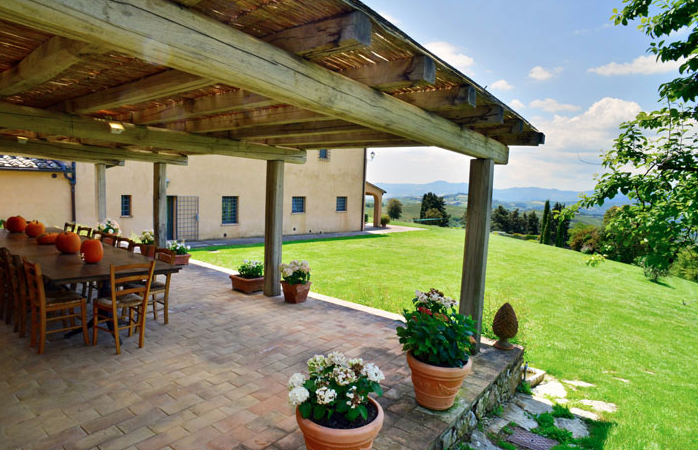
Le Ripe villa, Tuscany, Italy
Le Ripe villa, Tuscany, Italy. Photo: Home Base Abroad
Le Ripe villa, Tuscany, Italy
Le Ripe villa, Tuscany, Italy. Photo: Home Base Abroad
Le Ripe villa, Tuscany, Italy
Le Ripe villa, Tuscany, Italy. Photo: Home Base Abroad
Via Lambertesca apartment rental, Florence, Italy
Via Lambertesca apartment, Florence, Italy. Photo: Home Base Abroad
Via Lambertesca apartment rental, Florence, Italy
Via Lambertesca apartment, Florence, Italy. Photo: Home Base Abroad
Via Lambertesca apartment rental, Florence, Italy
Via Lambertesca apartment, Florence, Italy. Photo: Home Base Abroad
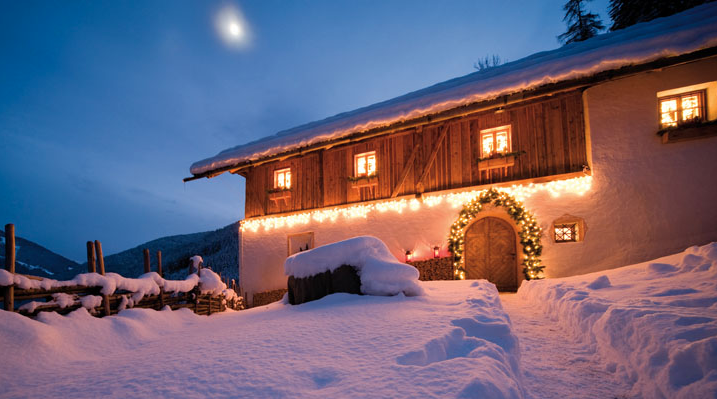
San Lorenzo villa rental, Dolomites, Italy
San Lorenzo villa, Dolomites, Italy. Photo: Home Base Abroad
San Lorenzo villa rental, Dolomites, Italy
San Lorenzo villa, Dolomites, Italy. Photo: Home Base Abroad
San Lorenzo villa rental, Dolomites, Italy
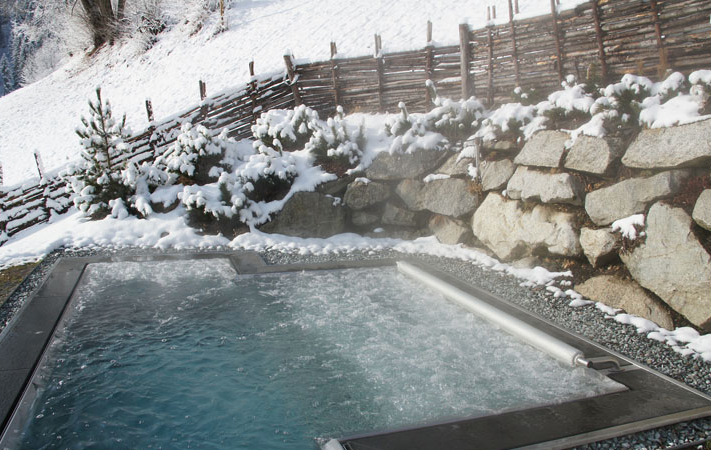
Outdoor whirlpool, San Lorenzo villa, Dolomites, Italy. Photo: Home Base Abroad
La Civetta villa rental, Maremma, Tuscany, Italy
La Civetta villa, Maremma, Tuscany, Italy. Photo: Home Base Abroad
La Civetta villa rental, Maremma, Tuscany, Italy
La Civetta villa, Maremma, Tuscany, Italy. Photo: Home Base Abroad
Villa Maria Serena, Lake Como, Italy villa rental
Villa Maria Serena, Lake Como, Italy. Photo: Home Base Abroad
Villa Maria Serena, Lake Como, Italy villa rental
Villa Maria Serena, Lake Como, Italy. Photo: Home Base Abroad
Villa Sola Cabiati, Lake Como, Italy villa rental
Villa Sola Cabiati, Lake Como, Italy. Photo: Home Base Abroad


How does a holiday in an Italian villa sound? Like a dream, if you ask us. Sure, the holidays are lovely no matter where you spend them because it’s always wonderful to be with family…but wouldn’t they be just a bit more wonderful if you were sipping Italian wine from the scenic backyard of your own Tuscany estate? Yeah, you know it would. That’s why we checked in with Mara Solomon, our Trusted Travel Expert for Large Italian Villas (four bedrooms or more), to find the best, most beautiful properties for all your holiday getaways. Start planning your Italian villa vacation now…

Thanksgiving in Tuscany

Le Ripe villa, Tuscany, Italy

Le Ripe villa, Tuscany, Italy. Photo: Home Base Abroad

“One of our favorite houses is Le Ripe, outside the village of San Casciano dei Bagni, a little jewel box of a medieval village that’s a 1.6 km walk from the house. The view is of all the hills that go up to Monte Amiata—it’s breathtaking. It’s a main house for eight with an adjacent building that brings you up to 14. You have working fireplaces, and the cook, Antonietta, is amazing. The owner of the house has also developed a lovely spa, and November is a perfect time to visit (so are December and January) because you can sit in 104-degree water and look out over the gorgeous countryside. The other reasons to come here for Thanksgiving are that airfare is cheap and you are deep into the autumn festival. You have fresh porcini, zucca, chestnuts—it’s a huge food time here and there are many simple quaint festivals to celebrate the harvest.”

Christmas in Florence

Via Lambertesca apartment rental, Florence, Italy

Via Lambertesca apartment, Florence, Italy. Photo: Home Base Abroad

“I love Florence for Christmas. They put these long, white banners over the streets with illuminated stars and snowflakes, and it’s beautiful. They don’t do the whole commercial Christmas here—you get together with your family and you eat. And there’s no better place for it. Via Lambertesca is the apartment I would recommend in Florence. It’s between the Ponte Vecchio and the Duomo—there is no better location. It has five double rooms and comfortably accommodates ten people. It’s modern and gorgeous, and we have a terrific cook who can prepare a whole holiday dinner.”

Christmas or New Year’s in Milan/Lake Como

Villa Maria Serena, Lake Como, Italy villa rental

Villa Maria Serena, Lake Como, Italy. Photo: Home Base Abroad

“Milan is fabulous right now—so alive, so interesting, and the people are beautiful. As for where to stay, this is a contrarian view, but I recommend Lake Como. I was at Lake Como a few years ago in December and it snowed, and it was the most beautiful I’d ever seen it. We have three houses that have beautiful working fireplaces, and that are so sumptuous that you just want to relax indoors and enjoy. Plus, it takes no time at all to get to Milan from here—they’ve really improved the highways so it’s only about an hour, and we would arrange the car so you don’t have to drive.”

Winter Break in Venice and then the Dolomites

San Lorenzo villa rental, Dolomites, Italy

San Lorenzo villa, Dolomites, Italy. Photo: Home Base Abroad

“For a February or March break, I am an enormous fan of doing a city culture trip to Venice and then going two hours to the Dolomites for skiing, where you can do the Sellaronda ski loop of connected lifts and trails.

We have a beautiful house called San Lorenzo. It’s small and intimate with four rooms and three and a half baths, and it can accommodate ten people. It’s up in the mountains overlooking Val Badia, Val Pusteria, and Val Aurina. It’s really a retreat: You have a stainless steel heated outdoor whirlpool, you have a full indoor spa with sauna, you have a huge wood-burning stove, and you have people who cook and look after you and who are gems.”

Easter/Spring Break in Maremma, Tuscany

La Civetta villa rental, Maremma, Tuscany, Italy

La Civetta villa, Maremma, Tuscany, Italy. Photo: Home Base Abroad

“April is pretty much the best time for getting a hit of spring in Italy, when it’s still bad weather back home on the East Coast. My preference for April is the Maremma region. There’s a microclimate here, where spring comes early. It’s not pool weather but it’s warm, colorful spring days, and after a long winter, we’re all just starved for that. It doesn’t work if you’re from L.A., but as a New Englander I’m especially drawn here.

La Civetta is one of our properties in this area. It’s five minutes from a cool little village where you’ll find a Croatian tailor who will make you a beautiful jacket in a week, for men or women. It’s also near another thermal bath that’s very natural, rustic, and wonderful.

In addition to this little tailor, there are also food shops—and this is wine country. All the big heavy-hitting wines—they’re from here. You’re driving by the vineyards as you come to the house. So anybody with an interest in wine could easily fill an April here. And it’s nice because this is not when other people are there. You pay nothing for your plane ticket, it’s not crowded, and it’s much easier to see the vineyards.”

Be a smarter traveler: Follow Wendy Perrin on Facebook and Twitter @wendyperrin, and sign up for her weekly newsletter to stay in the know.

 

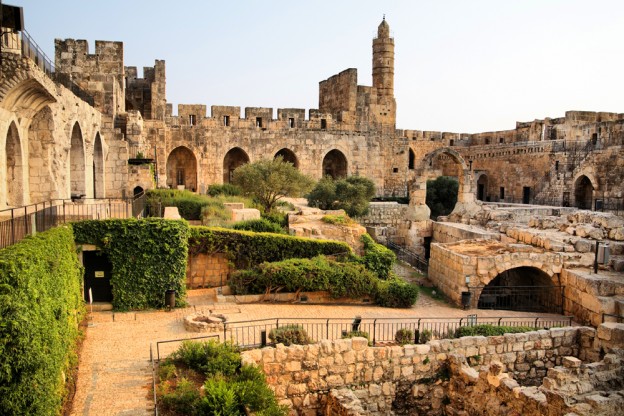
Tower of David, Jerusalem, Israel.

How to Stay Safe Traveling in Risky Countries

If you’re waiting for that perfect moment to travel to the Middle East, it’s probably never going to happen. It’s like waiting for that perfect moment to have a baby: You can always find some reason why now is not the optimal time.

At least once a week a reader emails me asking whether it’s safe to go to Israel, Egypt, Turkey, or [fill in country perceived as dicey] right now. I’ve noticed that the people asking have one thing in common: They’ve never been to the country in question.  And I think that very fact makes it harder for them to put the risks in perspective. If you’ve traveled in a supposedly precarious country before, you know first-hand how much less risky it is than all the media noise would indicate, you realize that the statistical probability that you will be the victim of a terrorist attack there is tiny, and you have no need to email me.

The news media never report the extent to which everyday life goes on as normal at a destination—because that’s not news. As I pointed out in Is It Safe to Travel To Turkey?, “Television and news coverage always make an incident in a foreign country seem more alarming than it actually is. If news sources were to report the extent to which life at the destination goes on as usual, with people going about their everyday routine unaffected, it wouldn’t sell ads, and the news sites wouldn’t get traffic.”

I’m writing this from Marrakech, by the way. It’s my fifth trip to Morocco. And in those five trips I’ve had so few safety concerns that it no longer even occurs to me that there might be risk involved in traveling to Marrakech.

So, in my opinion you should just go ahead and go. But be a smart traveler by doing three things:

(1) Book your trip through a Trusted Travel Expert.

Proven destination specialists like those on my WOW List have the latest security information at their fingertips, know which areas in a country are safe and which aren’t, employ the savviest guides and drivers, and know how to keep you from harm. Earl Starkey, Trusted Travel Expert for Turkey, has been keeping travelers safe there. And Joe Yudin, Trusted Travel Expert for Israel, is keeping travelers safe in Israel.

“I felt totally safe,” says Nadika Wignarajan, a WendyPerrin.com traveler from Bayonne, New Jersey, who just returned from a trip to Israel arranged by Joe. She and her parents were there for a week, including on November 4, when an Israeli Border Police officer was critically injured by a Palestinian driver who deliberately struck him near Hebron—the latest attack in a wave of increased violence since the start of October.

“Joe and his team have their ears to the ground and know what’s going on,” says Nadika. “I knew my guide wasn’t going to take us anywhere that wasn’t safe. There are parts of New Jersey that are more dangerous. We felt safer in Israel than in some areas of New York City where you don’t want to go at night.”

In fact, Nadika adds, there are advantages to being in Israel right now. “There are fewer tourists than usual. The religious sites are crowded, and there are cruise ships bringing in a lot of tourists, but other places were not crowded, and the hotels weren’t that busy; they were going out of their way to do stuff for us.”

“The biggest misconception travelers have,” says Joe Yudin, the Israel-based travel specialist who booked Nadika’s trip, “is that there is constant violence everywhere. That just isn’t the case. The second biggest misconception is that there is tension in the air. Not true. Yesterday I spent the entire day in an Arab village in the Gallilee, and everyone was nice, pleasant, accommodating, warm, smiling. There have been a few bad incidents, and these unfortunately are played up in the news over and over and over. But the fact is that usually there is no violent crime on our streets. Yes, there have been a few wars and everyone here is a soldier and knows what to do in wartime, but this isn’t a war. This is a wave of violence that we usually do not have. It brings the level of violence here up to the regular level of violence you find in Western cities.”

(2) Give yourself peace of mind via MedjetAssist’s Horizon Membership.

Even intrepid seasoned travelers who are able to put risks in perspective—and who understand the difference between the probability of an incident occurring in a country and the probability of an incident occurring to them while they are in that country—can still wonder how to lessen their risks when traveling there. If an incident occurs and does impact your trip, what are the smart steps to take?

You might not know the answer, but you can turn to someone who does. MedjetAssist, the air medical transport membership program that gets you from a foreign hospital that you happen to find yourself stuck in to a hospital back home that you trust—something that most travel insurance policies won’t do for you—recently added a new membership level that reduces your risk when your security is threatened: Horizon Membership offers assistance should a crisis—a terrorist attack, a political threat, violent crime, or the like—strike. You get access to a 24/7 Crisis Response Center, a veteran security expert to advise you, and response services to come to the rescue if necessary.

Actually, MedjetAssist Vice-President and COO John Gobbels points out, if required, a crisis team can come in and remove you from a situation even if it’s not been a declared a major event or incident—even if it’s just because you’re feeling uncomfortable due to the current situation on the ground and want to get out of that place.  Some other companies’ emergency response services benefit kicks in only after a “qualifying security event” has taken place, says Gobbels—for instance, after the State Department has issued a Travel Warning, or after the event that was merely threatening has escalated into a dangerous situation.

(3) Take smart precautions.

If you’re headed to Israel or elsewhere in the Middle East:

1. Enroll in the U.S. State Department’s Smart Traveler Enrollment Program (STEP), so the Embassy can send you security updates and help you in an emergency.

2. Choose a hotel that has CNN, BBC, and Al-Jazeera, so you can monitor the news in the mornings and evenings. Also make sure the hotel has reliable Internet access, so you can check local English-language news Web sites.

3. Avoid public gatherings and demonstrations.
Don’t get caught in an angry mob.

4. Avoid public transport.
Use a driver.

5. Stay away from border areas and avoid bad neighborhoods the same way you would in New York City or Chicago.
“Don’t wander alone in the Muslim Quarter of Jerusalem, Hebron, Bethlehem, or Nablus,” says Joe Yudin, my Trusted Travel Expert for Israel.

6. Don’t photograph government buildings, military installations, airports, train stations, policemen, guards, or anyone who doesn’t want his/her photo taken.

7. Carry your hotel’s business card—the one written in the local language—so you can show it to non-English-speaking locals (such as a taxi driver) and get back to your hotel in an emergency.

8. Carry a cell phone programmed with emergency numbers (for the police, your hotel, and medical emergencies)

9. Carry a mini-flashlight (in case you’re caught in the dark).

10. Don’t focus on the wrong risks. Don’t get so caught up in avoiding risks that are highly unlikely—e.g., a terrorist attack—that you forget to focus on those risks that are much more likely to damage a trip—e.g., traffic accidents, pickpockets, food poisoning, sunburn.


Be a smarter traveler: Follow Wendy Perrin on Facebook and Twitter @wendyperrin and sign up for her weekly newsletter to stay in the know.
exercise bands on carry-on bag

An Easy Way to Exercise on Vacation — No Gym Required

Making time to exercise on vacation can often seem like a chore. There are so many fascinating things to be doing, and after all, you’re probably already walking a ton each day. But it’s even more important than usual to take care of yourself when you’re traveling: You’re out of your normal routine, eating differently, sleeping differently, and are probably more tired than you realize.

One way I make it easy to stay on top of my health is to keep a couple of tiny exercise helpers in my carry-on: A resistance band and a loop band. They weigh next to nothing and fit right in the pocket of my carry-on—as opposed to bulky running sneakers, which eat up a ton of precious space (and so often go unused; am I right?).

Instead, the bands quickly turn any hotel room into a gym. I use the first band to do arm- and leg-strengthening exercises (here’s a wide array to choose from). And I place the loop band around both legs for bridges, clamshells, and lateral band walks.

I especially appreciate these items after a long flight, and when I don’t want to deal with making an appearance at the hotel fitness center.

Do you have an exercise routine when you travel?

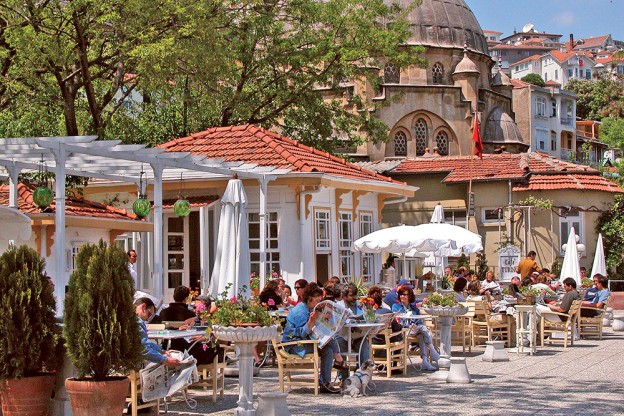
Istanbul's Bebek Neighborhood

Is It Safe to Travel to Turkey?

Is it safe to travel to Turkey? That is a question I’ve been asked dozens of times over the past two decades, usually as a result of a scary news story that makes someone second-guess a trip they’ve already planned.

Last week I was asked the same question again by a reader who has booked a Turkey trip through one of the Trusted Travel Experts on my WOW List. Even though she’s excited about the trip, she is getting pressure from her family and adult children to rethink her plans.

I understand that her family may be concerned, given what they are hearing and seeing in the news, but if it were me, there’s no way I would cancel. Turkey has had bombings every year since I can remember, and never have any of these incidents impacted or dampened my readers’ travel experiences there. I myself have been to Turkey four times—three of those times coinciding with major terrorist incidents—and every time I felt totally safe everywhere I traveled in the country.

I know that politics in Turkey are complex and that national elections are scheduled for November 1. But I also know that television and news coverage always make an incident in a foreign country seem more alarming than it actually is. If news sources were to report the extent to which life at the destination goes on as usual, with people going about their everyday routine unaffected, it wouldn’t sell ads, and the news sites wouldn’t get traffic. That’s why media outlets are forced to write sensationalistic, scary headlines: to get people to click and read.

True, there are areas in southeastern Turkey—near the border with Syria—that most countries’ governments are warning travelers not to visit. But those areas are hundreds of miles from Istanbul and other popular tourist sites.

Furthermore, any coverage that paints a story about difficulties travelers might be facing does not apply to travelers who booked through a destination specialist such as the Trusted Travel Experts on my WOW List. These experts know their destinations like no one else, and they know the truth about where it’s safe to be. In the case of this particular reader, she booked her trip through Karen Fedorko Sefer, a Turkey travel expert to whom I’ve been sending travelers for years. Karen lives in Istanbul and has the latest on-the-ground intel for making trips safe, not to mention extraordinary.

Last year, after another spate of news reports about terrorist incidents in Turkey, I interviewed several readers of mine who were traveling in the country at a seemingly difficult time. They had arranged their trips through Earl Starkey, another Trusted Travel Expert who lives in Istanbul. (Here’s his Insider’s Guide to Istanbul, as well as his Insider’s Guide to Cappadocia.) Examples of what these travelers told me include:

“The impression from the news in the U.S. is of a somewhat exotic, traditional country that is as progressive as a secularized Muslim country can be, but that remains somewhat poor and undeveloped,” Mr. Martin said. “I was, quite frankly, in shock to find a modern, affluent, and incredibly clean cosmopolitan city in Istanbul, efficient, modern airports, and generally friendly, accommodating people who truly were secular and in many areas very wealthy.”

“Before we left, my main fear was that there would be a great deal of hostility toward Americans. I never felt that! The Turkish people are warm and welcoming—just lovely people.”

“We were in Cappadocia when the U.S. bombing of Syria started. That day we toured a number of small towns in the area, and I looked carefully for any negative response from the locals. (I am over six feet and clearly American, so I do stand out in a small village). Everyone was very friendly and welcoming—I did not observe a single negative glance or frown.”

In that same article, I outlined steps you can take to decide if Turkey is right for you, along with precautions you can take to remain safe. While those tips remain useful, that article was written for people who travel totally on their own and do not have one of my Trusted Travel Experts watching over them throughout. The on-the-ground support that my Trusted Travel Experts offer is invaluable on any trip, and it’s the reason I created The WOW List in the first place.

So please don’t avoid Turkey. Just plan it right. Chances are you will be pleasantly surprised by the extent to which life goes on as normal, you will have fascinating conversations with the locals about current events, and you will feel jazzed about being there at an important moment. I say this because that’s what my readers who return from Turkey always tell me.

Imagine the news that Turkish people are getting about our lives in the United States right now. The sudden and all-too-frequent mass attacks of violence in our schools, movie theaters, and churches surely must make them question whether it’s safe to travel to the U.S.   Would you tell them not to come?

Astonishing Business-Class Airfare Deal to Europe—But You Have to Act Fast


Every year I wait with bated breath for the day when business travel expert Joe Brancatelli announces that the airlines have started their secret business-class airfare sales to Europe. Today’s the day, folks—and this time the sales, which are usually for either the Thanksgiving/Christmas holidays or for summertime, are actually for both! Joe has found outstanding business-class airfares to Europe for as low as $1,566 roundtrip from the East Coast and $1,616 roundtrip from the West.

If you don’t know who Joe is or why I think he’s the smartest guy in the room when it comes to getting the most for your business-travel dollar, you can read our interview with him here. You can also sign up for his Joe Sent Me newsletter as soon as you finish reading this; you’ll be glad you did.

But back to the sale: The low fares, which are on British Airways, are for travel between November 16, 2015 and August 2016, but you must book by the end of the day tomorrow, October 16. Fares available include:

  • Tampa to London for $1,566
  • New York to London for $1,605
  • San Francisco, Chicago, Dallas, or Washington, D.C., to London for $1,611
  • Los Angeles to London for $1,616
  • Atlanta to London for $1,811

If you want to travel elsewhere in Europe via London, business-class fares start as low as $1,533 roundtrip.

But wait—it gets even cheaper: If you are an AARP member, says Joe, “you can drive your fare down below $1,200 roundtrip on some routes between late November and next August. (Yes, August, 2016.) And, yes, other carriers do seem to be matching. And, yes, there’s a great mileage bonus opportunity. And even a first-class sale.”

The key to many of these low fares is a Sunday-night stay, says Joe. Start reading about the sale at www.ba.com/2015, and then dig deeper with BA’s pricing tool here. The sale includes American Airlines, Iberia and OpenSkies, BA’s boutique carrier to Paris and Iberia. And, amazingly, Joe reports good availability.

So, if you’ve been toying with the idea of a trip to Europe, now is the moment to book. And if you were ever thinking, “I wish I knew about great business-class travel deals,” now is the time to become a member at Joe Sent Me. Yes, you’ll still get some great info if you opt only for his free weekly newsletter, but you’ll get the really good stuff—including breaking travel alerts and deals—if you purchase a membership. Starting at just $69 a year, you can see that it very quickly pays for itself.

Fireworks at Disney World, Orlando, Florida.

How Disney’s New Ticket Prices Will Impact Your Family Vacation

Disney made two announcements last week that will affect trips to Disney World and Disneyland. We checked in with Susan Kelly, Wendy’s Trusted Travel Expert for Disney trips, to learn more about how these changes could impact any family vacations you may be planning to the happiest place on earth.

The first news was that annual passholder rates have gone up and benefits have changed. “Now visitors have options between different levels of passes at different price points,” Susan explains. “The most expensive Platinum Pass includes parking, park hopping, a photo pass, and no blackout dates.” Conversely, the least expensive option has blackout dates and excludes the extra perks.

These passes are geared toward visitors who go to Disney a lot, Susan points out, so the change might not affect you at all if you’re planning a one-off family vacation.

The second announcement will have a greater impact if or when it is eventually implemented: surge pricing. When demand for tickets is highest (holidays, school breaks), tickets will be most expensive; when demand is lowest, tickets will be cheaper.

“The current park admission model has everyone paying the same flat rate to enter the parks,” Susan explains. “A four-day pass is the same price, no matter when those four-day visits occur. The new pricing being considered will have different prices for each day, based on what season and what day of the week you visit. A visit to Magic Kingdom on the Saturday of Christmas week will be more expensive than a visit on a Wednesday in early September. You will save by visiting on weekdays and designated off weeks.”

One reason cited by Disney for this potential change—apart from the obvious goal of making more money—is crowd control; the theory is that cheaper tickets offered at low-peak times will help spread out the high peaks and valleys of visitor numbers throughout the year. “Hopefully it will do something to alleviate the crowds,” Susan says. “The number-one question travelers ask us is: ‘When can I go when it is not busy?’”

And how can families still make a Disney vacation affordable? It’s all about planning: “You will save more the longer you visit,” explains Susan. “It’s the family visiting for only one or two days that pays the most per day. There is the opportunity to save up to 45 percent on park admission if you visit for more days. Knowing that, it’s smartest to plan for one big trip. It is better to visit once for eight nights than to do two shorter visits of four nights each.”

Susan also recommends taking advantage of any promotions that Disney runs. “Part of our free service is that we keep our ears to the track on discounts as they are released, and we work to apply them to existing reservations. If there are no discounts available at the resort the traveler booked, we give them the option to move to where there is a savings.”

Your best strategy? Reach out to Susan to book your Disney vacation for the smartest dates. (She knows when they are.) And keep in mind that if the only time your family can travel is during a peak week, and you hate crowds, Disney might not be the right place for your family at that time.

“I think that one hand of Disney is trying to find ways to manage the crowds by providing a financial incentive to visit during ‘off’ times,” Susan says, “but the other hand has over-built and over-promised that ‘magical’ experience. You can’t skip down Main Street with 25,000 people in your way!”

Remember also that Disney can be so expensive on some dates that it might actually be more affordable to take your family overseas! For ideas, check out our list of European Cities that Are Surprisingly Kid-Friendly and contributor Eric Stoen’s guide to a perfect family vacation in Paris.


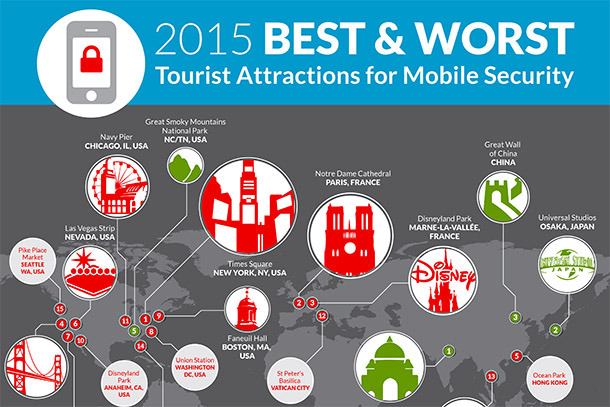
infographic about best and worst tourist attractions for wi-fi security

Why You Should Think Twice Before Connecting to Wi-Fi When Traveling

This article originally ran on Smarter Travel

These days, traveling is almost impossible without a mobile Internet connection. Between Google Maps, TripAdvisor, Yelp, and other booking and review-based apps and websites, you need your phone to get the most from your trip.

And with international data packages so expensive, you might think a cheap or free Wi-Fi connection is your best bet. But maybe not. Mobile threat defense company Skycure says you should disconnect when traveling in certain high-risk destinations. Here’s why.

Skycure studied the world’s top tourist destinations (based on data from Travel + Leisure) from June 2014 to June 2015 to determine the places most frequently targeted by malicious networks. Times Square in New York City topped the list with the highest threats, followed by Notre Dame Cathedral in Paris and Disneyland Paris. The full list of tourist attractions with the highest risks is below.

Times Square, New York City, NY
Notre Dame Cathedral, Paris, France
Disneyland Paris, Marne-la-Vallee, France
Golden Gate Park, San Francisco, CA
Ocean Park, Hong Kong
Las Vegas Strip, Las Vegas, NV
Hollywood Walk of Fame, Hollywood, CA
Union Station, Washington, D.C.
Faneuil Hall Marketplace, Boston, MA
Disneyland Park, Anaheim, CA
Navy Pier, Chicago, IL
St. Peter’s Basilica, Vatican City
Grand Palace, Bangkok, Thailand
Disney World’s Magic Kingdom, Orlando, FL
Pike Place Market, Seattle, WA

Where is your network the most secure? Places with remote connections and restricted mobile phone use. The Taj Mahal in India, Universal Studios in Japan, the Great Wall of China, Sydney Opera House, and Great Smokey Mountains National Park round up the top five safest spots to connect to a Wi-Fi network.

Also from Smarter Travel: Best Apps to Prevent Travel Disasters

Android v. iPhones

In a separate study, Skycure found that Android devices were twice as likely to encounter a threat compared to iPhones. According to the study, iOS devices will connect to more Wi-Fi networks overall, but Android devices connect to more malicious networks.

How to Stay Safe

Follow these quick tips if traveling to high-risk destinations:

  • Avoid “Free Wi-Fi” networks (8 percent of the total reported threats came from a network with “Free” in its name).
  • Read warnings on your device before agreeing to Terms and Services.
  • Make sure your device is updated to the most current operating system.
  • Disconnect from a network if your phone has erratic behavior, i.e. frequent crashes or if you receive any warning messages.
  • Download a mobile security app.
    Click here to download the full infographic from Skycure. Click here to download Skycure in the app store.

Also from Smarter Travel: The 8 Best (and Worst) Travel Apps


girl in front of duomo florence italy

Florence Can Be Kid-Friendly: Just Follow These Tips

When I won Condé Nast Traveler’s Dream Trip contest three years ago, it was based on my essay about wanting to take my kids to Florence, a city I loved but that I didn’t think of as kid-friendly. Wendy and her WOW List expert Maria Landers crafted a great two-week trip for us—so great that Florence quickly became our family’s favorite destination, and we’ve now returned to the city every summer since the prize trip.

My advice to families heading to Florence for the first time? Embrace what Florence is known for—namely art, architecture, history and food. Here are my recommendations for how best to do that with kids:

Embrace the Art

visiting Pitti Palace with kids Florence Italy

Our guide Elvira (arranged through CIU Travel) showing our kids the art of the Pitti Palace. Photo: Eric Stoen/Travel Babbo

Art is everywhere in Florence—in the public squares, in the museums, and even on street signs. Our kids loved the Bargello, Academia, and Uffizi Museums with Elvira, our extraordinary guide arranged by Concierge of Umbria. At each museum we were able to skip the long lines and we had decidedly kid-friendly tours, focusing on lesser-known important pieces, as well as the major works. We never spent more than an hour in any museum, and every stop involved not only seeing the art but also interacting with it. Elvira arranged scavenger hunts and sketching sessions for us around town. After my kids saw David, they went out to patio of the Academia and drew photos of what they thought Goliath looked like. And our private tour through the Uffizi’s Vasari Corridor was extraordinary. Our kids still remember the corridor above their heads every time they cross the Ponte Vecchio.

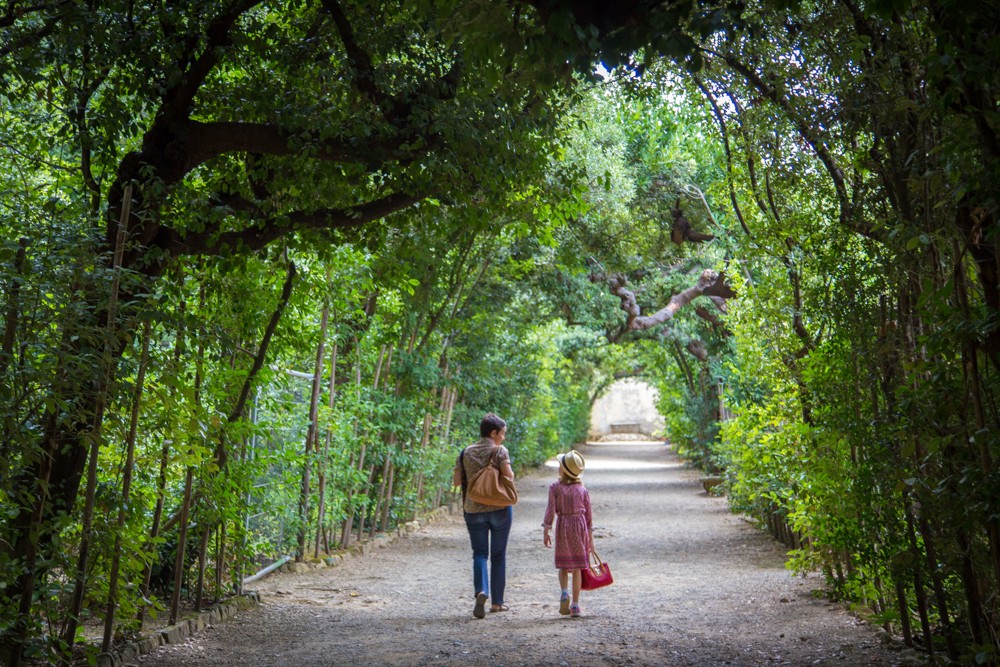
We’ve also done private art sessions. Paul Bennett, another Trusted Travel Expert on Wendy’s WOW List,, set up a fresco making session with a Florentine artist. And through Arte al Sole the kids had a sketching class combined with a scavenger hunt through the Boboli Gardens. The best thing about the Arte al Sole class? We, the parents, weren’t involved at all. We dropped the kids off with their art expert Andi and picked them up three hours later at the entrance to the gardens. It’s the only time we’ve separated from the kids in Europe and they loved it!

Embrace the Architecture

Palazzo Vecchio in Florence Italy

The Palazzo Vecchio in Florence reflected in a puddle. Photo: Eric Stoen/Travel Babbo

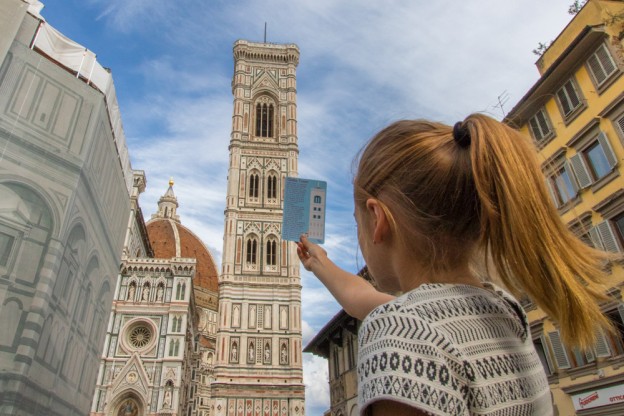
My favorite way to get the kids to appreciate the architecture of Florence? Climbing to the top of the Duomo. Buy tickets in advance across the street, get there early and enjoy! And don’t fall for this “private tour” scam.

This year we also added in a scavenger-hunt-with-a-twist through the city using cards from Tava Adventures. The cards are for kids and show the major sites of the city, like the Uffizi, Santa Croce, and the Duomo, along with some games for the kids to play during downtime. But since our kids had been to Florence several times they already knew the information on the cards, so we tested the kids by letting them lead us to each site in the city based on the cards. That challenged their navigation skills and memory (and our patience a little!) but they got us to all of the sites successfully.

The last thing that we do is to make an annual visit to Piazzale Michelangelo above the city. It’s a great place to enjoy the sunset, but we let the kids point out to us all of the elements of the skyline so that they remember, for example, the difference between the churches of San Lorenzo, Santa Croce, and Santa Maria Novella. The Duomo, Palazzo Vecchio, and Ponte Vecchio are all visible from there as well.

Embrace the History

Flag throwing with the Bandierai degli Uffizi, Florence Italy

Flag throwing with the Bandierai degli Uffizi. Photo: Eric Stoen/Travel Babbo

History is obviously intertwined with art and architecture, but there are some excellent museums that are more historical than artistic—like the Bardini, Galileo and Stibbert museums—that our kids really enjoyed. We also had a great visit to the Torrigiani Gardens with Elvira and Maria, which included a tour of the gardens (Europe’s largest private garden) by the owner of the property and a private demonstration by the Bandierai degli Uffizi, one of the most prestigious flag carrying/throwing groups. Such a cool afternoon, all rooted in Florence’s history.

Florence italy park

Take walks with one or more of the kids at sunrise; you’ll have the city to yourselves. Photo: Eric Stoen/Travel Babbo

My favorite thing to do in Florence, sometimes with one of the kids and sometimes by myself, is to walk around the city right at sunrise. There are a few locals out but very few tourists, and it’s amazing to have all of the sites virtually to myself. I love standing in the middle of the Piazza della Signoria, closing my eyes and thinking about the Medici, artists, and others who have walked through that exact spot. Florence isn’t particularly enjoyable in the middle of a summer day with hordes of tourists and day-trippers off of cruise ships, but early in the day, as the sun is rising and the city is coming to life, it’s magical.

Embrace the Food

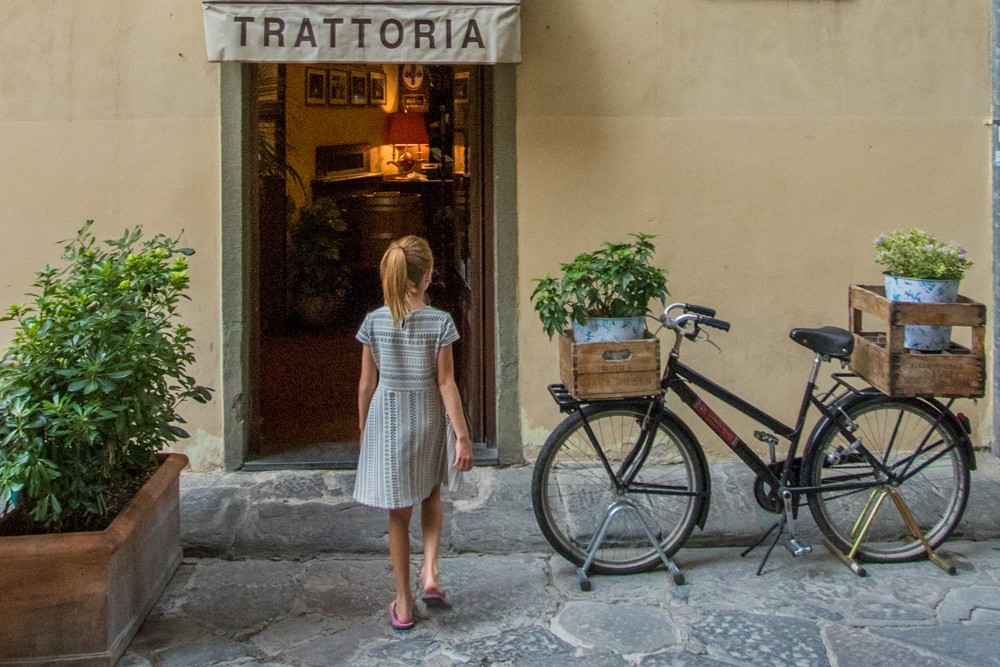
trattoria entrance Florence Italy

Become a regular at a restaurant during your trip and you’ll soon be treated like family. Photo: Eric Stoen/Travel Babbo

We love the food in Florence. Every year we return to our favorite restaurants and also make a point of trying new places. Even when we don’t love a trattoria we rarely have a bad meal. My primary dining advice to people when traveling to Europe applies in Florence just like it does in Paris or anywhere else: become locals! If you find a place that you love, go back again and again. You’ll find the service is completely different when the staff recognizes you and appreciates that you’ve returned. We typically eat at our favorite casual place three times a summer. The staff remembers us even when we haven’t visited in 11½ months and greets us with handshakes and hugs. We sometimes get a local discount. And this year we were given a bottle of our favorite wine as we were leaving the final time. The restaurant is barely in the top 50 percent of Florentine restaurants on TripAdvisor, but to us it has some of the best food in the city and the service is great. Find your own favorite place and go back again and again! I promise it’s worth it.

pasta making class Florence Italy

A cooking class is a great way to introduce kids to local cuisine, and to continue the memories once you get home. Photo: Eric Stoen/Travel Babbo

Beyond restaurants, we’ve done many cooking classes in and around the city. We’ve learned how to make pizza, gelato and pasta. We’ve made chocolate, tiramisu and salads. We’ve cooked chicken, pork and zucchini flowers using only local ingredients. Every cooking experience has been excellent and our kids have loved every minute. Maria and CIU Travel set up several of the cooking classes for us. We’ve also found others through TripAdvisor—simply search for Florence, and then go to Things to Do and choose Classes and Workshops and then Cooking Classes in the menu on the left (here’s my full guide on how to use TripAdvisor to find great things to do). Our last class was extraordinary, through Let’s Cook with Jacopo and Anna, but there are a lot of highly-ranked classes.

Overall, we’ve found Florence to be extraordinarily kid-friendly, but it’s kid-friendly because we’ve gone out of our way to find family-friendly guides who make the art and history of Florence come alive, and we’ve made walking around and sightseeing highly interactive. Food is no longer something to order; it’s something to learn how to make, and then to build on that when we get home. Take your kids to Florence! But do it right.


Meet our writer

Eric Stoen, the founder of Travel Babbo, travels around the world constantly with his three kids. Wendy met him when he won Condé Nast Traveler’s Dream Trip Contest a few years ago and was so impressed with his travel savvy that she invited him to contribute to WendyPerrin.com.

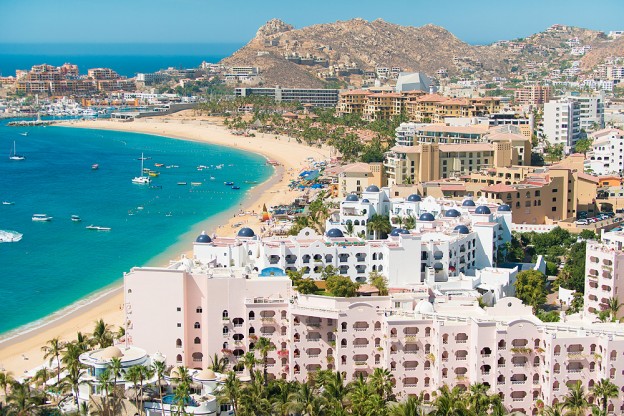
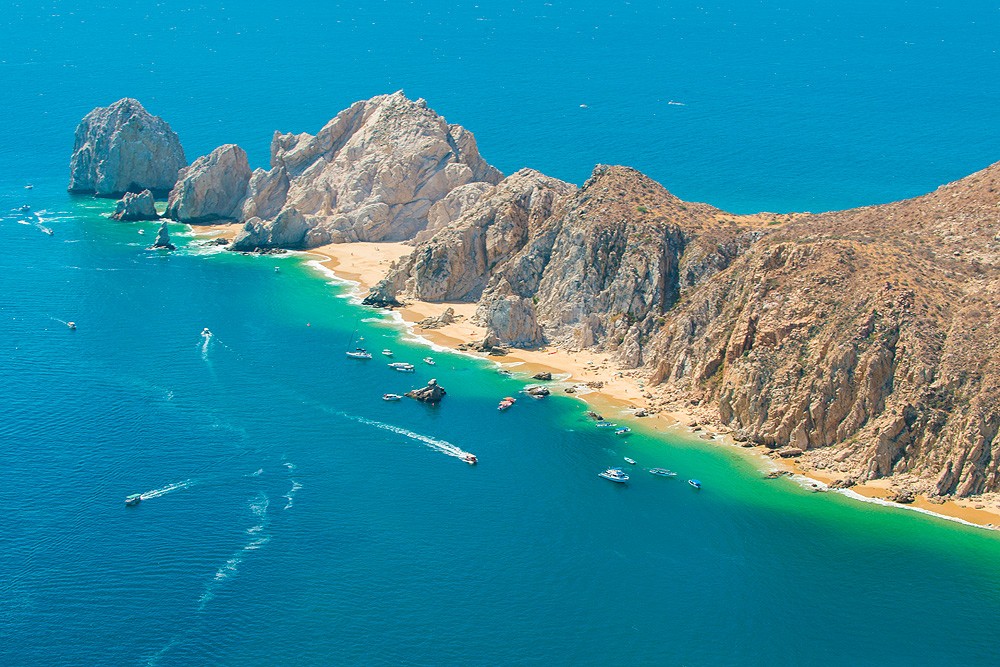
Medano Beach, Cabo San Lucas, Mexico

Why You Should Be Heading Back to Cabo. Now.
As travelers start planning their fall and winter escapes to the sun, Mexico looms large in imaginations. It’s so close, so sunny, and works equally well as a beach-bum getaway, a family vacation, a sporty adventure destination, a romantic resort escape, or a sophisticated foodies’ hot spot.
But just one year ago Baja California, and particularly Los Cabos, was facing something much more challenging than the usual busy tourist season: rebuilding after Hurricane Odile, a category 3 storm which made landfall on September 14 and decimated the area.

Amazingly, Los Cabos has rebounded with the speed of a superhero. The video below, put together by the Los Cabos Tourism Board, shows just how extensive the damage was — and how fast the rebuild was.

We checked in with Julie Byrd, Wendy’s Trusted Travel Expert for Los Cabos, to get her insider opinion on how her favorite spot on the Baja Peninsula has recovered. Julie specializes in villa rentals, and her company can also arrange fishing and yacht charters, ground transportation, celebrations, and guided tours. A foodie at heart, Byrd has strong opinions on everything from local taquerias to fine dining, so be sure to ask her for recommendations when you get in touch.

What’s the lay of the land now: Where is it okay to travel?

I am confident in saying that it is okay to travel to any of the resort areas and private housing communities of Los Cabos. The downtown area of Cabo San Lucas, the marina and luxury developments throughout the tourist corridor and extending to Puerto Los Cabos and the East Cape, are in excellent shape.

In fact, something very cool was uncovered as a result of Odile: the sunken cargo ship Lundenberg, which went down off the coast of Cabo San Lucas in 1954. You can watch an underwater video here.

Which hotels have reopened or are reopening? Are villa rentals an option now too? If so, where is best?

We’ve actually had a lot of villas available since shortly after the hurricane. In fact, we had very high occupancy during the winter holiday season last year. Only two of our properties were not ready for the December holidays. At this time, more than 100 Los Cabos rental villas are available.

As for hotels, the bulk of Cabo’s hotel inventory is back, with a few notable exceptions with reopening dates extending into 2016. Some resorts took the opportunity not only to repair after the storm but to undertake extensive remodels. I’m happy to see that the luxury boutique Hotel El Ganzo will be reopening soon at the Puerto Los Cabos marina—it is a personal favorite.

We have been maintaining a list of hotel reopening dates on our blog. The only hotels that have not reopened are:

Casa del Mar Resort – opening October 2015
El Ganzo – opening October 2015
Dreams Los Cabos – opening October 2015
Me Cabo – opening December 2015
Melia Cabo Real – tentatively opening April 1, 2016
Westin – July 1, 2016

I personally stayed at Villa Estero, located in the private development of Fundadores (in Puerto Los Cabos, San Jose), in May and found it to be among the best Los Cabos has to offer. It is an up-and-coming area, where celebs and the like are now staying for the luxury and privacy the community offers. It has a championship golf course, close access to the PLC Marina and great restaurants, a private beach club and—best of all—brand-new, amazing villas.

Lovers Beach Cabo San Lucas Mexico

Lover’s Beach, or Play del Amor, Cabo San Lucas

Are there any places travelers should avoid?

Visitors should be cognizant of construction projects taking place in areas such as Cabo Real, where they are building two new hotels, Solaz and LeBlanc Spa Resort.

When is the best time to visit?

The winter months are, by far, the most popular time of year. The migrating whales begin arriving in Cabo around December. Peak season for our private villas is Christmas/New Year’s. The region remains busy throughout the spring, with low-season deals starting in May and lasting throughout the hot summer months. Another good time is early November, when you have similar weather and thinner crowds, plus the big-game fishing is fantastic and the water is still warm.

What else do travelers need to know?

Our palm trees had some pretty extreme haircuts.

One year ago from Hurricane Odile from vcabo on Vimeo.