Make Your Next Trip Extraordinary
Insider’s Guide to Shropshire, a Slice of English Countryside
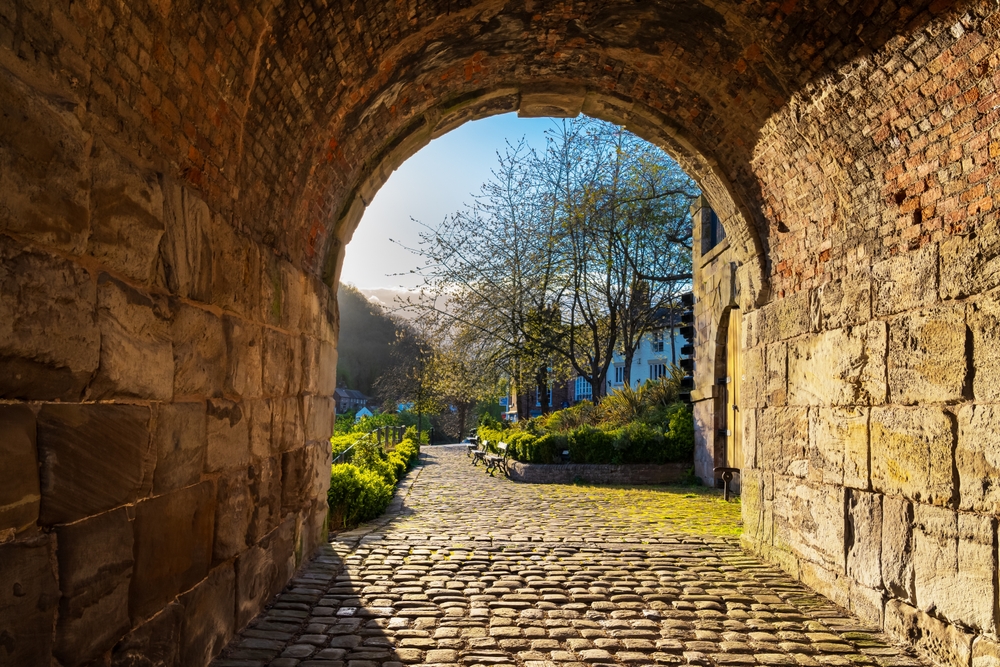 Shropshire has all the charms of the English countryside, without the Cotswold crowds. Photo: Shutterstock
The insider advice on this page is from one of Wendy’s Trusted Travel Experts for England: Karen Gee of Crown Journey.
For Karen, travel is all about the people you meet. She loves to introduce travelers to everyday folks who have captivating stories to tell, from a police officer stationed at Scotland Yard to a “high sheriff” who represents the Crown at local ceremonies to an English family who moved to Edinburgh because of Brexit. After 30 years planning trips amid England’s unpredictable weather, Karen knows to always have a Plan B in her pocket and can pivot on a dime. She’s also wise about when to splurge on a private guide, and when a high-quality group excursion keeps a trip budget on target. Her preferred accommodations lean toward the eccentric—think places with personality, where every room is decorated differently—and she’s equally comfortable hiring a private driver, booking train tickets, or sending you down country lanes in a rental car.
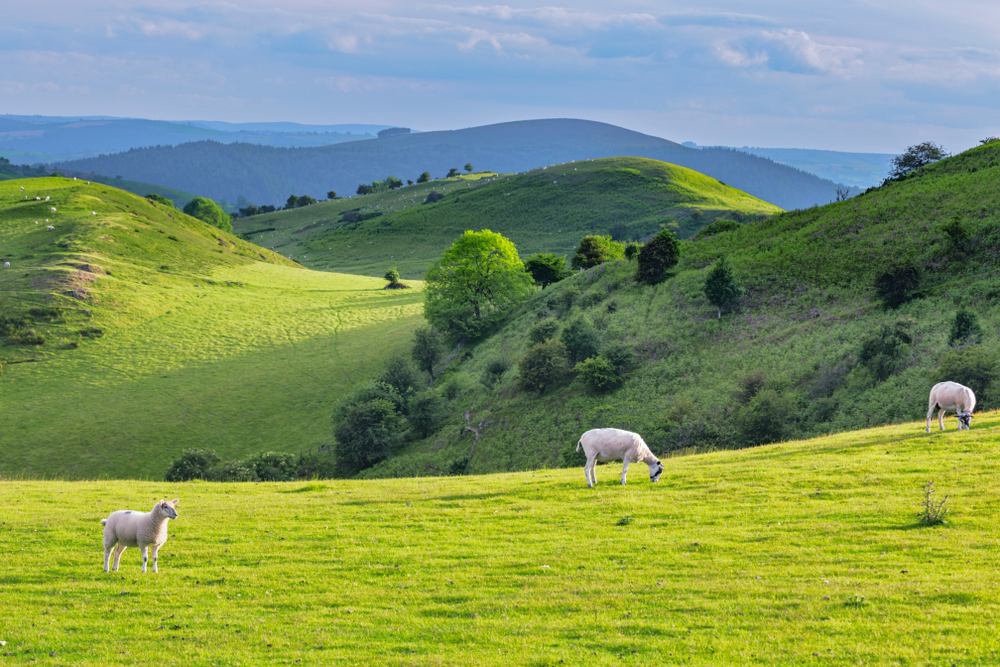
The Shropshire Hills are one of 38 “National Landscapes” in England and Wales. Photo: Shutterstock
What Makes Shropshire So Special?
Most Americans visiting the U.K. tend to stick to London, the Cotswolds, and maybe Edinburgh. Shropshire is a hidden gem on the western edge of central England, bordering Wales, and almost no international visitors find it—which is exactly why it’s worth going.
Officially designated as an “Area of Outstanding Natural Beauty,” Shropshire has medieval market towns, Iron Age hillforts, Bronze Age stone circles, proper English pubs that haven’t been renovated for tourists, plenty of castles and historic houses, and some of the most genuinely wild-feeling walking country in England. It’s also significantly cheaper than the Cotswolds, less crowded than the Lake District, and more honest-feeling than both. If you’ve already seen the U.K.’s greatest hits and are in search of a real-life adventure, Shropshire should be on your radar.
What to See and Do
Don’t miss
Church Stretton and the hills that surround it. This small market town sits in a narrow valley so completely enclosed by hills that the Victorians nicknamed it “Little Switzerland.” They also built a spa here in the late 1800s, convinced that the air, scenery, and local spring water had restorative properties. For a time Church Stretton was a resort destination, drawing visitors from the industrial cities of the Midlands who came specifically to take the waters and walk the hills. The spa is long gone, but the water is still there, and the town retains a genteel, slightly out-of-time quality that’s genuinely appealing: good independent cafés, a small market, and the sense that it hasn’t tried too hard to modernize.
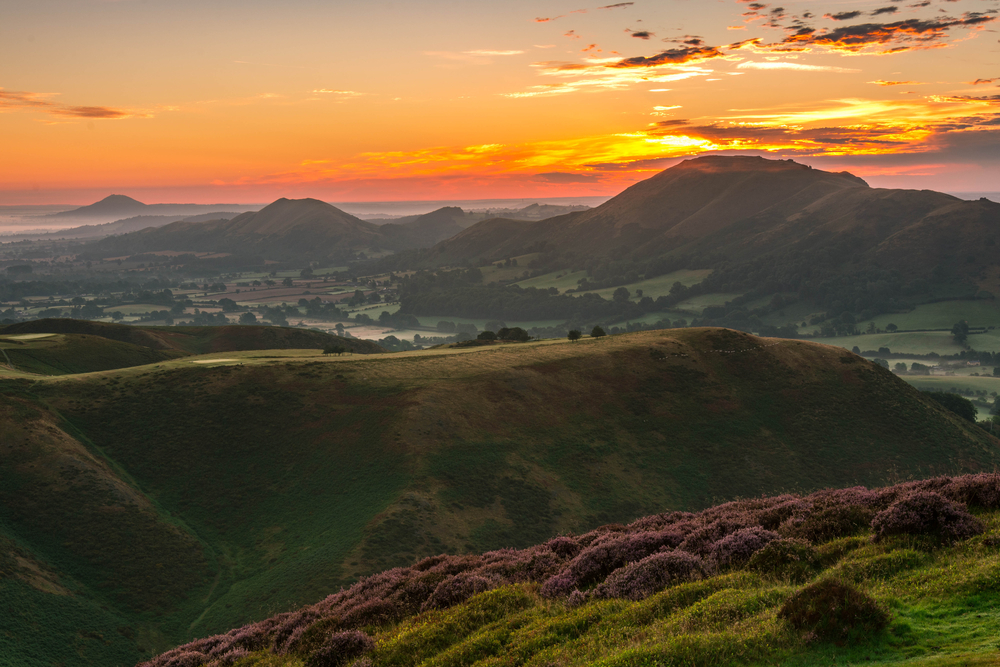
Atop the Long Mynd, you’ll have views all the way to Wales. Photo: Shutterstock
The reason to base yourself here, though, is what’s immediately outside the town. The Long Mynd—a high moorland plateau directly to the west—is one of the finest walking landscapes in the English Midlands. It offers views across into Wales and over the Shropshire plain that feel vast and genuinely wild, the kind of landscape that makes you understand why J.R.R. Tolkien, who knew this part of England well, imagined Middle Earth the way he did. A steep single-track road climbs from the town to the plateau—the drive is dramatic and a buttock-clenching experience in itself—or you can walk up through Carding Mill Valley, a National Trust-owned locale that cuts straight up into the moorland from the edge of town. Go in the late afternoon when the light turns golden across the heather and you’ll be more likely than not to see wild ponies. There’s a gliding club on the plateau, and the sight of silent gliders turning overhead against a wide sky adds an almost surreal quality to the experience.
A few miles south of the town, and equally worth half a day, is Acton Scott Heritage Farm—a working Victorian farm that has been in the hands of the same family for nearly 900 years and operates exactly as it did in the 19th century. Enormous Shire horses still work the land. Shropshire sheep, Dairy Shorthorn cattle, Gloucester Old Spot pigs, and Dorking chickens roam the yard. Blacksmiths, wheelwrights, butter-makers, and spinners demonstrate their crafts. This is not a theme park re-creation of agricultural history but an actual farm, doing actual farm work, in the actual landscape it has always occupied.
Don’t bother
Ironbridge Gorge. Ironbridge is historically significant—the Iron Bridge, built in 1779, was the world’s first cast-iron bridge and a landmark achievement of the Industrial Revolution—but the visitor experience is fragmented across multiple museums spread along the gorge, and therefore a bit confusing. The National Trust has recently acquired the site and has big plans for improvements, but for now it’s best avoided.
Most underrated place
Bishop’s Castle, a tiny, unpretentious market town in the far southwest of the county that most visitors—British or American—never reach. It has two of England’s oldest surviving brewpubs (the Three Tuns has been brewing on the same site since the 17th century), some genuinely eccentric local character, good access to quiet hill walking, and a pace of life that feels like England before it discovered tourism. Friday is market day. One of the most charming and unexpected features of the town is the Poetry Pharmacy, where instead of sleeping pills, anxiety medication, or multivitamins you are “prescribed” poetry that calms, inspires, brings joy, or offers courage—whatever is needed for each person’s individual situation. Browse around yourself or for true immersion, book a consultation in the treatment room.
Hidden gem
Mitchell’s Fold Stone Circle, a Bronze Age stone circle out on open moorland on Stapeley Hill, near the Welsh border. Almost no tourists ever find it. You park at the end of a farm track and walk about 15 minutes uphill through heather to reach it—no entrance fee, no ticket booth, no interpretation panels, no gift shop. Just ancient stones on a windy hill with views across into Wales. Travelers who’ve paid to queue at Stonehenge are often surprised to find something like this that you can walk up to and touch, completely alone, for free.
Cheap thrill
Climbing up Caer Caradoc from Church Stretton. Hiking to the Iron Age fort at the summit takes about two hours round-trip. It’s a proper climb, but the views from the top are 360 degrees—the Long Mynd to the west, the Stretton valley below, the Welsh hills on the horizon. If this were in the Cotswolds it would have a visitor center, a parking fee, and a three-mile queue; here there’s a muddy car park and a signpost.
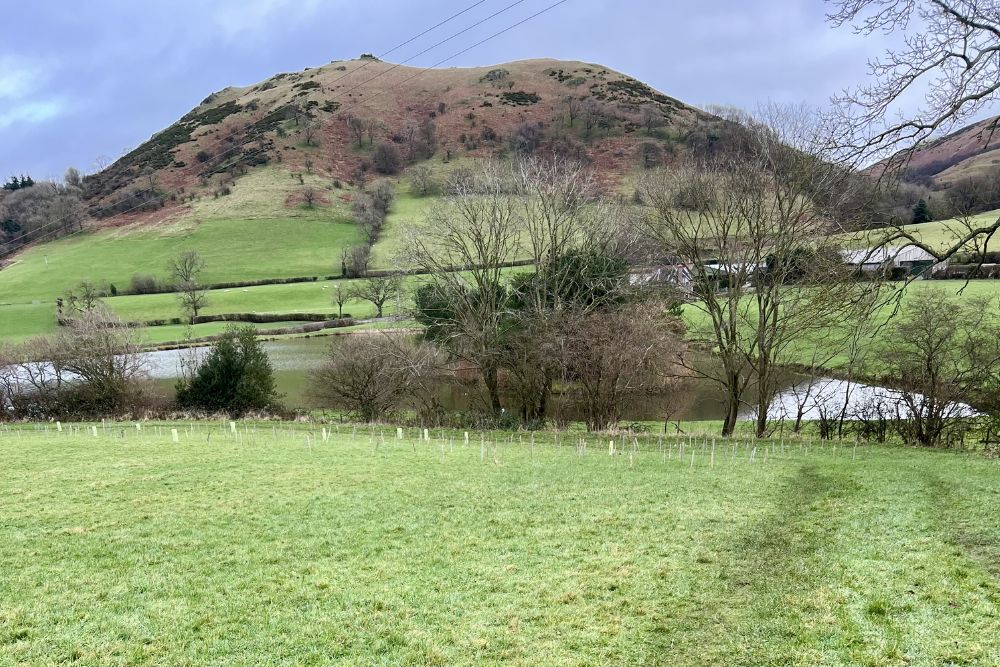
360-degree views are your reward for climbing Caer Caradoc. Photo: Karen Gee
Bragging rights
Stokesay Court is an 80-room Victorian mansion that was made famous in the film Atonement, starring Keira Knightley and James McAvoy. The owner inherited it unexpectedly in the 1990s while living in London, spent thirty years restoring it, opened it to the public, and then at the end of 2025 quietly closed the doors again—unless, that is, Karen is planning your trip. Stokesay’s owner personally welcomes Karen’s travelers for a tour of the house followed by coffee and conversation. She is one of the most engaging storytellers you will encounter, and the house—still half-furnished from the film shoot, its great oak-carved hall intact—is extraordinary.
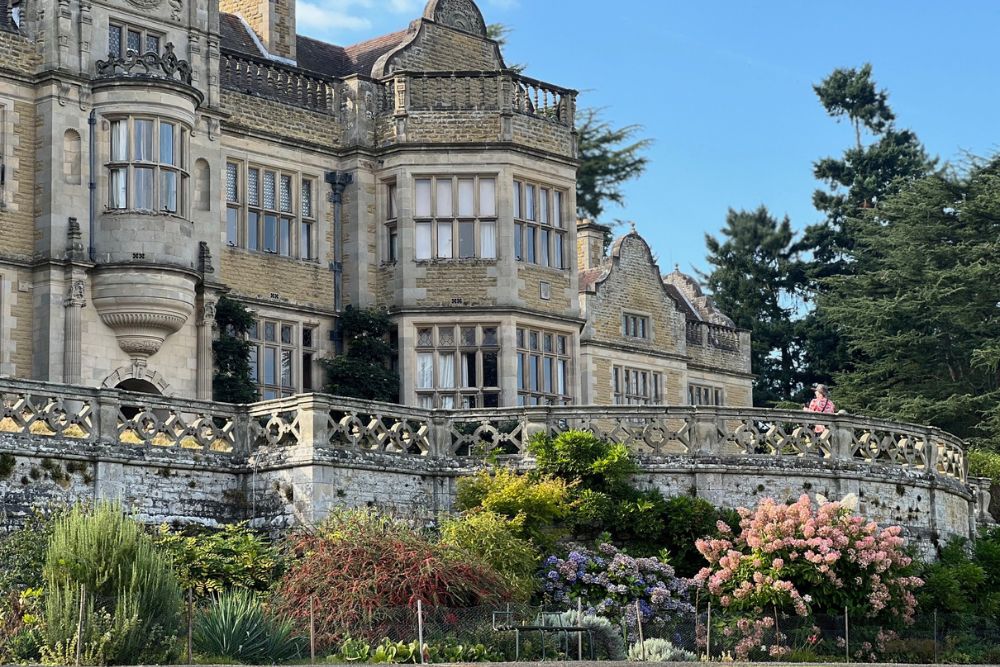
Karen can introduce you to the owner of Stokesay Court. Photo: Karen Gee
The 60-acre gardens at Hodnet Hall are among the finest in England—a chain of seven ornamental lakes and pools, woodland walks, rhododendrons, a 17th-century dovecote, a walled kitchen garden—and open to the public seasonally. Karen can arrange a private tour by the owner himself through gardens that he knows with the intimacy of someone whose family has shaped them across three centuries.
Meet a gentleman who is a retired royal florist, and a personal friend of Queen Camilla since they were fifteen years old. He has letters, photographs, and first-hand accounts that no journalist, biographer, or documentary maker has ever had access to. Spend a private morning with coffee, conversation, and the kind of candid insider perspective on the royal family that you will not read in any book.
How to spend a lazy Sunday
During the week, Shrewsbury is a working town—shoppers, traffic, market traders, school runs. On Sunday it exhales. The streets empty out enough that you can actually look up at the buildings, and what you see is extraordinary: block after block of black-and-white half-timbered Tudor architecture, much of it dating to the 15th and 16th centuries, in better condition than almost anywhere else in England. Start with a slow walk through the medieval street network—Shrewsbury is famous for its narrow lanes and passages called “shuts” and “snickets,” and the street names alone are worth the visit. Grope Lane, Gullet Passage, Butcher Row; these are not modern affectations but names that have survived unchanged for centuries, and they tell you exactly what kind of town this was.
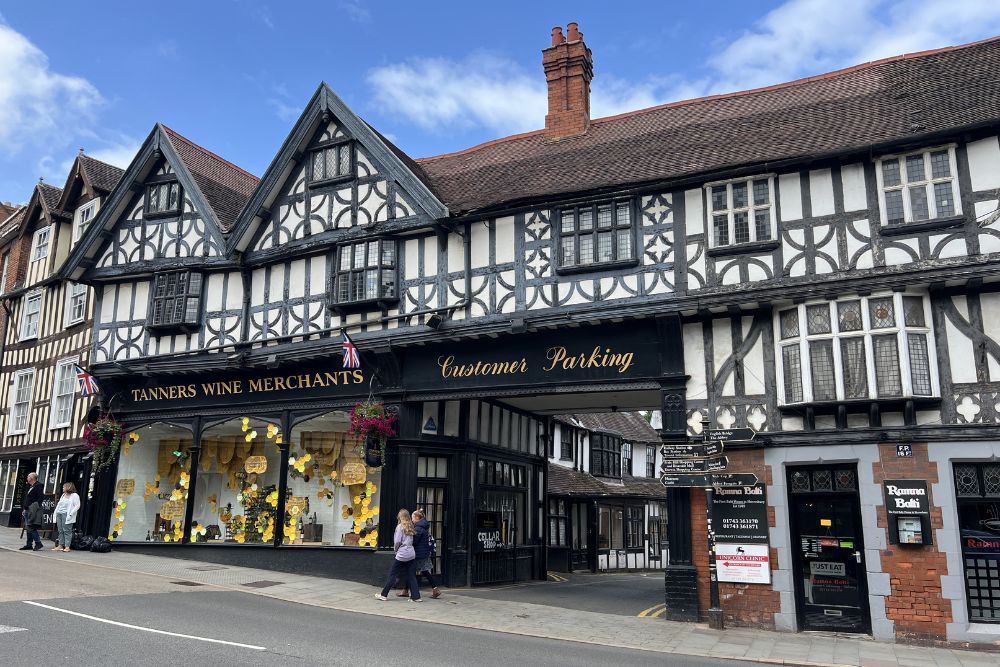
Shrewsbury is home to some of the best-preserved Tudor architecture in England. Photo: Karen Gee
Two particular attractions are worth noting: Shrewsbury Prison is one of the largest surviving Victorian prisons in Britain, built in 1793 and only decommissioned in 2013, and it is indeed arresting—the scale of the place, the Victorian landings, the execution room presented without melodrama. Guided tours run every day starting at 10:00am, led by former prison officers, and the combination of history, architecture, and dark atmosphere make these among the more memorable two hours you’ll spend in Shropshire. Shrewsbury Castle, a sandstone Norman fortification dating to 1066 and later remodeled by Thomas Telford, is worth the walk up for the views alone—the grounds are free to enter. Finish with a walk down to the Quarry, a large riverside park along the Severn, and follow the river for as long as you like.
Where to Stay and Eat
Best bang-for-your-buck hotel
Drapers Hall, in Shrewsbury, is a B&B with six individually designed guest rooms in a Tudor building dating to 1483. On the ground floor there’s an excellent restaurant and bar, RHUBARB, that would have a three-month waitlist if it were in London. The building has the kind of age and character that Americans cross the Atlantic specifically to find: wonky floors, centuries of history in the walls, a genuine sense that this place existed long before hotels were even a concept. The rooms have been renovated properly—good beds, good bathrooms—without stripping out the character. Breakfast is a full traditional English, cooked to order. And because it’s in Shrewsbury rather than the Cotswolds, the price reflects a place that’s still operating for locals as much as visitors.
Best-value splurge accommodations
If you’re traveling with a group—an extended family, a milestone birthday party, a gang of friends doing England—Weston Park is the answer. It’s a 17th-century stately home set in 1,000 acres of Capability Brown-landscaped parkland, and you hire the entire thing: all 27 bedrooms, the butlers, the housekeepers, the chefs cooking from their own walled garden. While you’re there, the house is yours—including the art collection, which contains works by Van Dyck, Constable, Gainsborough, and Stubbs that would be behind ropes in any museum. But you’re not looking at them through a velvet barrier; you’re having breakfast in the same room. The estate was gifted to the nation in 1986 by the Earl of Bradford and is now run by a charitable trust, which means it operates with heritage preservation in mind rather than as a commercial hotel. So for a group of 27, a night at Weston Park can cost less per person than a decent hotel room in New York City.
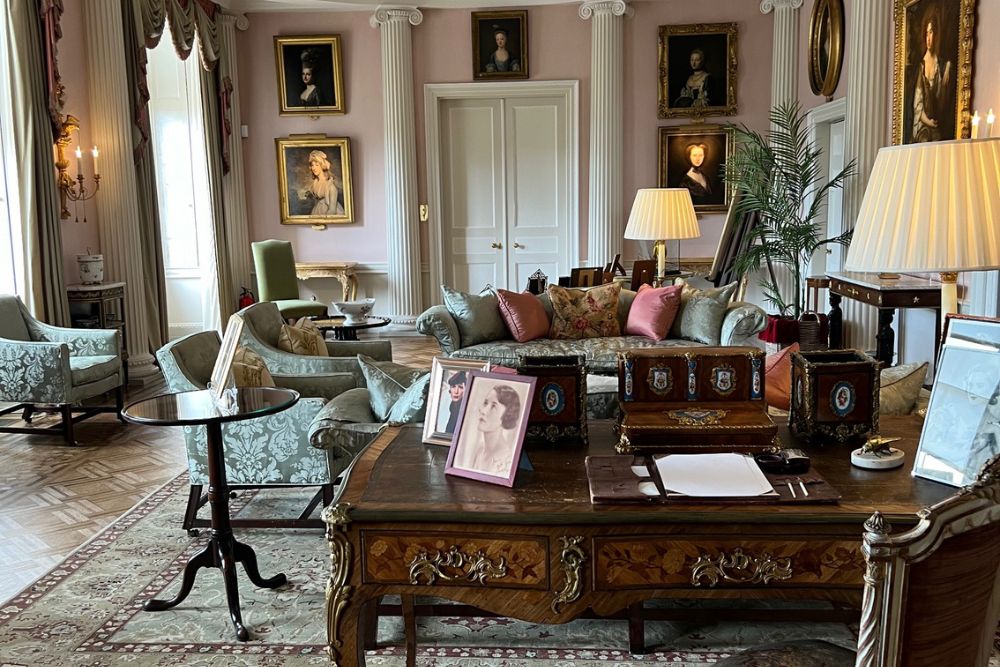
Traveling with a group? Take over all 27 bedrooms at Weston Park. Photo: Karen Gee
Restaurants the locals love
Chapter 66 is a breakfast and lunchtime spot inside Ludlow Castle, serving a simple menu of locally sourced seasonal food with a seriousness that goes well beyond what you’d expect from a café. Chef Damien McNamara works closely with Ludlow-area farmers and producers, and the cooking is careful and properly considered. The setting—a terrace overlooking the medieval ruins—is hard to beat. If your visit happens to overlap with the monthly dinner, Karen highly recommends it (and can book your spot).
The Bear Inn is a 16th-century coaching inn in the quiet village of Hodnet that was completely renovated in 2021 into one of the best gastropubs in the county: Produce from Hodnet Hall’s walled garden across the road and butcher’s cuts from their own cattle have helped earn the inn two AA Rosettes and a Michelin Guide listing. The atmosphere is genuinely cozy—exposed beams, log fires, original art—without feeling staged. It’s worth the detour from the main tourist trail, and there are twelve bedrooms if you want to spend the night.
The Armoury in central Shrewsbury is the kind of place that does everything well without pretension—fish and chips, a very good Sunday roast, eight handpumps of local ale, an impressive whisky collection, and a daily-changing menu of fresh British food. In summer, the riverside terrace is one of the best places to eat in Shrewsbury. It can get busy, so go at lunch on a weekday if you can.
Dish to try
A Shrewsbury biscuit. Think of it as a buttery, crumbly shortbread cookie flavored with lemon zest and currants. What makes it worth seeking out is the history: the biscuit originated in Shrewsbury in the 16th century and was carried to America by early colonists—so an American visitor is actually tasting something that their own food culture descended from. Shrewsbury biscuits have received Protected Geographical Indication status, the same EU designation that protects Champagne and Parmigiano Reggiano, which tells you how seriously the locals take them. Buy them from a bakery or deli rather than a supermarket; the difference in texture and flavor is significant.
Meals worth the splurge
The Walrus. Chef/owners Ben Hall and Carla Ernst run a tight, ambitious, modern British restaurant in Lower Claremont Bank, listed in the Michelin Guide and ranked among the top three restaurants in Shrewsbury. Start with drinks at the upstairs bar, then order the tasting menu with the wine flight and watch the chefs work in the open kitchen. The cooking makes intelligent use of Shropshire’s larder and the service is warm without being stiff.
Ludlow has had more Michelin stars by population than almost anywhere in England, and while the restaurant scene has changed over the years, the food culture and supplier network that created that reputation remain. Mortimers is currently the best option for a serious dinner—modern British cooking using the local ingredients that Ludlow is known for. Book ahead, especially on Friday or Saturday nights, and ask for a window table. For those used to New York or San Francisco restaurant prices, even this splurge will feel reasonably priced.
Prime picnic spot
Carding Mill Valley. The valley is owned by the National Trust (England’s equivalent of a conservation land trust—free to walk, small parking fee) and the lower section gets busy on weekends and holidays. But walk 25 minutes up the valley floor, bear right onto the open moor, and you’ll find flat grassy spots above the stream with views back down to the hamlet of Church Stretton and across to Caer Caradoc. Pick up food from Saxtons, the award-winning deli in town, before you go. On a clear day, this is one of those quietly perfect English moments.


Get a Personalized Trip Recommendation
For a travel solution tailored to your trip goals and preferences, click this green box.

Best Time to Go
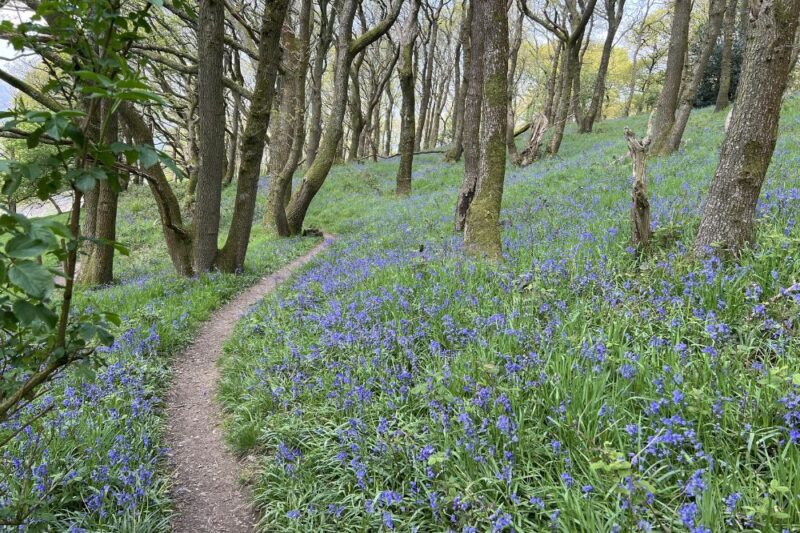
Late April through September. In late April and May, the countryside is at its most vivid green, the bluebells are out in the woodlands, the days are lengthening fast (daylight until nearly 10:00pm by June at this latitude), and the crowds haven’t yet arrived. June is quietly excellent. July and August are, technically, peak season—but peak season in Shropshire means National Trust car parks fill up on sunny weekends and you have to book ahead for restaurants. It is not, by any stretch, peak season in the way that London or the Cotswolds experience it. September is the most underrated month of all—the summer visitors have gone, the schools are back in session, the light turns golden, the hills take on early autumn color, and everything is noticeably quieter and cheaper.
Worst Time to Go
November to February, excluding Christmas and New Year’s. A number of the independent restaurants, small hotels, and rural attractions that make Shropshire special shut down for several weeks in the depths of winter—a common practice for small businesses in rural England. You can find yourself driving through beautiful scenery with almost nowhere to eat dinner. And since it gets dark at 3:00pm, there’s less time to feast your eyes on the stunning countryside.
If a winter visit is your only option, aim for the weeks around Christmas, when there are atmospheric markets and special festive events in the area’s historic houses, and everywhere feels dark (in a good way) and nicely Dickensian. Or wait until early March, when things start reopening.
Biggest Rookie Mistake
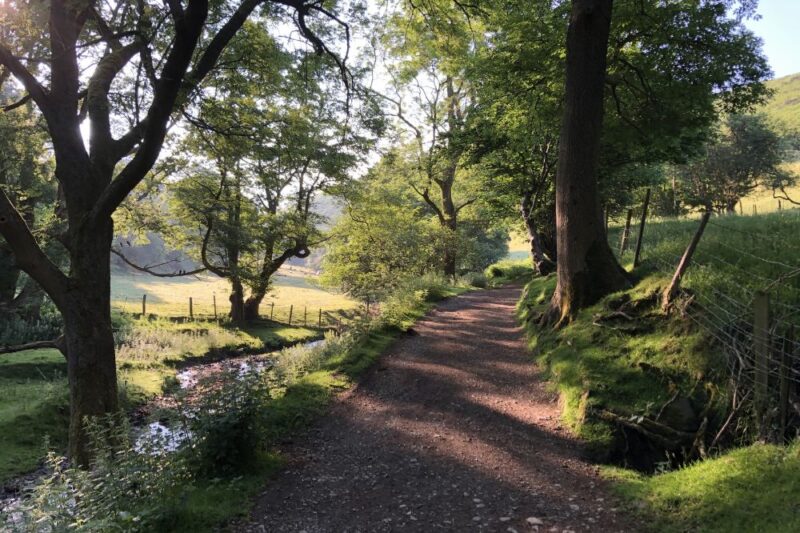
Trying to do too much in a single day. Shropshire looks manageable on a map, but the roads are almost entirely narrow country lanes and winding two-lane roads through hilly terrain. What looks like a 20-minute drive between two towns is often 45 minutes, especially if you get stuck behind a farm vehicle. Travelers who try to do Ludlow, Shrewsbury, and a walk in the Shropshire Hills in one day end up rushing everything and enjoying nothing. Pick a base—Ludlow if food and architecture are your priority, Church Stretton if you want to hike, Shrewsbury if you want a proper historic town—and explore outward from there rather than trying to cover the whole county.
Can't-Miss Photo Op
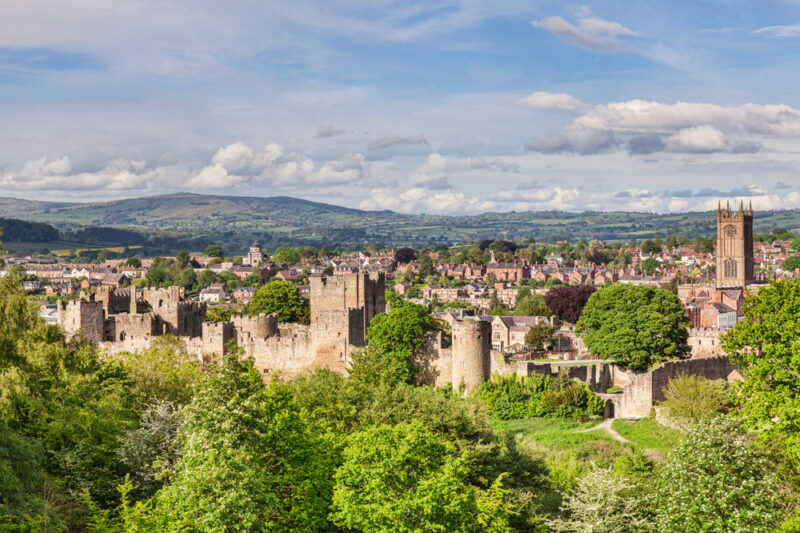
Ludlow Castle from the south bank of the River Teme, in the early morning. Cross Ludford Bridge (the medieval stone bridge at the bottom of town) and turn left along the riverbank. After about five minutes of walking you’ll reach a spot where the full south face of the castle rises dramatically above the river, framed by trees on both sides. Before 8:30am the light hits the stonework and there’s virtually no one around. It’s a far more striking image than the standard, square-on castle shot, and you’ll have it entirely to yourself.
The Souvenirs
A copy of A.E. Housman’s A Shropshire Lad. This slim collection of poems was published in 1896 and is one of the most beloved works in English literature. Housman wrote about the hills, the farms, and the towns you’ll have just been walking through, and reading it on the plane home reframes everything you’ve seen. It’s lightweight, inexpensive, and available in any decent bookshop in Shrewsbury or Ludlow.
Alternatively, how about a one-of-a-kind piece from a local artist at the Made in Shropshire Artisan Fair? This is a carefully curated market is held in the Shrewsbury town square on the second Saturday of every month, featuring independent makers of ceramics, glasswork, jewelry, textiles, and art. If you miss the fair, there are many independent shops and markets in the county where you can buy a “made by a real person” ornament, print, or bangle to take home.
Must-Have Apps
First, a word about connectivity: Don’t expect reliable mobile coverage or WiFi everywhere in Shropshire, and don’t fight it. The county is hilly, rural, and sparsely populated, and there are valleys and stretches where your phone may not show any signal at all. In an era when most of us are permanently tethered to a device, this is a rare and yet unexpectedly liberating experience. Some of the best moments in Shropshire happen when you’re standing on a hillside with no bars, no notifications, and no option but to look at the view. Embrace it.
That said, a little preparation goes a long way—which is where these apps earn their place, precisely because they work offline once set up: If you’re doing any walking, hiking, or mountain biking in Shropshire—and you should be—download OS Maps before you leave home. Ordnance Survey is Britain’s national mapping agency, and the app gives you detailed topographic maps for every walking area in the county. The subscription costs roughly $30/year and covers all of Britain. The footpath network in Shropshire is extensive but not always well-signposted on the ground; having the OS map on your phone is the difference between a confident walk and an anxious one. What3Words is also worth downloading: Every ten-square-foot patch of ground on earth has been assigned a unique three-word address by this app, and emergency services in rural Britain use them.
Airport Intel
The nearest airports are Birmingham (about 50 miles east, with direct flights from several U.S. cities) and Manchester (about 70 miles north, with more transatlantic options). It’s two-and-a-half to three-hour drive from Heathrow, which can make sense if you combine Shropshire with another region such as North Wales or the Cotswolds.
Rules of the Road
The county’s public transport is skeletal, and the best things to see and do are entirely inaccessible without your own vehicle. Driving on the left is less terrifying than it sounds after the first hour; the bigger adjustment is the narrowness of the country lanes. Take it slowly, use passing places when you meet oncoming traffic, and don’t be embarrassed to reverse—locals do it all the time. Keep your tank above a quarter full—rural gas stations are farther apart than you’d expect—and download your maps before heading into the hills. (If all of that sounds exactly like the opposite of a vacation, don’t fret: Karen can hire a private driver to show you around.)
Tipping Tip
In pubs and restaurants, 10% is the norm and will be appreciated. At farm shops, markets, and delis, you don’t tip at all. Hotel housekeeping: £1–2 per night left in the room is generous. The short version: Tip about half what you would at home, and nobody will think worse of you.
Don't Forget to Pack
Waterproofs shoes and layers. Everyone packs a rain jacket for England, but what catches people out is the ground underfoot rather than the sky above. The Long Mynd, the Stiperstones, and most of the best walking in the county involves boggy moorland paths that stay wet even in dry summer weather. Walkers who bring only sneakers spend the whole time picking routes around mud rather than walking freely. Gaiters weigh almost nothing, fold flat, and transform a cautious, wet-footed walk into a confident one.

Stay in the Know With Our Newsletter