
Make Your Next Trip Extraordinary
Rio de Janeiro, Brazil: Insider’s Guide to the City Beyond the Beach
 Rio is a city of natural beauty, from Sugarloaf Mountain to its beaches and parks. Photo: Shutterstock
The insider advice on this page is from one of Wendy’s Trusted Travel Experts for Brazil and beyond: Paul Irvine of Dehouche.
From his home base in Rio de Janeiro, Paul regularly digs up intel on fabulous new hotels, hidden beaches, and wilderness adventures, and constantly checks in with his hand-picked guides, drivers (both cars and speedboats), and private-jet pilots. His connections across the continent open doors for his travelers—imagine bottling your own blend with a winemaker in Mendoza, or taking a privately owned 50s-era Chevrolet for a road trip in Uruguay—and his relationships at the hottest hotels often translate to upgrades for his clients. His vibrant itineraries incorporate as much nature, sea, and culture as possible, although he also likes to leave flexibility in each trip to allow for those spontaneous moments that are often the most memorable. His staff is, of course, on hand 24 hours a day to attend to any client’s need.


The Botanical Gardens are an oasis of calm in the middle of the city. Photo: Shutterstock
What to See and Do
Don’t miss
Nestled under the slopes of Corcovado and Rio’s iconic Christ the Redeemer statue, the Botanical Gardens offer a calmer, more contemplative vision of the city than the beaches or mountain viewpoints that usually dominate postcards. Founded in 1808 by the Portuguese prince regent (and father of the first emperor of Brazil) Dom João VI, the gardens combine imperial grandeur and historic importance with the luxuriant abundance of the Atlantic rainforest, their avenues lined with soaring royal palms, giant water lilies, and rare tropical species gathered from across Brazil and beyond. Monkeys chatter in the trees, toucans dart between the branches, and shaded paths lead past orchid houses, fountains, and quiet ponds where locals come to escape the city’s relentless energy. Though undeniably one of Rio’s classic attractions, the gardens retain an air of serenity and refinement that makes even a brief stroll feel restorative—especially in the early morning, when the air is still cool and the mountains loom through the mist like a painted backdrop.
Don’t bother
Copacabana has an iconic status to foreigners—and it’s probably the most beautiful of Rio’s many beaches, with its perfect horseshoe shape. But those who think it’s still the hottest address in town are behind the times: Ipanema and Leblon are more fashionable these days and thus attract the best restaurants, bars, shops, and cafés. Copacabana has improved a lot in recent years and the Arpoador end (where the Hotel Rio Emiliano is located—see “Hotel worth the splurge”) is actually a great place to base yourself, with views of Sugarloaf while still just a short walk to Ipanema. The far end by Avenida Princesa Isabel, though, remains a little seedy, especially late at night. If you do want to see what all the fuss is about, go to the Copacabana Palace for their legendary Sunday brunch by the pool (see “How to spend a lazy Sunday”).
Hidden gem
World-famous landscape architect and artist Roberto Burle Marx drew on local flora and modernist themes to create “living works of art” in the Guaratiba neighborhood, on the western edge of Rio. Paul can organize a private tour of this UNESCO-recognized tropical garden.
Most underrated place
Most travelers come to Rio for the beach and party scene and don’t even consider the amazing rainforest nearby. Visit Floresta Tijuca, said to be the world’s largest urban forest, for hiking, waterfalls, and monkeys—all right in the middle of the city.

In Tijuca National Park, you can go hiking without leaving Rio proper. Photo: Shutterstock
Cheap thrill
One of Rio’s quintessential experiences is completely free: the beach! Any Carioca (Rio resident) will wax lyrical about the democratic merits of the many miles of sand that hem the coastline—once those skimpy bathing costumes are on, everyone is equal, from telenovela star to favela resident. The Rio beach is about so much more than getting a tan and cooling off in the ocean. This is the place to socialize, to eat and drink, to play ball games, and of course to take part in the most popular Carioca pastime of all: flirting. Different tribes have their different patches, be it the trendy surfers of Posto 9 or the families of Posto 11 (postos are the numbered lifeguard stations that demarcate the beach), so pick your spot, pull up a deck chair, and enjoy the show.

Pick your posto and lay down your towel on Ipanema Beach. Photo: Shutterstock
Big thrill
Rio is one of the most spectacular cities in the world to see from above, but there’s no need to fork out the big bucks for a helicopter ride; try your hand at a spot of hang gliding to enjoy the same bird’s-eye view while you ride the thermals 1,500 feet above the city’s Tijuca rainforest.

Hang gliding is a popular—and thrilling—way to gain an aerial view of the city. Photo: Shutterstock
Bragging rights
For those after the full Carnaval experience without necessarily visiting during Carnaval, Paul can arrange for a private show by one of Rio’s top samba schools at any time of year; this can even take place in the villa that used to belong to samba legend Elis Regina (which is off-limits to the public), adding an invaluable historical background to the evening.
Famous Brazilian contemporary artist Marcos Chaves will serve as your host for a day of private viewings at galleries and studios, where you’ll meet some of the artists, curators, and gallery owners that are part of Rio’s flourishing art scene. If you’re already a collector, this is a chance to get ahead of the curve and spot the next big thing.
Paul has an exclusive arrangement with the bar halfway up Sugarloaf: They rope off a section of the mountain overlooking Copacabana while their top barman leads you through a private master-class in the art of making the perfect caipirinha, Brazil’s national cocktail.
How to spend a Sunday
Grab one of the orange Itaú bikes and cycle to La Bicyclette in the Jardim Botânico for a breakfast of cappuccinos and the best croissants outside France, then take a stroll through these stunning gardens. Next, head to the Copacabana Palace for Sunday brunch. The buffet is packed full of delicious seafood, the (admittedly hefty) price includes free-flowing Champagne, and the grand setting by the pool will instantly whisk you back to its glamorous heyday in the 1930s. After brunch, hit the beach; on Sundays, one lane of the beach road is shut down, giving space for all manner of Carioca peacocking, from fitness fanatics to chi-chi dog walkers. Leave the bike to join the melee and work off some of your indulgences with a gentle stroll toward the Arpoador fort. Finally, finish the perfect Sunday at the Jockey Club. Walk through the palatial colonial entrance and take the elevator to your reserved table on the upstairs terrace opposite the winning post, where you will have uninterrupted views across the track. Amble down to the leafy paddock, enjoy the view of Christ the Redeemer, and then return to your table to place a bet and watch the drama unfold. On the off chance you start feeling a little peckish again, luck has it that there is a branch of renowned São Paulo steakhouse Rubaiyat within the racetrack grounds.
Where to Stay and Eat
Hotel worth the splurge
Rio Emiliano’s most striking feature is its unique façade, designed by Arthur Casas, with sliding white blinds that provide the balconies with customizable shade and privacy. This feature, together with the fact that no buildings overlook the rooftop swimming pool, make the hotel a top choice in the city. The design is clean and simple (more minimalist than the Fasano, for example) but the use of vertical tropical gardens, Brazilian designer furniture, and wooden flooring ensures there is still a strong sense of place. The overall effect is a happy medium between sleek city hotel and laid-back beach resort. Rio is not always known for its sleek service, but the Emiliano bucks the trend on this front too, with incredibly switched on (and implausibly good-looking) butlers assigned to each room. All of Paul’s travelers receive a free 15-minute massage and complimentary Havaianas sandals.
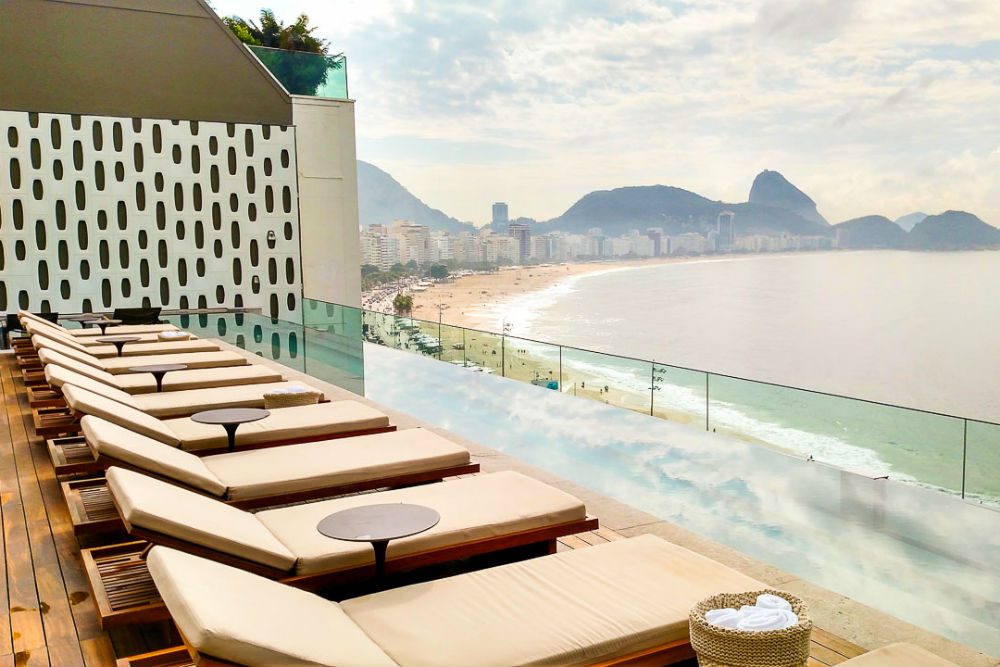
The Rio Emiliano’s rooftop swimming pool has an unbeatable view. Photo: Rio Emiliano
Restaurants the locals love
Rio has its fair share of famous steak and barbecue houses, but one in particular is almost entirely overlooked by most visitors to the city—the humble Churrascaria Majorica in the Flamengo neighborhood. The atmosphere is 100% local eatery rather than fancy restaurant, and its Picanha Especial may just be the best steak in Rio.
Elena is definitely Rio’s most sceney restaurant and one that few tourists know about—yet. Its food—Asian fusion with Brazilian ingredients—is very good. The rooftop vibe and live music on weekends only add to its allure.
Venture even farther from the hallowed beaches of the Zona Sul to the Sao Cristovao neighborhood and Aconchego Carioca, set in a tumbledown colonial townhouse. The owners were among the original pioneers of the gastronomic revolution that put traditional Brazilian cuisine back on the menu of the country’s top restaurants. This place mainly focuses on northeastern cuisine; the camarão na moranga (a creamy shrimp stew served in a pumpkin) is the best you’ll taste this side of Pernambuco. Be sure not to skip past the petisco (bar snacks) section of the menu: Start your meal with a portion of bolinho de feijoada, Brazil’s national dish (feijoada, traditionally a stew of various meats and black beans served with rice) presented in a perfectly executed bite-size fried version; it’s best washed down with a traditional caipirinha or one of the many Brazilian craft beers also on offer.
Bar buzz
The bar scene in Botafogo is both very cool and very local. Places like Quartinho, Calma, Fala Bar, Canastra Rose, and the spots along Arnaldo Quintela offer a peek into the hip, laidback vibe of the city; most offer food, too.
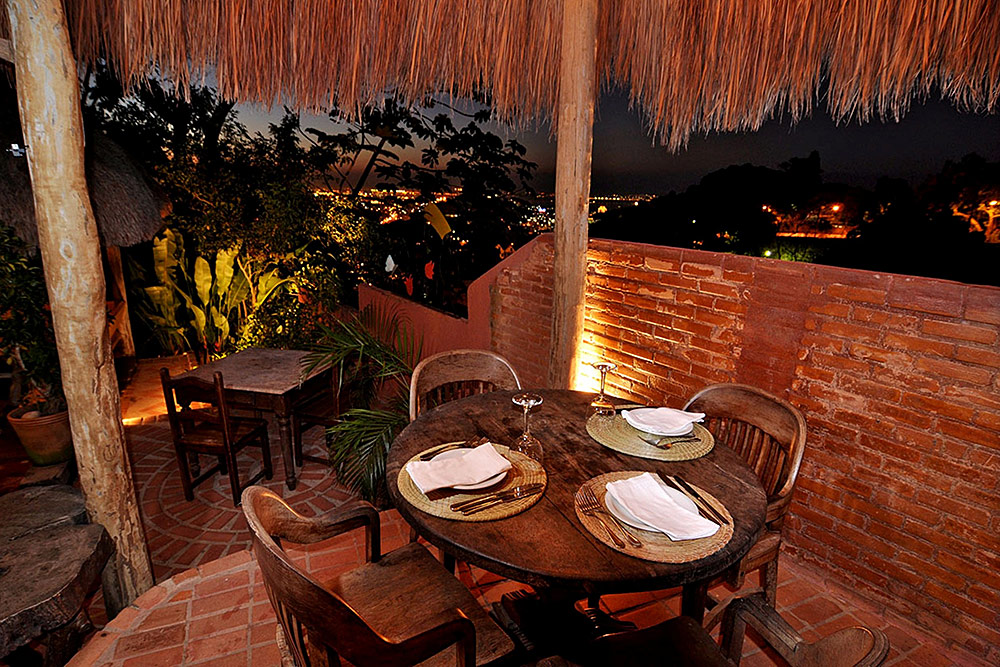
Try the moqueca at Restaurante Aprazível. Photo: Restaurante Aprazível
Dish to try
Brazil’s cuisine is very regional. Minas Gerais, for example, is famous for its hearty stews and slow roasts, and Rio Grande do Sul for its barbecue houses or churrascarias. In its assumed role as the country’s cultural capital, Rio has great examples of all these, but perhaps the most unusual cuisine for a first-time visitor is that of Bahia, where West African influences contribute liberal use of coconut milk, dendê (palm) oil, and hot chilies. The quintessential Bahian dish is moqueca, a fish stew with a rich coconut sauce, eaten with crunchy farofa (toasted cassava meal), fluffy white rice, pirao (fish paste), and copious amounts of hot sauce. Restaurante Aprazível, in Santa Teresa, serves a particularly good version. Perhaps it’s the spectacular hilltop setting or the unusual Amazon-village-meets-colonial-mansion decor, but somehow this one hits the spot every time.
Meal worth the splurge
Long gone are the days when Rio lingered in the shadow of São Paulo when it came to gastronomy. The Cidade Maravilhosa now has several fine-dining establishments that can more than hold their own on international terms, among them Oteque in Botafogo. Having trained in London and run an acclaimed restaurant in his native São Paulo, chef Alberto Landgraf finally chose Rio for his passion project, overseeing every detail from the laidback minimalist décor to the Carioca-chic playlist. But, of course, it is the cuisine where Alberto’s talent really shines, with a changing eight-course tasting menu highlighting the best of Brazilian produce. Refreshingly for Rio, the abundant fresh local seafood also plays a starring role. In 2020 the restaurant earned its second Michelin star, one of only four restaurants in Brazil to hold this accolade.
Paul can also arrange for Alberto to take travelers on a private tour around some of his favorite foodie destinations, including local markets and hole-in-the-wall eateries, before sitting down at Oteque’s chef’s table for an evening to remember.


Get a Personalized Trip Recommendation
For a travel solution tailored to your trip goals and preferences, click this green box.

Best Times to Go

January and February (except Carnaval): It’s summer, there are a lot of events and parties going on, and Cariocas are at their most relaxed. Temperatures regularly hit 105 degrees, though, so if you suffer in the heat, the next-best time of year is May through August. Though this is technically the winter, the thermometer rarely drops below 75, and it’s also the driest period. There are often off-season festivals and events (literary, gastronomic, jazz) that attract mainly Brazilian crowds. It’s also a great time of year to combine your Rio holiday with a trip to the Pantanal or the Amazon.
Worst Time to Go
Unless you are specifically after a crazy-party experience of world-class proportions, then for goodness’ sake, don’t come for Carnaval. Hotels have minimum stays, and prices are three times the normal high-season rates. On top of this, traffic is terrible—streets are blocked off for blocos, or street parties—and the samba plays all night long.
Biggest Rookie Mistake
People tend to allot too little time to Rio; to be able to glimpse the real Rio, you need to spend a couple of days on the beach and a day or two exploring the city’s sites. This isn’t a city that you can capture the flavor of in a single overnight on the way to Bahia or the Amazon or Iguaçu Falls (never mind that those places are all a good distance away, given Brazil’s size).
Instagram Moment

Rio is so often photographed that it’s going to take a little more than the standard Christ the Redeemer shot to push your Instagram likes into triple figures, so if you are looking for something just as spectacular but more original, head to the Vista Chinesa at the golden hour (preferably sunset, although the silhouettes at dawn can also be spectacular). This Chinese pavilion, tucked high in the Tijuca Forest, has a vantage point over the whole of the Zona Sul, including Corcovado, Sugarloaf, and the lagoon.
Prime Picnic Spot
With acres of tropical forests—complete with hidden waterfalls—right in the city, as well as numerous mountaintops and public parks, Rio is not short on spectacular picnic spots. For something different, head over to Niteroi, the city that sits across the Guanabara Bay from Rio. It’s worth a trip anyway to visit the famous Oscar Niemeyer–designed Contemporary Art Museum. After seeing the exhibitions, take a cab up the hill to the Parque da Cidade and picnic by the hang-gliding ramp, which has one of the most spectacular—and least known—views of Rio. You can see every major peak of the city (Sugarloaf, Corcovado, Pedra da Gavea), all lined up on the far side of the bay.
The Souvenirs
A bottle of cachaça and a wooden cocktail muddler for making caipirinhas. The best caipirinhas are made with simple (i.e. cheap) cachaça that you can pick up in any supermarket, but bringing back a bottle of artisanal cachaça from a small distillery might impress your friends more. Academia de Cachaça in Leblon has a great selection.
For kids (and adults!), the ubiquitous Havaianas flip-flops are a fail-safe gift—of course, they are available back home, too, but in Brazil you can find them in a dazzling array of designs for a third of the price.
Word of Warning
Don’t book a taxi from the service desks inside the arrivals area at the airport; the drivers usually try to charge two or three times the actual cost of a run from the airport to downtown. Instead, take a yellow taxi from the taxi queue outside the terminal.
Must-Have Apps
Rio has a network of free bikes; download the Bike Itaú app to use them.
When you need a ride, Uber is the way to go.
Today the most popular payment method in Brazil is Pix, which enables small vendors to take payments with a personal key. This is very convenient for locals but can be a nuisance for visitors. However, the Paysend app has an option to pay via Pix using your credit card.
And of course, as everywhere these days an eSim for local data is essential—Paul says Nomad and Holafly are the best.
Tipping Tip

In restaurants, it’s common to tip 10 to 15% depending on how happy you are with the service. Most restaurants add a service charge, though, in which case you do not need to tip extra. Brazilians do not tip taxi drivers, but you can round up to the nearest real.
Airport Intel
If it’s busy and your flight time is fast approaching, skip directly to the front of the line—it’s expected! (Likewise, don’t make a scene if someone does this to you.)
Don’t Forget to Pack
A sweater or shawl. Yes, it’s always warm in Rio, but the restaurants are freezing.

Stay in the Know With Our Newsletter