Make Your Next Trip Extraordinary
Thailand Like You’ve Never Seen Before: Insider’s Guide
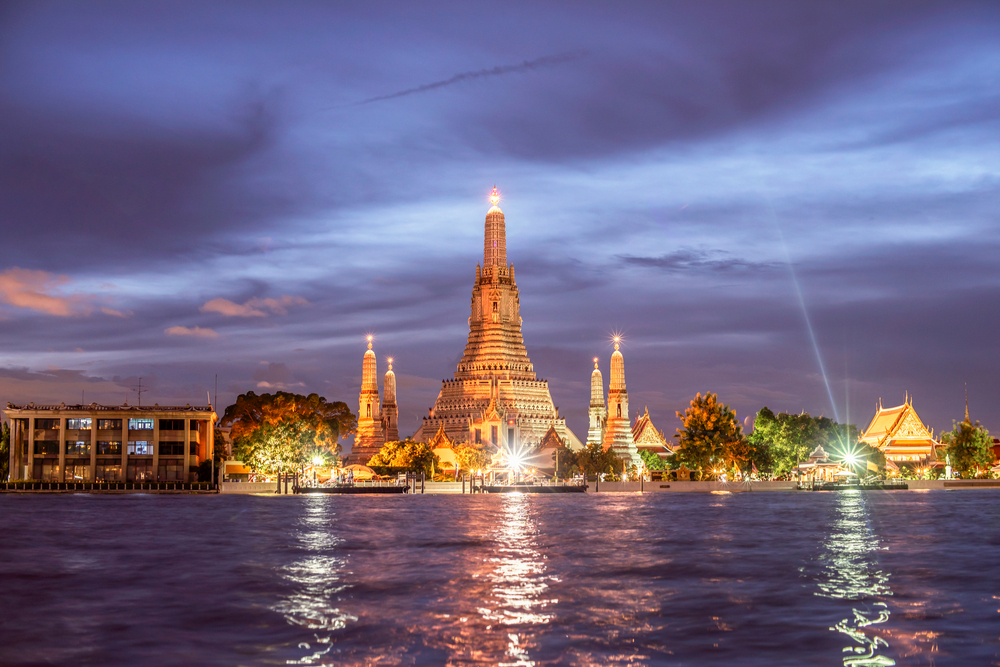 Bangkok's Wat Arun is a gleaming spire at night. Photo: Shutterstock
The insider advice on this page is from one of Wendy’s Trusted Travel Experts for Thailand: Daniel Fraser of Smiling Albino.
This Thai-speaking Canadian got his start in Asia working for the Thai royal family more than 25 years ago and is now well-known as a TV host. With that celebrity comes the ability to open all sorts of doors in the country that others can’t (private lunches in the homes of famous architects and designers, exclusive tours of Bangkok’s underground art scene), either as a stand-alone half-day excursion or as part of a soup-to-nuts multi-day itinerary. In a region where tourism is booming, Daniel has a variety of tricks up his sleeve to keep travelers far from the hordes—whether that’s getting a private monk blessing in Wat Pho and entry to famous landmarks before they are open to the public, or visiting artisans’ workshops that are accessible only by boat. He has offices in Cambodia, Vietnam, and Laos, and is equally adept at delivering authentic local experiences there too.
What to See and Do
Most overrated place
Over-hyped hotel rooftop bars in Bangkok. They’re famous, sure, but you’ll have to wait in line, purchase a very expensive drink, and then jockey for space. Instead, Dan can recommend great bars, with great views, that are away from the masses.
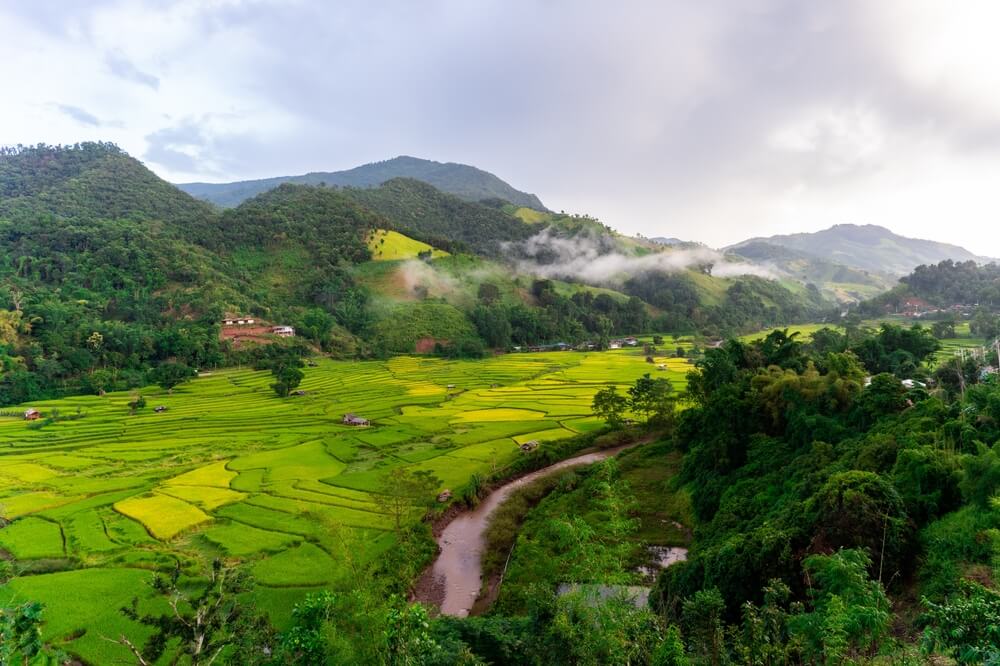
The rural landscape of Nan province includes rice paddies and mountains. Photo: Shutterstock
Most underrated places
The Nan province blends gentle rural life with a heritage that rivals its more famous neighbors and delivers some of northern Thailand’s most rewarding cultural and natural experiences. The capital’s centerpiece, Wat Phumin, holds 18th-century murals that are regarded as among the nation’s finest. Outside town, Nan’s mountains conceal waterfalls, national parks, and minority communities of Tai Lue, Hmong, and Mien. Tai Lue villages still weave bold indigo textiles, Hmong communities craft silver jewelry and embroidered costumes, and the Mien preserve intricate cross-stitch and Taoist rituals.
The province of Loei is a magical place of both adventure and tranquility squeezed between Thailand’s northern mountains and its vast agricultural plains of Isan. Chiang Khan, the province’s riverside gem, charms with teakwood architecture and lantern-lit evenings, offering a glimpse of Thailand untouched by tourism. Beyond town, vineyards, wildflower fields, and quiet national parks provide opportunities for hiking, cycling, and exploration.
If islands are your thing, there are plenty that have yet to see the rush of speedboats and convenience stores. Ko Mook, Ko Phra Thong, and Ko Libong have spectacular scenery—white sand, blue water, vibrant island vibes—but offer barefoot elegance in four-star accommodations that make them a perfect add-on to a luxurious stay in the more famous Phuket or Krabi.
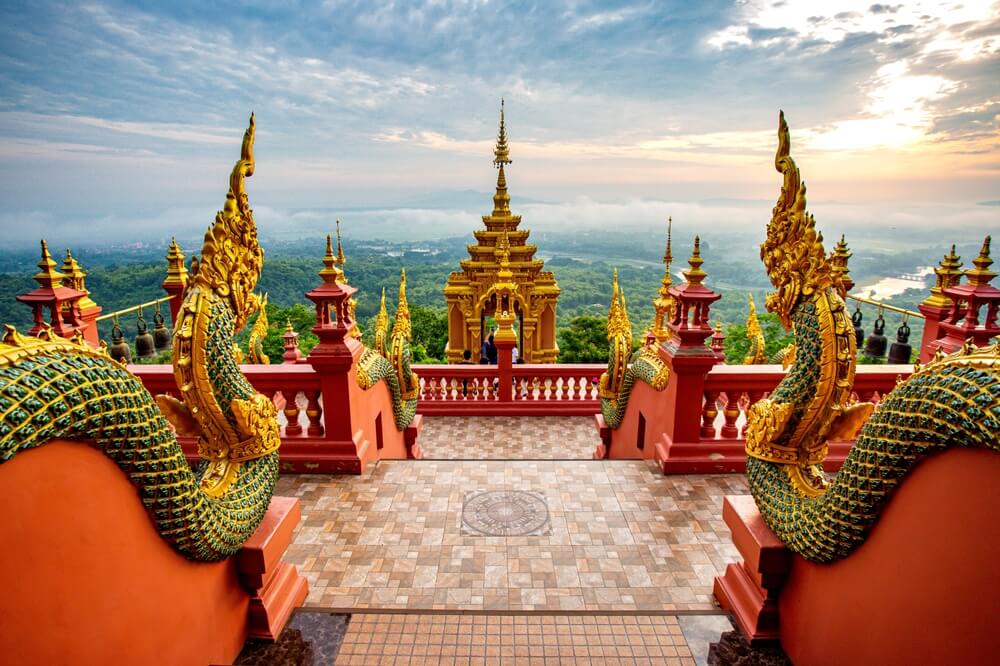
The Wat Phra That Doi Phra Chan temple sits high in Lampang Province. Photo: Shutterstock
The picturesque town of Lampang is overlooked by most travelers to northern Thailand. Established during the Lanna Kingdom, it was always a bit of a backwater compared to Chiang Mai and Chiang Rai, but it became a major teak-logging and trading center in the late 19th and early 20th centuries. Louis T. Leonowens (son of Anna from The King and I) made it his home when he set up a teakwood trading business. The town itself resembles Chiang Mai as it was 50 years ago, with large teakwood mansions shaded by ancient trees, as well as spectacular wooden temples established by Burmese woodcutters to ask forgiveness from the forest spirits. Two weekend markets alternate on either side of the river, offering a large selection of authentic northern Thai arts, antiques, crafts, and edibles.
Hidden gems
Wat Suwannaram, in Bangkok, has original wall murals created by the two top artists in Siam in the early 1800s—the works are considered masterpieces of the Rattanakosin era—and .01% of the tourists that you’ll find at better-known temples around the city. Of note to fans of The White Lotus television series: The beautiful opening credit sequence for Season 3, which takes place in Thailand, used murals from this temple. Dan’s guides can point them out to you—or let you find them yourself.
The serene setting of Wat Ratchabophit is only steps from the Grand Palace but miles away in terms of crowds. With its distinct circular cloister, dramatic angles, and ornate architecture that sparkles in the afternoon sunlight, it is the embodiment of a hidden gem.
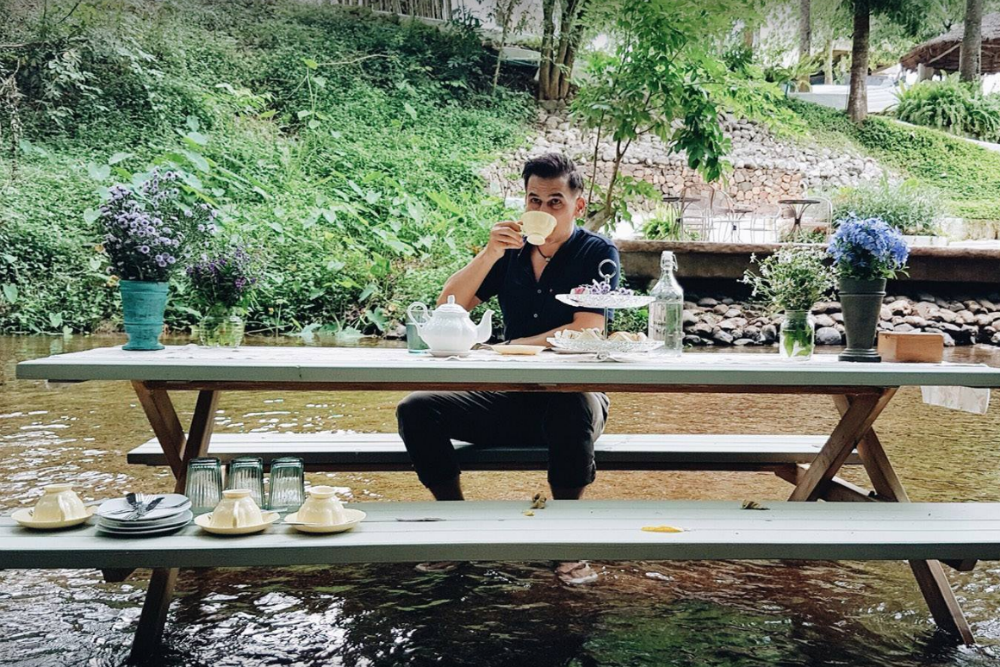
Our WOW List expert can arrange private picnics in idyllic locations across Thailand. Photo: Smiling Albino
Prime picnic spots
Bangkok was once known as the “Venice of the East,” and you can still conjure up the atmosphere that earned it that nickname with a picnic in a sala (gazebo) on a private canal pier. Watch the slow-paced canal life pass by while enjoying a great lunch from a nearby market or, for something a bit fancier, a five-star hotel.
Wiang Kum Kam is a historic settlement along the Ping River that predates the city of Chiang Mai. This is a large archaeological site with many beautiful ruins in various stages of restoration. Take a horse cart around the pleasant historical park to Wat Chedi Luang, the first temple of Chiang Mai, where you’ll find a table set up in the shade. Starting with a glass of white wine, enjoy a delicious lunch in an amazing location.
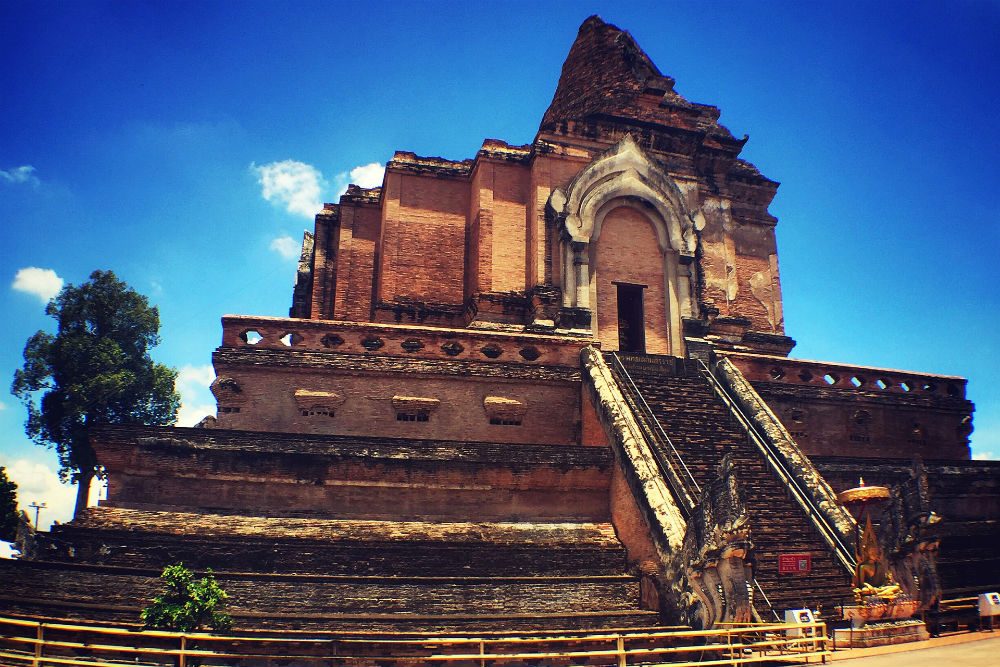
Wat Chedi Luang was the first temple in Chiang Mai. Photo: Pixabay
Cheap thrills
Thai massage: available everywhere, thoroughly relaxing, and at a fraction of the cost for a similar service in the West.
If time allows, consider venturing just outside Bangkok to the surrounding small towns and communities where life still moves at a rhythm unchanged for generations. Linked to the capital by rail or canal boat—a trip rarely costing more than $10—these enclaves boast charming markets and engaging locals that transform a simple day trip into a richly textured cultural experience.
Bragging rights
Visit Bill Bensley and Jirachai Rengthong’s design compound, a quiet oasis in bustling Bangkok. Lek Bunnag, one of Thailand’s leading architects, who has collaborated with Bensley over the years, will join as well. Meet and chat with the three designers who have created some of the most spectacular resort properties in Asia, from Istanbul to Bali. Get a sneak peek at current projects and listen to entertaining stories while enjoying a private lunch catered by Kua Kling, the city’s most authentic and delicious southern Thai restaurant.
Jim Thompson was renowned for the monthly dinner parties he put on for movie stars, politicians, and artists at his Bangkok house, which is now preserved as a museum. Dan can arrange for private cocktails and/or dinner there, hosted by a senior curator, and invite some interesting local luminaries to join you.
In the north, Dan can arrange a rare and intimate encounter with one of his dearest friends, the revered landscape artist Sa-Ngiam Yarangsee, whose monumental canvases grace collections worldwide. Take your place at an easel in front of a majestic mountain setting, a glass of champagne in hand, as Sa-Ngiam shares his techniques and insights. It’s an unforgettable opportunity to create your own work under the guidance of a true master of the form.
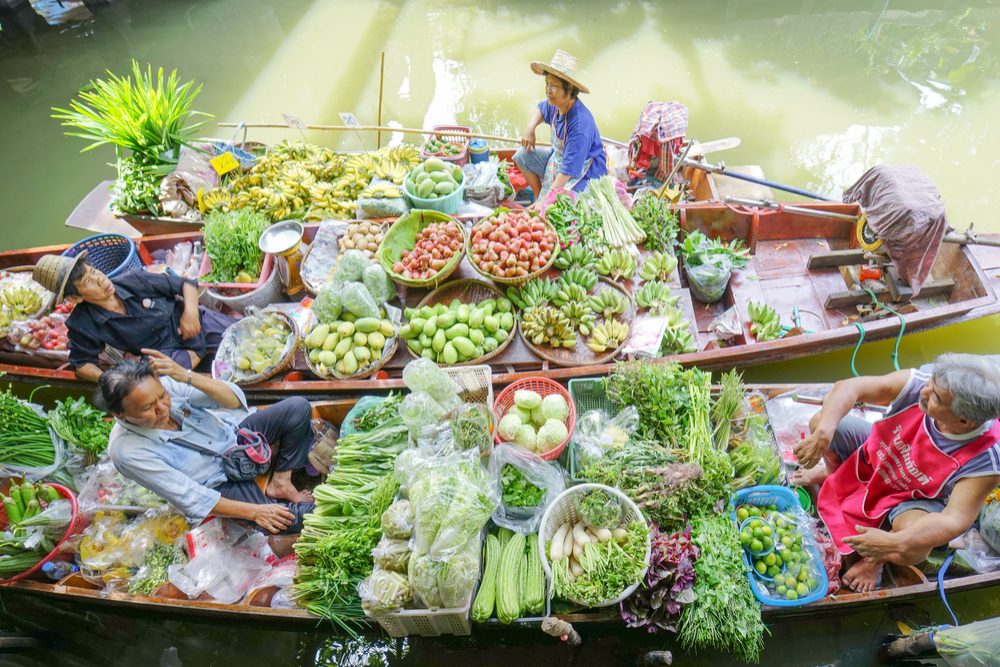
Locals bring their produce to the Tha Kha Floating Market in Tambon Thaka. Photo: Shutterstock
How to spend a lazy Sunday
Tha Kha Floating Market: Sit in a paddle boat and watch the market float by while snacking on whatever passing treats catch your fancy. About an hour outside Bangkok, this is one of the more authentic floating markets and is open only on weekends.
Where to Stay and Eat
Best bang-for-your-buck hotel
The luxury boutique hotel Ariyasom Villa retains its authentic Thai design and furnishings, taking guests back to 1950s Bangkok. It is located in the city’s upscale residential district, away from the riverside hotels, and offers an alternative base ideal for interesting urban walks (including through the foodies’ paradise of the Arab quarter). It is also situated on Bangkok’s main canal artery, providing easy transportation into the heart of the city. Executive Suite #208 was previously the family patriarch’s room and is richly decorated with dark woods and a four-poster bed.
Best-value splurge accommodations
Bangkok: The Siam. Filled with private collections of art and antiques belonging to the owner, this property offers a more private experience than the larger five-star hotels in the city do. Each of the 39 rooms has its own butler; there’s a guests-only Muay Thai gym with a professional instructor, and a Sak Yant (Thai spiritual tattoo) studio with one of the country’s top tattoo artists on call.
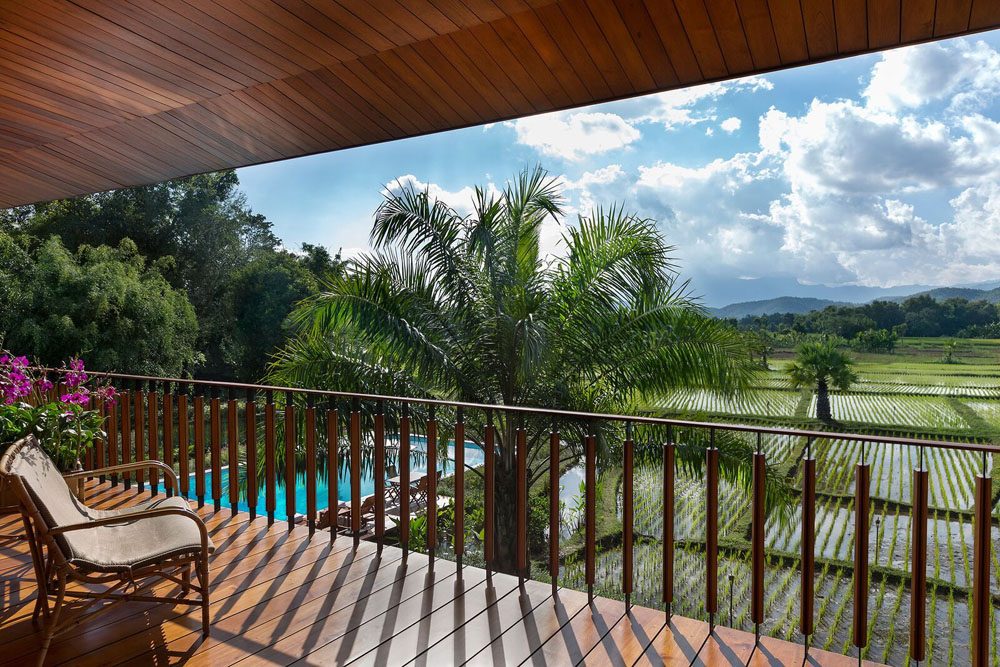
The private villa at Pa Sak Tong overlooks gardens, ponds, and rice fields. Photo: Pa Sak Tong
Chiang Rai: Pa Sak Tong is a private, luxurious, three-bedroom villa that comes with a personal butler, made-to-order meals by a highly trained personal chef, and your own pool, spa, and gym. It’s ideal for multi-generational families and groups of friends, and is close to the White Temple, Night Market, mountain hikes, and cycling routes. Its sister property, Tatvani, offers a similarly luxurious stay for larger groups looking for an all-inclusive sanctuary experience.
Raya Heritage is a beautifully crafted retreat set along the tranquil Ping River, just outside the city. Drawing inspiration from Chiang Mai’s brick and teak heritage—both cultural and architectural—the property exudes a sense of understated elegance. Its design is brought to life through collaborations with local artisans, infusing every corner with a handmade sophistication. Be sure to visit the Him Gong craft boutique on site, where an inspired collection of one-of-a-kind pieces makes for truly memorable souvenirs.
Restaurants the locals love
Bangkok: Krua Apsorn is a small restaurant in the city’s Rattanakosin area that has served dedicated foodies, top government officials, and the occasional royal (take-away, of course) for decades. It’s particularly known for its massaman nua, an exquisite preparation of the mild beef curry dish thought to have been introduced by Muslim merchants during the Ayutthaya period.
Located in Chinatown, the Guay Jub Ouan Pochana food cart has decades of experience with its signature dish, guay jub, a rolled rice-noodle soup with delectable peppery broth.
E-ga has earned a reputation for high-quality but down-to-earth Thai food that does away with overly complicated flourishes to concentrate on taste and quality. Most of the dishes are inspired by the wistful memories of the food that many Thais ate growing up. You can’t beat grandma’s home cooking.
Though often seen in malls, the Kub Kao Kub Pla chain sits right at that sweet spot between local comfort food and stylish modern Thai dining, consistently punching above its weight in terms of food quality. Don’t miss the panang curry, which is particularly rich and delicious.
Chiang Rai: Locus Native Food Lab. This 14-seat restaurant is a fusion of a scientific laboratory, gallery, and botanical museum. Blending ethnic Karen, Akha, and other regional cuisines with traditional Lanna culture, there is just one ten-course set menu, which changes each month. The chef/owner is bringing back local wisdom to preserve northern Thai cuisine. The restaurant is usually fully booked a month ahead of time by locals, so you need to reserve far in advance.
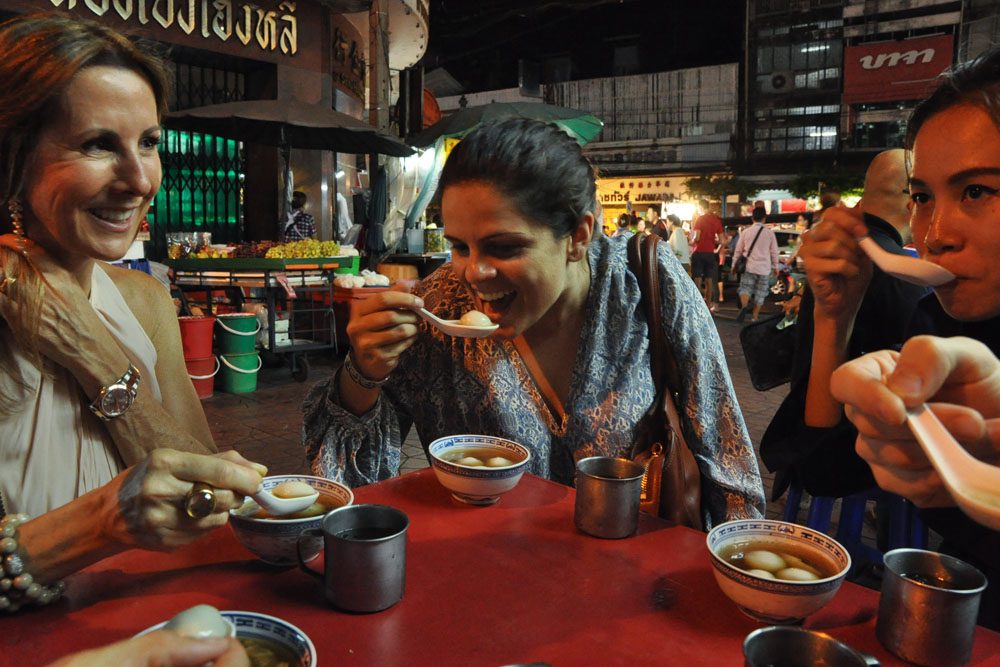
Sampling Thailand’s delicious street food is a necessary part of a the culinary experience. Photo: Smiling Albino
Dishes to try
Bangkok: gui chaai, or chive dumplings, brought by the Teochew Chinese immigrants who settled on the banks of the Chao Phraya River. This vegetarian appetizer or snack was originally made as an offering to the gods during ceremonies; it has since become popular throughout Thailand, as it’s inexpensive and can be steamed or fried to meet various tastes. Try it from one of the roadside stalls beside the National Stadium and Ramkamheng University, or at one of the family-run restaurants behind Wat Arun, on the Thonburi side of the river.
Northern Thailand: gaeng hang lae. This thick and flavorful curry originated in Burma and is now famous in Chiang Rai and Chiang Mai. It can be made with various meats and seafood, but the best uses pork belly or wild boar. Most traditional northern and Thai-Shan restaurants do this well. (Paste Bangkok does an excellent high-end version.)
Southern Thailand: Kua kling is a popular dry curried meat preparation in the south; the kaffir lime leaves really bring this spicy dish to life. Eat it with lots of fluffy Jasmine rice to keep the chiles at bay. You’ll often find it at southern-style food-tray restaurants or roadside eateries, but you can also try it in Bangkok at one of Kua Kling Pak Sot’s locations.
Meals worth the splurge
Sitting on an elevated, torch-lit platform, Dining by Design overlooks the elephant camp and rice paddies at Chiang Rai’s Anantara Golden Triangle resort. Enjoy canapés as the sun sets over Thailand, Myanmar, and Laos, then feast on a memorable meal in this evocative corner of the world as the elephants roam and drift to sleep. This is one of the finest dining experiences in Southeast Asia! It’s best experienced with family or friends, but could also make for a romantic and memorable honeymoon dinner.
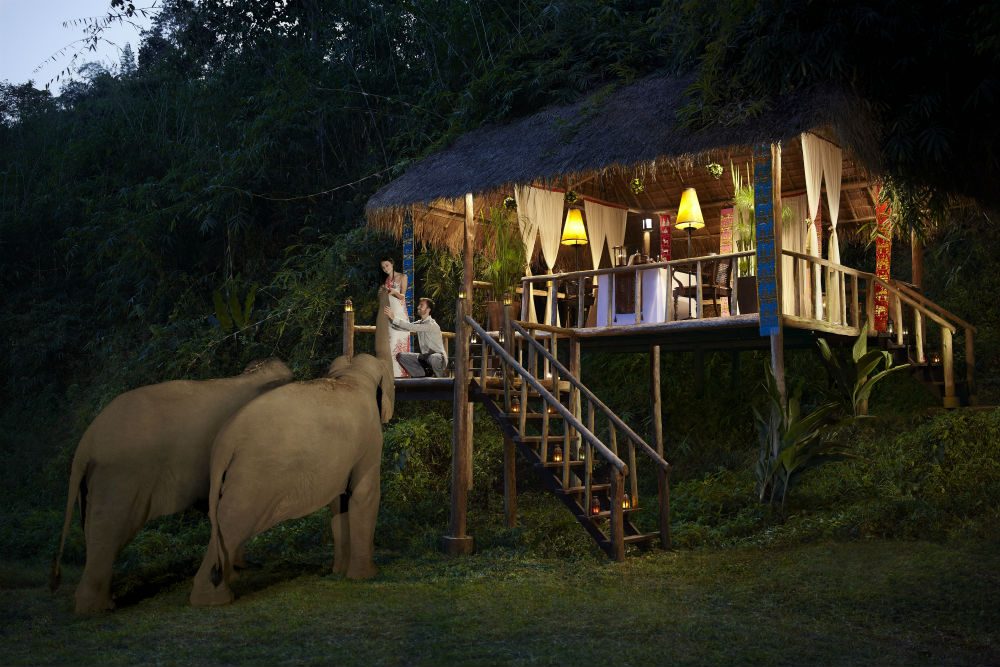
Dining by Design is an immersive experience at Chiang Rai’s Anantara Golden Triangle resort. Photo: Anantara
Chef Pam Soontornyanakij was named World’s Best Female Chef in 2025 for good reason, with her poetic tasting menu at Michelin-starred Restaurant POTONG seamlessly marrying heritage and innovation. From the incredibly restored shophouse on a quiet street in Bangkok’s Chinatown, a meal here is something you’ll be talking about long after your trip is over.
At Samrub Samrub Thai in Bangkok, Chef Prin Polsuk offers a menu that dives deep into regional and historical Thai recipes, resurrecting long-forgotten dishes with a bold, contemporary twist that earned the restaurant a Michelin star. Dining here feels like stepping into Chef Prin’s home kitchen—elegant, warm, and deeply personal.


Get a Personalized Trip Recommendation
For a travel solution tailored to your trip goals and preferences, click this green box.

Best Times to Go
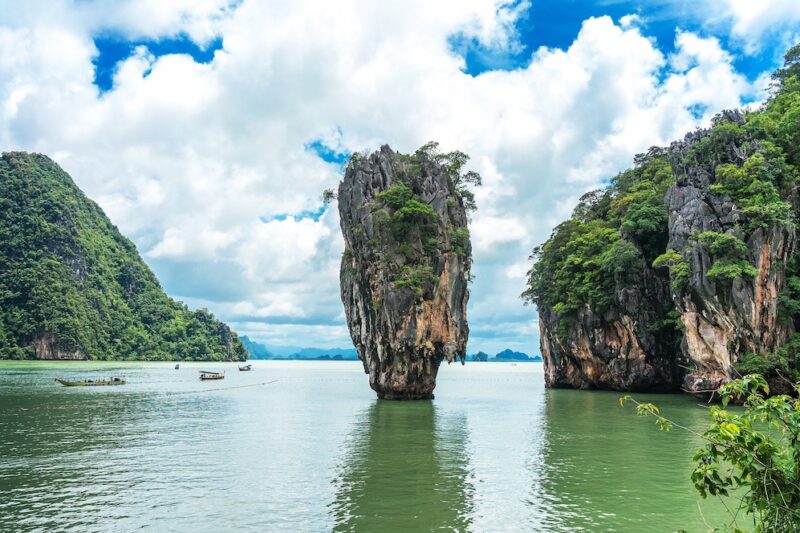
Bangkok is a year-round destination; there’s always great food and off-the-beaten-path adventures to uncover, and short bursts of rain can easily be dodged while in the city.
Northern Thailand is at its best at the end of the green season, from mid-October to mid-December, when the rains diminish but the waterfalls and rivers are full, and before the crowds and higher prices of the late-December to mid-January peak season arrive. The mountains are lush and green, and morning mists hanging in the valleys send shivers up your spine.
Southern Thailand is ideal from mid-January through March, when the oceans are still relatively calm after the crowded peak season, and sunny skies and cooler temperatures prevail before the heat returns in April.
Worst Times to Go
Avoid Bangkok during Songkran, Thailand’s New Year holiday. Many Thais travel back to their home provinces during this nearly weeklong festival in mid-April. Transportation into and out of the city is scarce, and many shops and restaurants are closed. (But there are some great water fights on Silom Road!)
During Chinese New Year in early February, northern Thailand fills with Asian tourists capitalizing on the longest and most important holiday on the Asian calendar.
July and August see the monsoons settle over the south of the country; strong storms can develop quickly, disrupting ocean activities. There’s still plenty of sunshine for those who don’t mind staying closer to their resorts.
Biggest Rookie Mistake
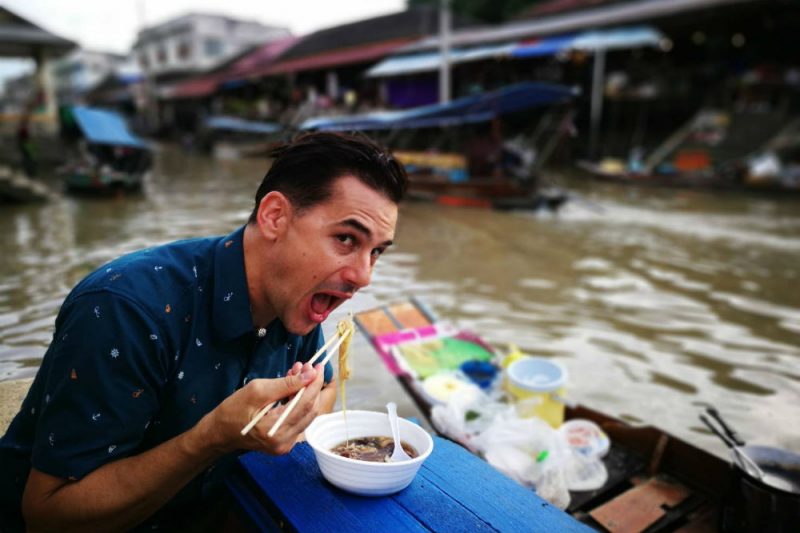
Not trying the street food. Cuisine is such an integral part of Thai culture, and enjoying it at all levels—from street stalls to Michelin-starred tables—is the best way to take it in.
Must-Have Apps
Nemo Thai is a great introduction and translator for Thai languages.
VoiceMap allows you to download Greg Jorgensen’s excellent Bangkok walking tours.
Grab Car is the Thai version of Uber.
Airport Intel
Book the Fast-Track immigration service in advance. It’s available at Bangkok’s two airports and is quite affordable, and you won’t wait in long queues or end up in the wrong arrival hall.
Tipping Tip
If there is a “service charge” on the bill, skip the tip—unless the service was truly exceptional.
The Souvenir
A Thai silk scarf. The most luxurious ones are found at Jim Thompson’s house and outlets; for a more affordable version, try the weekend JJ Market.
Can't-Miss Photo Ops
Kids heading to school in their neatly pressed uniforms via paddle boats early in the morning on the calm back canals, deep in the Thonburi side of the Chaopraya River.
Wat Po at closing time (6:30 p.m.), when dusk descends. There are few other people about, and the illumination is stunning when the temple’s and chedi’s floodlights come on as the sky turns a dark blue.
Don’t Forget to Pack
A lightweight, long-sleeved shirt. Great for putting on over tank tops to visit temples, or when you run out of sunscreen.
Scams to Avoid
Fresh fruit juice that isn’t real. Street food is very popular, and you will find lots of orange and pomegranate juice stands; if it’s real, you’ll see big piles of spent peels. If not, you’re likely drinking sucrose syrup.
24-hour suits. If you want something made to measure, give yourself time—as in several days—and several fittings to ensure that it’s done right.

Stay in the Know With Our Newsletter