Make Your Next Trip Extraordinary
Mongolia: Insider’s Guide to a Country of Epic Landscapes and Endless Skies
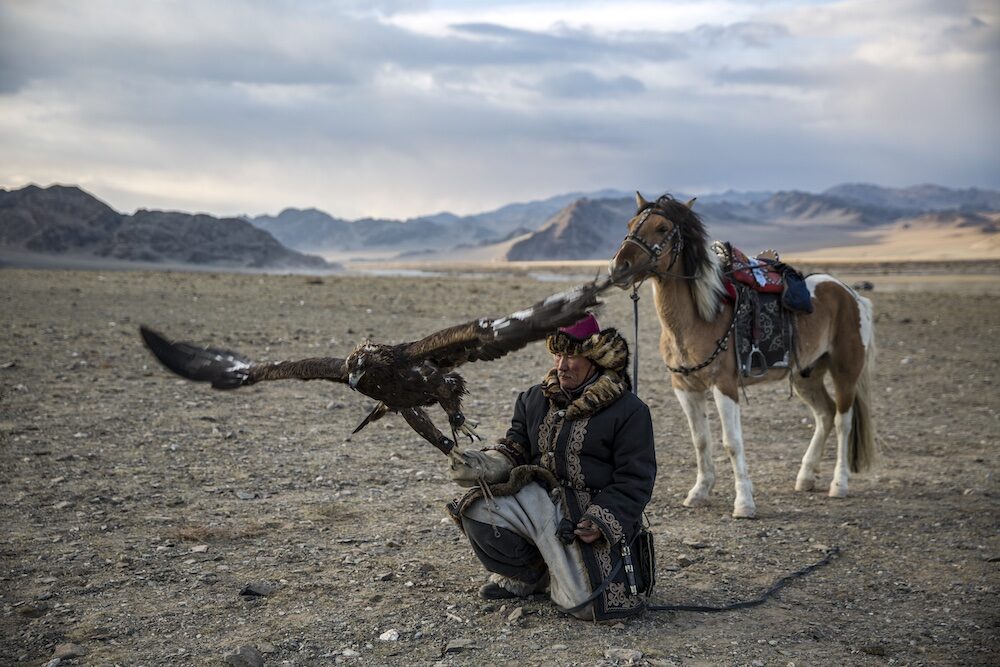 Eagle hunting is an age-old tradition in Mongolia. Photo: Nomadic Expeditions
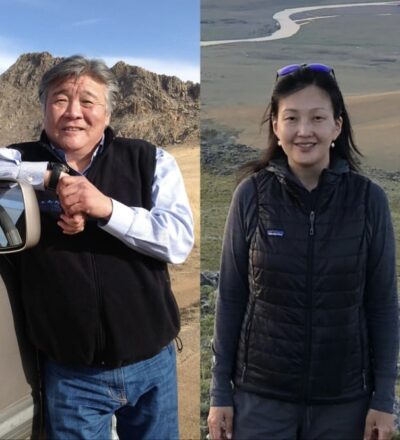
The insider advice on this page is from two of Wendy’s Trusted Travel Experts for Mongolia: Jalsa Urubshurow and Undraa Buyannemekh of Nomadic Expeditions.
A Mongolian-American who grew up in New Jersey, Jalsa started out in construction and used the proceeds from his successful business in that sector to found a travel company in 1992 and bring tourism to a place—Outer Mongolia—that was once synonymous with the end of the earth. Jalsa now splits his time between Mongolia and the U.S., leaving daily operations to trusted deputy Undraa Buyannemekh, who was born and raised in Mongolia and received her master’s degree in the U.S. Jalsa and Undraa don’t simply design itineraries that cross off sights on a checklist; they pair travelers with experts—historians, scientists, artists, photographers—who give visitors a comprehensive understanding of the country’s history, culture, and traditions.
What to See and Do
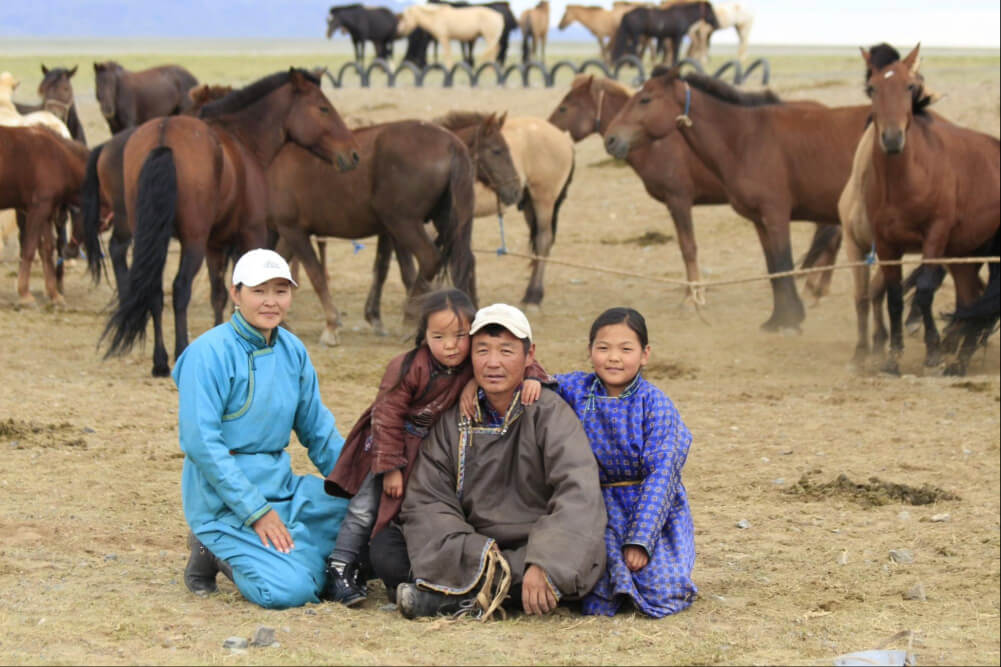
Our WOW List experts can introduce you to nomadic families living in the Gobi Desert. Photo: G. Buyandelger
Don’t miss
Travelers often ask to skip Ulaanbaatar, but Mongolia’s capital has quite a few attractions worth visiting. Don’t miss the Chinggis Khaan Museum, opened in 2023 and dedicated to the history of the Mongolian Empire. The Zanabazar Museum of Fine Arts showcases the country’s best Buddhist sculptures and thangkas (paintings on silk or cotton), and there is a thriving gallery scene as well. The National Folk Song and Dance Ensemble, which was first formed by Kublai Khan and resurrected after the communist period, performs at the state theater during the summer. You can also shop here for the world’s finest cashmere, along with traditional felt slippers and leather boots.
Hidden gems
Choijin Lama Temple, in the heart of Ulaanbaatar, is a hidden gem of history and architecture. The temple’s museum houses various Buddhist artifacts dating back to the 19th century, as well as thangkas, a comprehensive collection of tsam masks, and several masterpieces by famed Mongolian sculptor Zanabazar.
The Roerich Shambhala Museum in Ulaanbaatar preserves the legacy of Russian artist Nicholas Roerich, who lived there during his Central Asia expedition in the 1920s. It showcases his Mongolian-inspired art and his vision of Shambhala (a mythical kingdom in Tibetan Buddhist tradition that is said to be a hidden, pure land of harmony and happiness), and serves as a cultural and educational center.
The Fat Cat Jazz Club, an intimate, underground jazz venue located in the heart of Ulaanbaatar, aims at promoting and growing jazz culture in Mongolia. With performances by top Mongolian and international acts, it’s a nightspot not to miss—because one always thinks of jazz when one thinks of Mongolia, right?
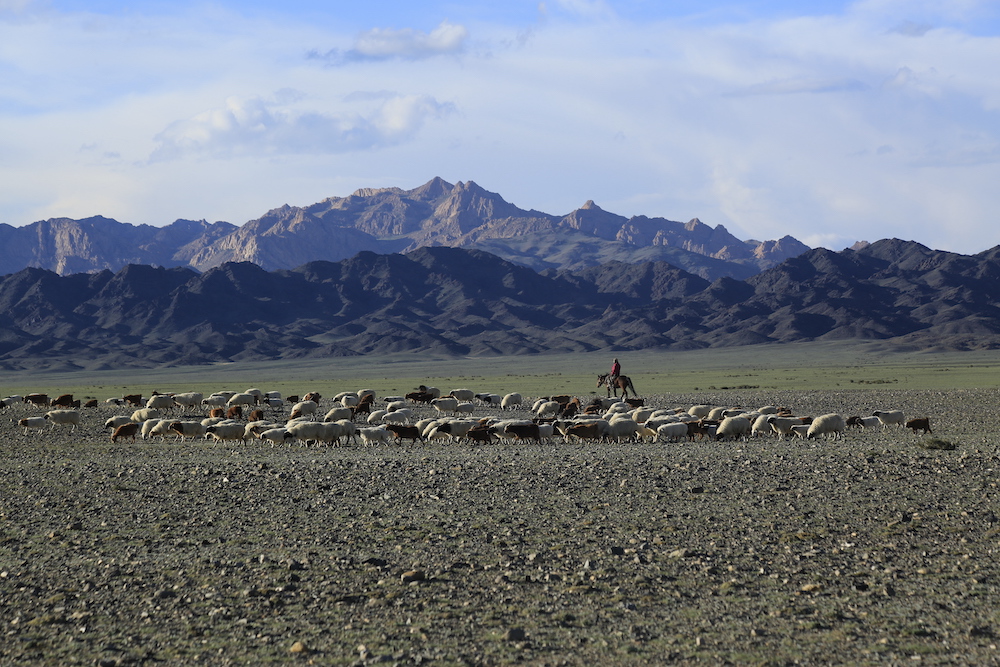
Mongolia is the most sparsely populated country on earth. Photo: Nomadic Expeditions
Best for thrill seekers
Mongolia offers several fabulous outdoor options: horse trekking through the northern region’s spectacular forests and meadows; hiking the Altai Mountains in search of the snow leopard; or riding horses with Kazakh hunters while their golden eagles hunt rabbits and foxes. For those who prefer transportation of a motorized nature, Jalsa and Undraa can arrange for escorted sidecar motorcycle trips through hidden valleys in the Gobi Mountain range.
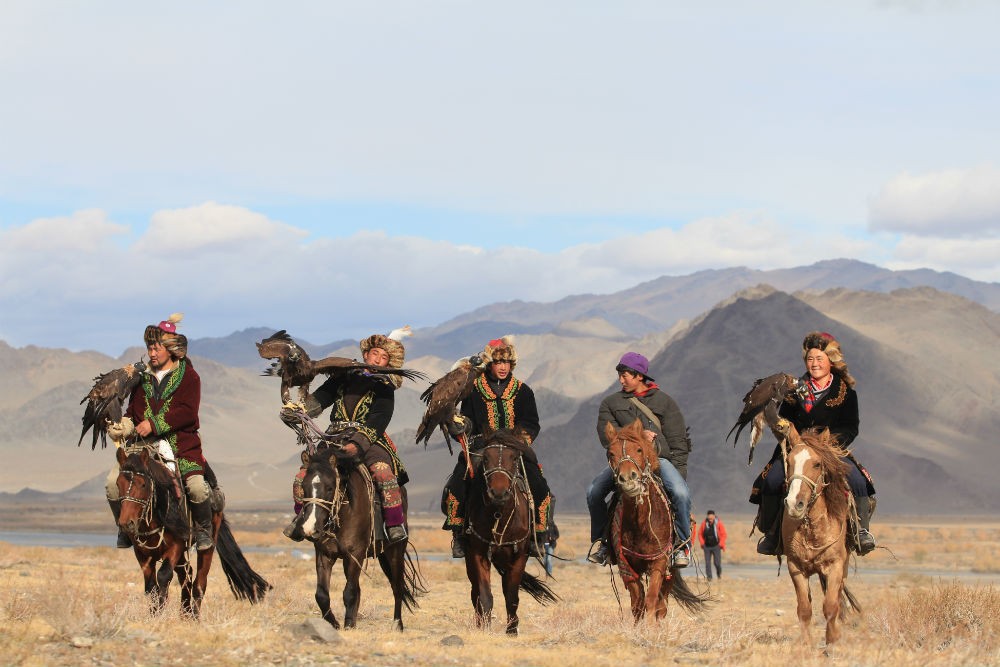
Riding horses with Kazakh hunters is a once-in-a-lifetime experience. Photo: Nomadic Expeditions
Bragging rights
Many of paleontology’s greatest finds have come from Mongolia, and scientists continue to hunt for fossils here; Jalsa and Undraa can not only provide entrée to their remote work areas (and set up luxury camps nearby), but also arrange behind-the-scenes access to the Paleontological Lab, part of the Academy of Sciences in Ulaanbaatar. Their travelers are welcomed into the rooms where paleontological treasures are kept, and where scientists toil away toward the next big discovery.
Although most of the country’s Buddhist monasteries were either destroyed or converted into museums during the Stalinist purges of the 1930s, Erdene Zuu Monastery in Karakorum survived. Jalsa and Undraa can arrange a private blessing with a senior lama there.
Three Camel Lodge Ulgii, situated within the longest mountain range in western Mongolia in an otherworldly landscape of breathtaking valleys and dramatic rock formations, is scheduled to open in 2027. But Jalsa and Undraa’s team can set up a private luxury ger camp there now, offering guests an utterly exclusive experience. You can also explore this incredible corner of Mongolia on a day trip while staying at the seasonal Three Eagle Camp in the foothills of the Tsambagarav Mountains.
Where to Stay and Eat
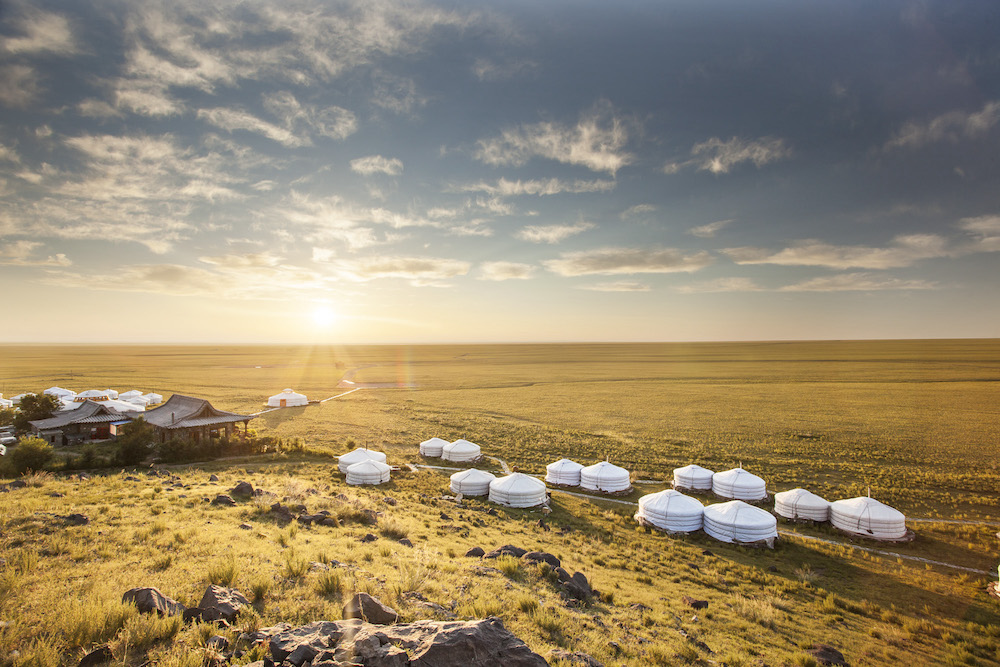
Three Camel Lodge is the most luxurious place to stay in the Gobi Desert. Photo: Nomadic Expeditions
Best bang-for-your-buck hotel
The Shangri-La in Ulaanbaatar provides five-star accommodations and service (the latter can be lacking at the city’s more historic hotels), and with a sensible price tag. A true luxury property, it has a magnificent porte cochère and lobby, and well-appointed rooms. The complimentary breakfast and cocktails in a private lounge make the slightly more expensive Horizon Club rooms a good deal for many travelers transitioning between the comforts of home and Mongolia’s remote—and sometimes rough—countryside.
Best-value splurge hotels
Slightly north of Ulaanbaatar, Terelj Hotel and Spa lies in a beautiful river valley adjacent to Gorkhi-Terelj National Park. This pristine setting is matched only by the creature comforts (marble bathrooms, Mongolian cashmere blankets, Egyptian cotton linens) that draw many members of parliament to these posh rooms. The spa is respectable, though perhaps not world-class. The Executive Rooms are a bit small, so if you want space to spread out, opt for a Superior Room or a suite.
The over-the-top Ayan Zalaat, opened in September 2025 and a member of the Leading Hotels of the World, is the most luxurious hotel in Ulaanbaatar. Bedecked in Italian marble and Moroccan tiles, with a gorgeous spa, wine cellar, and cinema room, the Ayan Zalaat also offers travelers the luxury of time: Nestled within the mountains at the city’s edge, it’s much closer to the airport than the other luxury options, saving you precious hours when using Ulaanbaatar as a hub.
Further south and set within the serene Gobi Desert, Jalsa’s own Three Camel Lodge is an eco-friendly and luxurious take on gers, the traditional felt tents used by nomads. Besides providing the only high-end accommodations in the Gobi Desert, the lodge also supports the local community: breeding native Mongolia Bankhar dogs to place with Gobi nomads to protect wildlife, supporting a local music school, awarding college scholarships, and helping families develop farms that provide food for the nearby ger camps. Note that the traditional ger design doesn’t allow for windows—but every door opens onto a lovely view of mountains or desert.
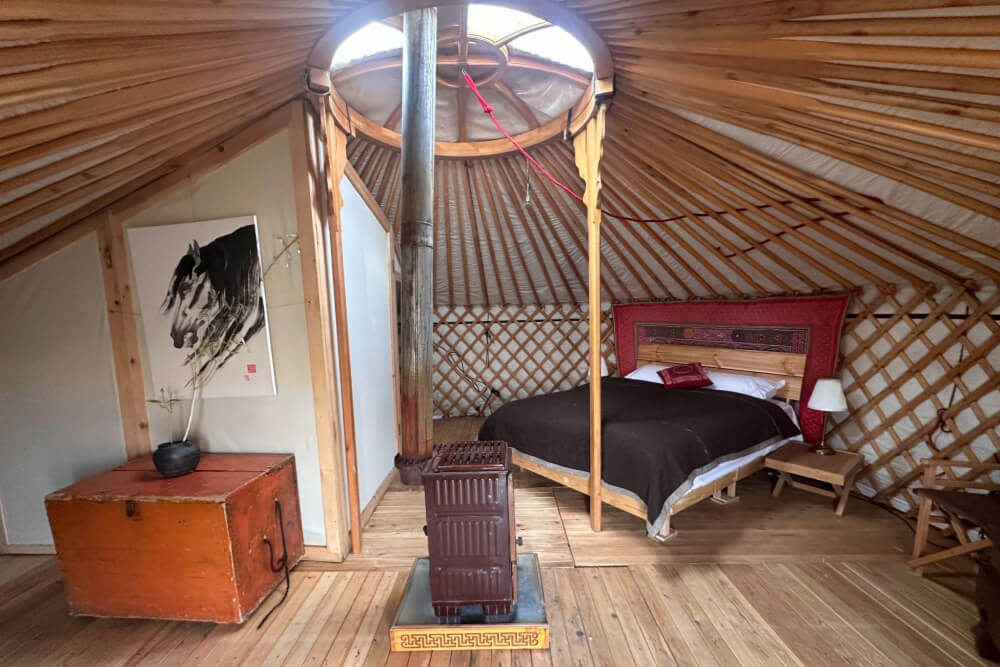
This is the inside of a ger at the Three Eagle Camp, in the Tsambagarav Mountains. Photo: S. Bolorchimeg
Dish to try
Huushuur: traditional fried dumplings usually filled with meat (nowadays, you can sometimes find them filled with vegetables). They’re available throughout the country in cafés and restaurants, but they are especially memorable when sampled at the table of a Mongolian family.
Restaurants the locals love
In Ulaanbaatar: Hazara is the go-to spot for Mughlai and North Indian frontier cuisine served up in a warm atmosphere. Choijin Temple Restaurant is popular for Mediterranean cuisine with a Mongolian twist, and Mongolian’s for—you guessed it—traditional Mongolian cuisine. Bitsy & Co., a small bar/coffee shop on the southeastern corner of the Shangri-La mall, offers salads, breakfast, and good cocktails in a cozy location.

Get a Personalized Trip Recommendation
For a travel solution tailored to your trip goals and preferences, click this green box.

Best Times to Go
May and early June or after mid-October are ideal for avoiding crowds, while the temperate weather of late August through September is perfect for camel trekking. The Golden Eagle Festival, a Kazakh hunting tradition in the Altai Mountains, is held annually the first weekend of October.
Worst Time to Go
December through April. Winter in Mongolia can be harsh, and many ger camps close during this time, limiting accommodations.
Scam Alert
It is illegal to remove fossils from Mongolia—but that doesn’t stop people from attempting to sell them to unsuspecting tourists.
Biggest Rookie Mistakes
Assuming that the Naadam Games—a festival of traditional sports such as horse racing, archery, and wrestling—are exclusive to Ulaanbaatar. Festival events are held all over the country. In the capital, the games are an increasingly touristy and grand occasion, a kind of national Olympics—but in smaller locations travelers can have a more immersive cultural experience, with competitors arriving on horseback and families gathering to celebrate the summer season.
Many travelers assume that domestic flights within Mongolia are easy to book at the last minute, but that is rarely the case. Most regions do not have daily service and flights fill up quickly—especially during the summer and festival seasons. It’s best to secure tickets well in advance, as they often sell out months ahead.
Tipping Tip
Tipping is not customary in Mongolia, but many in the service industry have come to expect it from foreigners. If you choose to leave a gratuity, it should be about 5 to 10 percent.
Don’t Forget to Pack
The Mongolian climate is extremely dry, so moisturizer and lip balm are essential.
Must-Have Apps
UBCAB, the Mongolian version of Uber.
Maps.me works offline and will help you orient yourself in the countryside of Mongolia. Download your maps in advance.
Can't-Miss Photo Op
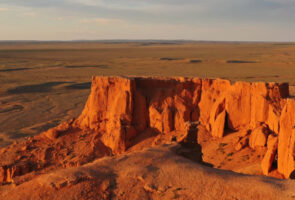
Sunset on a clear day at the Flaming Cliffs in the Gobi, when the sandstone glows bright orange.
The Souvenirs
Colorful Kazakh tapestries crafted by locals in the Altai region and sold throughout the country. Muslim Kazakhs have lived in this province for centuries, making it the only part of this majority Buddhist country that is not ethnically homogeneous.
Mongolian vodka is the smoothest in the world—it’s often distilled as many as ten times. You’ll find dozens of brands, many playing off the notoriety of Genghis Khan.
Recommended Reading
Genghis Khan and the Making of the Modern World, by Jack Weatherford, will give you a background in Mongolian history so that you can better understand this extraordinary country, an oasis of democracy in Central Asia.

Stay in the Know With Our Newsletter