
Make Your Next Trip Extraordinary
China’s Big Cities and Small Villages: Insider’s Guide
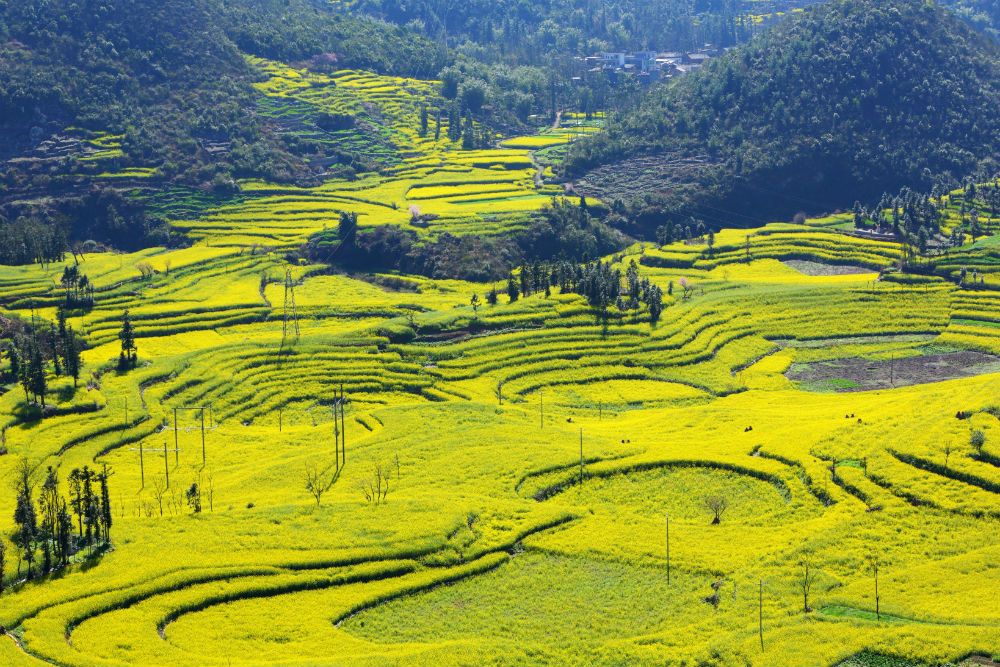
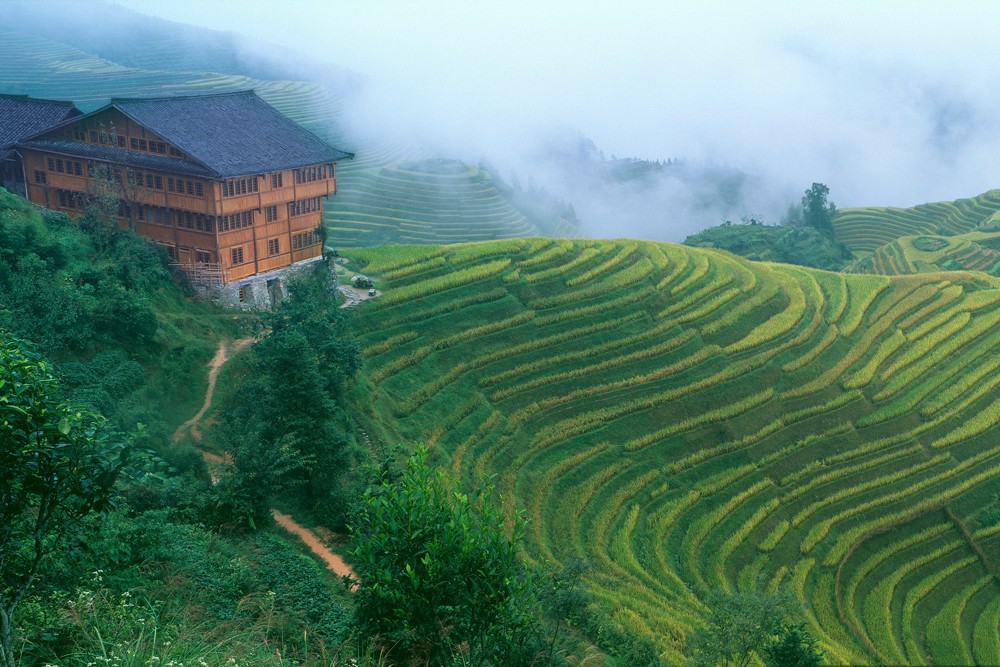 These rice terraces in China’s countryside are nicknamed “the Dragon’s Backbone.” Photo: Lian Lodge
The insider advice on this page is from one of Wendy’s Trusted Travel Experts for Mainland China, Hong Kong, and Taiwan: Mei Zhang of WildChina.
Sharing her homeland’s hidden gems has been Mei Zhang’s lifelong passion, interrupted only by the years she spent earning her Harvard MBA and working for McKinsey before she founded her travel company in 2000. No matter the occasion—family trip or 50th-birthday celebration—Mei can filter the seemingly endless options for clients to craft the experience that’s just right for them. Mei grew up in Yunnan province and has particular knowledge of Guizhou and Sichuan provinces too; now based in California with offices in Beijing and Taiwan, she has close relationships with hotel and restaurant owners and makes sure that her clients get the red-carpet treatment. Her guides and drivers are the best in the business, opening the doors to authentic Chinese culture and steering travelers away from the crowds, the expected, and all things touristy.

Melding New and Old
Much has been written about Beijing and Shanghai, China’s best-known metropolises. Yet in southwestern China, new stories are taking shape around Chengdu’s tea houses and relaxed pace, and Chongqing’s vertiginous skyline and fiery culinary culture. In small villages, you’ll witness the ways in which culture and community thrive far from the urban lights: In Chongzuo, near Yangshuo but less visited, tranquility unfolds among breathtaking karst landscapes; in Songyang, near Shanghai, a millennia-old tea culture endures. When visited together, these big cities and small villages reveal a side of China where tradition and modernity intersect in vivid and surprising ways.
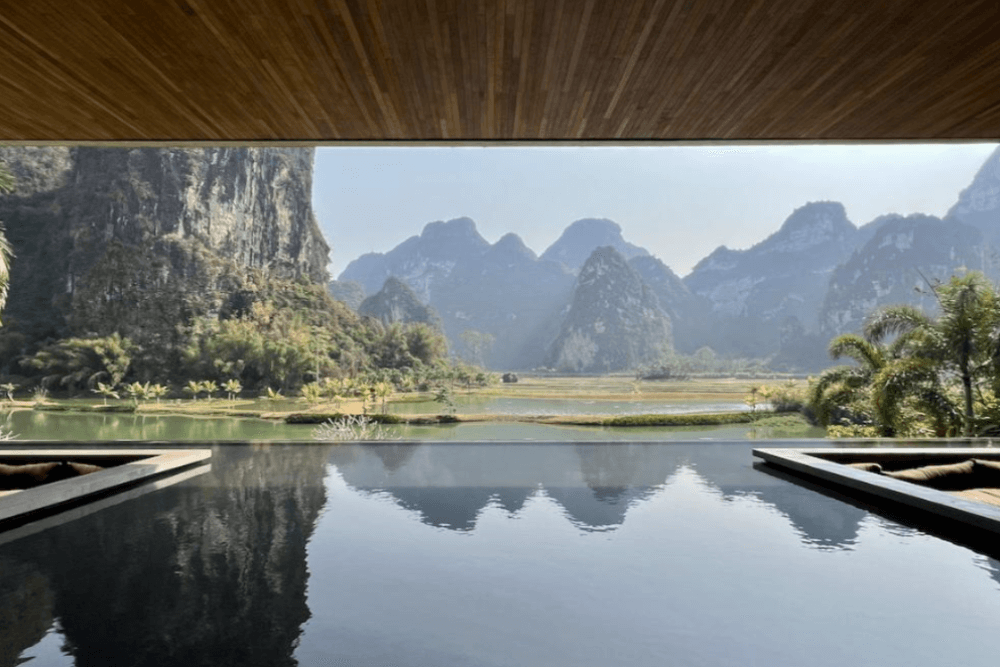
Guangxi, which borders Vietnam, is a mountainous “autonomous region” in southern China. Photo: LUX*Chongzuo / WildChina
Where to Stay and Eat
Best bang-for-your-buck hotel
Home of pandas and spicy hot pot, and the gateway to southwestern China, Chengdu is now a traveler hotspot. Buddha Zen, a boutique hotel in the city, is a real steal at less than $100 a night. The hotel is well located next to Wenshu Monastery and prides itself on immersing guests in a Buddhist environment.
Restaurants the locals love
No trip to Chengdu is complete without a hot pot experience, but selecting a single hot pot restaurant from the many options can be a challenge. If you’re wondering where the locals go, look no further than Wuliguan (Kuixinglou branch). The restaurant is immensely popular, attracting long queues of eager diners late into the night. It operates on a walk-in-only basis, so visitors should be prepared to wait patiently for a table. Try the stewed beef simmered in a spicy, aromatic broth, or, for the more adventurous, savor the textures of duck blood curds and beef omasum.
For classic Sichuan dishes like Kung Pao chicken, head to Yongle Restaurant, a long-running hole in the wall (and Michelin Bib Gourmand winner) beloved for its bold flavors and authentic cooking.
Chongqing, famous for its gorges, river valleys, futuristic architecture, and historic significance as China’s wartime capital, offers hot pot with a side of history. At Bomb Shelter Hot Pot, you’ll enjoy the city’s signature spicy communal meal inside a former WWII air-raid tunnel.
Meals worth the splurge
Yu Zhi Lan, one of the two Michelin-starred restaurants in Chengdu, is a must for discerning gourmands. Owner/chef Lan Guijun, a legend in the Chinese culinary world, elevates Sichuanese cuisine to haute cuisine. A set menu starts around $250 per person, with signature dishes such as handmade jinsi noodles and braised eel with bean paste. Yu Zhi Lan’s dining room, adorned with ceramic art crafted by the chef himself, exudes rustic charm. To secure a table for this exceptional dining experience, advance reservation with a deposit is necessary.
Chengdu is also home to Xin Rong Ji, another Michelin two-starred restaurant and part of a celebrated chain with locations across China. Known for its focus on Taizhou cuisine—a refined, seafood-based cuisine from Zhejiang province—Xin Rong Ji offers delicacies such as wild-caught yellow croaker and sea anemone, presented in an atmosphere of understated elegance.
Prime picnic spot
Chongzuo, at the southern edge of Guangxi Province and bordering Vietnam, sits in a landscape of meandering rivers and soaring karst peaks. After a morning of yoga beneath the cliffs or cycling through winding valleys, Mei can arrange a picnic of regional delicacies set against this dramatic backdrop.
What to See and Do
Don’t miss
Most travelers aren’t aware that they can experience Tibetan culture in China’s western provinces of Yunnan, Sichuan, and Gansu—along with stunning scenery and rich Tibetan Buddhist history—while avoiding both the hassle of securing travel permits to Tibet and the crowds they would encounter in Lhasa.

Prayer flags brighten the view in the romantically named city of Shangri-La. Photo: Rogan Yeoh
In southwestern China, the scenery is as varied as it is breathtaking: In western Sichuan, alpine peaks rise above turquoise lakes in places such as Yading Nature Reserve; in Yunnan’s Shangri-La, prayer flags ripple across meadows where Tibetan monasteries stand against snow-capped mountains; and in Gansu’s Gannan prefecture, rolling pastures stretch toward the horizon. For those who prefer comfort in the wild, Norden Camp, near Labrang Monastery, offers a rare blend of highland wilderness and luxurious comfort. Here you will awaken to the tinkling of yak bells outside your hut.
Don’t bother
Yangtze River cruises became popular in the 1970s when China lacked basic accommodations and restaurants. Today, China has developed beautiful lodges in remote mountain reaches, and there are fine restaurants even in small towns. Why spend three days with hundreds of other Western travelers over forgettable buffets when you could be sipping tea with a Bai ethnic family, or staying in a luxury lodge in a remote and fascinating region?
Hidden gems
Unlike many of China’s overly commercialized “old towns,” Songyang has preserved its character with care. Narrow cobblestone lanes lead to blacksmiths, herbalists, and weavers still practicing age-old crafts, while tea farmers cultivate some of China’s finest leaves on the surrounding misty hills. With a tea culture stretching back thousands of years, Songyang has become a hub where tradition meets thoughtful renewal: Heritage buildings stand alongside contemporary spaces designed by a new generation of architects. Visitors can bike or hike ancient trails through terraced tea fields, join farmers for hands-on tea picking, or step into Yangjiatang, a feng shui-designed village where Qing Dynasty wooden homes have stood quietly for centuries.
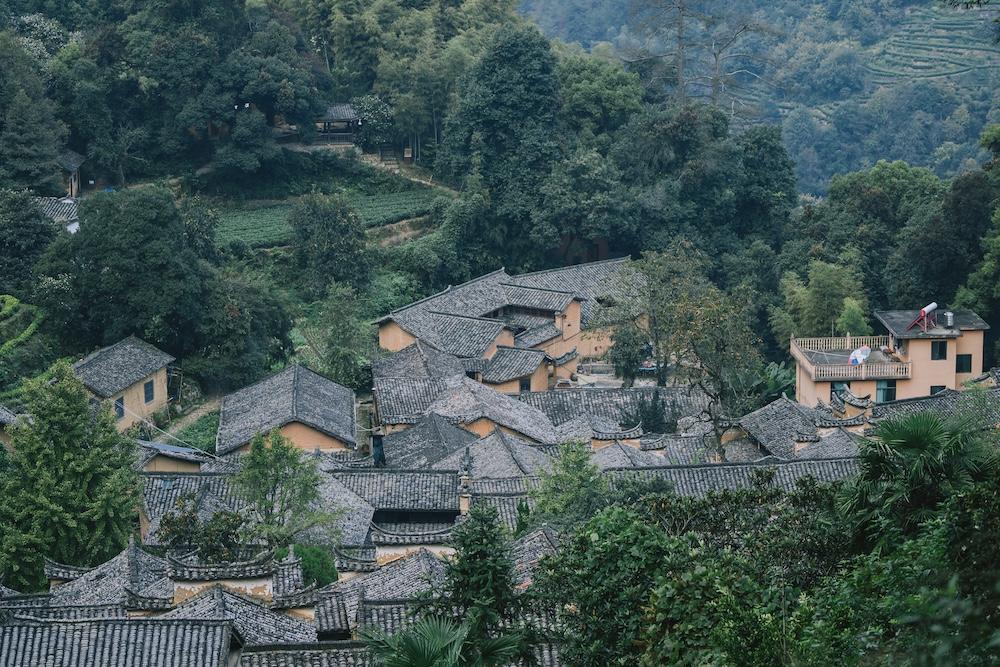
Songyang has a well-preserved Old Town. Photo: WildChina
In a quiet Zhuang ethnic village near Chongzuo, music has carried through the generations. The tianqin is a two-stringed, crescent-shaped instrument traditionally played during weddings, festivals, and village rituals. For the Zhuang people, however, the tianqin is more than an instrument—it is a vessel for storytelling. Families have preserved the tradition for ten generations, and now some welcome travelers to gather around an evening fire, share homecooked local delicacies, and maybe even join in the music.
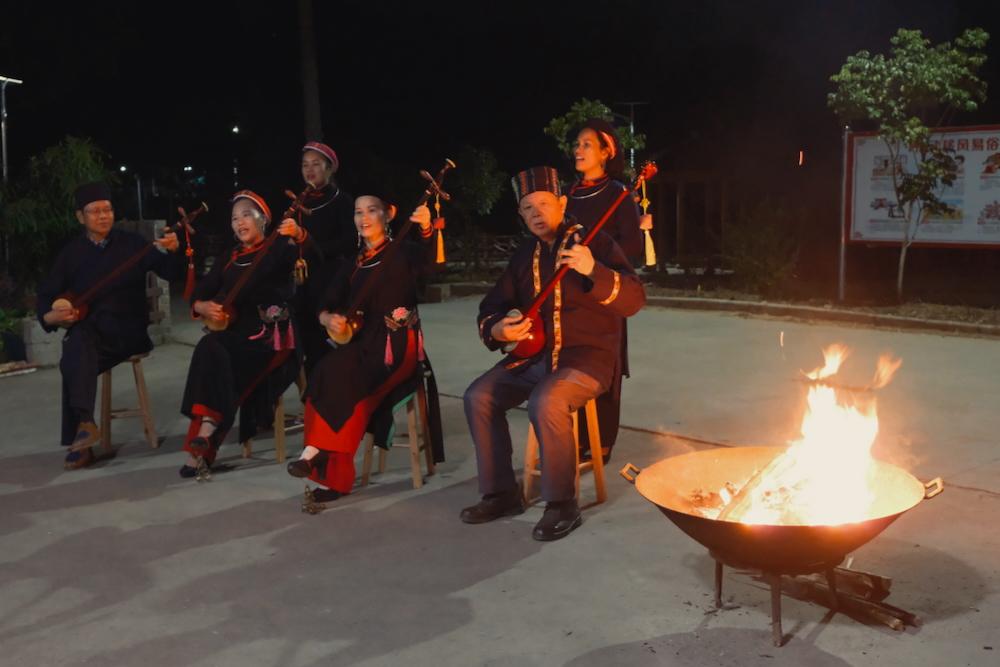
The Li family performs traditional music for travelers. Photo: WildChina
Cheap thrills
Venture along Jinli Old Street or nearby Kuanzhai Alley in Chengdu for a street food crawl. Sample dan dan noodles, sugar-oil pancakes, and spicy skewers, all for just a few yuan each. Afterward, rest your legs at a teahouse where you can order a cup of jasmine tea and, if you’re feeling adventurous, let a local ear cleaner ply their delicate craft while you sip.
A 45- to 60-minute river cruise gives you the best view of Chongqing’s cascading skyline and Hongya Cave’s stilt-house façade from the water. Prices vary by time of day—about $10 during daylight and closer to $20 at night—but it’s worth going at sunset or after dark, when the bridges and buildings light up. If you prefer something a bit more “local,” hop on the public ferry from Danzishi Old Street to Hongya Cave for just $2. The ride lasts 10 minutes, but the view is equally striking.

Take a river cruise—or a public ferry—for the best view of Chongqing’s skyline. Photo: Jerry Yang
At the White-Headed Langur Nature Reserve in Chongzuo, you can spot this critically endangered primate found only in Guangxi. Borrow a pair of binoculars at the visitor center and scan the limestone cliffs in the cooler morning hours, when the langurs are most active. Patient photographers often wait here with long lenses; strike up a conversation and you might get to peek at their close-ups.
In Chenjiapu Village near Songyang, a former cultural hall has been converted into the Xianfeng (Avant-Garde) Bookstore. From the outside it looks like a traditional earthen building, but step inside and the space opens onto sweeping views of bamboo valleys and terraced hillsides through expansive windows at the valley’s edge. The small café serves coffee and waffles, making it a good stop after cycling or hiking nearby trails.
Bragging rights
No trip to Chengdu is complete without encountering its most famous furry residents in person. Just a short, scenic drive from the city leads to Dujiangyan Panda Center, where pandas can be observed up close in a natural setting. For those looking to get more involved, Mei can arrange a hands-on volunteer experience. You won’t be touching pandas, but, guided by dedicated panda keepers, you’ll help with essential tasks such as breaking bamboo for food, cleaning enclosures, and preparing nutritious “panda cakes” from bamboo flour, corn, eggs, and vitamins. The highlight? Watching the pandas devour the treats you’ve just made.

Our WOW List expert can arrange for you to get up close with pandas. Photo: WildChina
Step into the kitchen of culinary legends at the Sichuan Higher Institute of Cuisine in Chengdu, where renowned author/chef Fuchsia Dunlop once trained. She went on to write acclaimed books on Chinese cuisine and became one of the world’s foremost interpreters of Sichuan flavors. In this masterclass, you’ll learn to distinguish the peppery ma from the spicy la and to prepare regional favorites under the guidance of a professional chef.
Outside Chengdu in the shadow of Qingcheng Mountain, one of Taoism’s most sacred peaks, lies the Qingcheng Martial Arts School. The master at this school is not selected based on merit alone but is also “chosen” by a higher power. With Mei’s introduction, the second-in-line after the head master will be your instructor for a private tai chi class. The lesson stretches beyond movement, beyond qigong, and into the history, philosophy, and mindset that underpin this branch of martial arts: Taoism.



Get a Personalized Trip Recommendation
For a travel solution tailored to your trip goals and preferences, click this green box.

Best Times to Go

China is huge, of course, and has a wide array of weather patterns depending on location and elevation. But for a classic China itinerary, October is hard to beat: Skies are blue in Beijing, Shanghai, and Xi’an, and temperatures are so agreeable you won’t need heat or air-conditioning.
Spring, from March to May, is also quite nice, especially with the cherry trees in bloom everywhere you look.
Worst Times to Go
December and January are very cold in the north of China, though in southern China the temperatures remain mild.
The worst times in terms of crowds are late July, August, the national holidays during the first week of May and October, and Chinese New Year, which moves according to the lunar phase. During these periods, it seems that every Chinese citizen is traveling, and it’s difficult to enjoy yourself with such massive crowding.
Biggest Rookie Mistake
Seeing only the famous sites, such as the Great Wall and the Terracotta Warriors. China has so much to offer, and major cities such as Beijing, Shanghai, and Xi’an are only a slice of the entire country—and an overdeveloped, crowded, and sprawling one at that. Spend from five days to a week focusing on a lesser-known province, such as Yunnan, Sichuan, Guizhou, or Guangxi. Visit some smaller villages, enjoy the beauty of misty tea fields, and get away from the most popular places and the wonderful diversity of the culture will come to life.
Instagram Moments
In Chongzuo, cycle past karst peaks, banana groves, and winding paths, where every stop along the way feels like a ready-made postcard. At the LUX* Chongzuo resort, step into the lobby for sweeping views of rice paddies, the Mingshi River, and jagged limestone mountains.
While hiking the ancient trails around Songyang, you’ll find centuries-old villages and tea terraces set against forested hills.
In January, the terraced rice fields of Guangxi, Guizhou, and Yunnan provinces are flooded and intensely green. Capture them in the early morning, when they’re blanketed in thick fog, and you’ll have a prize-winning image, guaranteed!
The Souvenirs
A silk qipao dress. If you are in the country for a few days, ask your concierge to recommend a local dressmaker and have one made for you in a modified style, so that when you get home it doesn’t look like a costume.
In Chengdu, Blue Sheep Crafts sells handmade purses, jewelry, leather goods, and homewares made by artisans across western China who are disabled or facing economic disadvantages; profits from the sales of these items are returned to their makers.
Scam Alert
Visits to silk factories or cloisonné workshops might sound like educational opportunities, but these are nothing more than overpriced souvenir shops.
Must-Have Apps
China uses its own apps for services and you won’t get far without Alipay and WeChat. Unique to the experience of modern China is experiencing all you can do with your phone. Subways, bikeshares, shops, and restaurants–even in large hotels–all use Alipay, so don’t leave home without it! Whether you want to order late-night snacks to your hotel or call a taxi, you can do it all within Alipay—there’s no need to download lots of separate apps.
WeChat is the main messaging app in China; use it to stay in touch with your private guide and driver. It also has a social media function, a bit like Facebook, but limited to people you know.
DiDi is great for finding a taxi back to your hotel after dinner.
Although popular social media sites like Facebook and Instagram are blocked in China, you can keep your family and friends updated on your adventures by purchasing and activating an eSIM on your device before leaving home. There are many service providers out there and they all have easy-to-use apps.
Tipping Tips
There is no need to tip in restaurants or bars; tipping in general is not part of the culture. However, tipping is expected in five-star hotels or with guides and drivers who speak English—a gratuity of $25 per day for the guide or $15 per day for the driver is standard. Some upscale restaurants may include a 10–20% service charge on the bill.
Airport Intel
The airports in China are modern, with clear signage and rail links to the city center. The taxi lines are usually long but move fairly quickly, and China’s taxi trade is very well regulated, so don’t risk being taken advantage of by one of the touts inside the airport offering to take you to your hotel.
Beijing, Shanghai, and Chengdu now each have two airports, and even terminals within the same airport can be far apart. Always double-check not just your terminal, but which airport you’re flying from or into, and allow plenty of time for transfers.
Don’t Forget to Pack
Pocket hand sanitizer and small packets of tissues. Chinese toilets in general do not supply toilet paper, so these will come in handy.
Your smartphone—China is close to 100% mobile payments for everything. Can’t say it enough—download WeChat and Alipay before you leave home!
Casual outfits. China in general is very casual—even for dinners in nice restaurants. Bring more casual clothes than you think you’ll need and leave the formalwear at home.

Stay in the Know With Our Newsletter