Make Your Next Trip Extraordinary
Insider’s Guide to Cambodia: What to See Beyond Angkor Wat
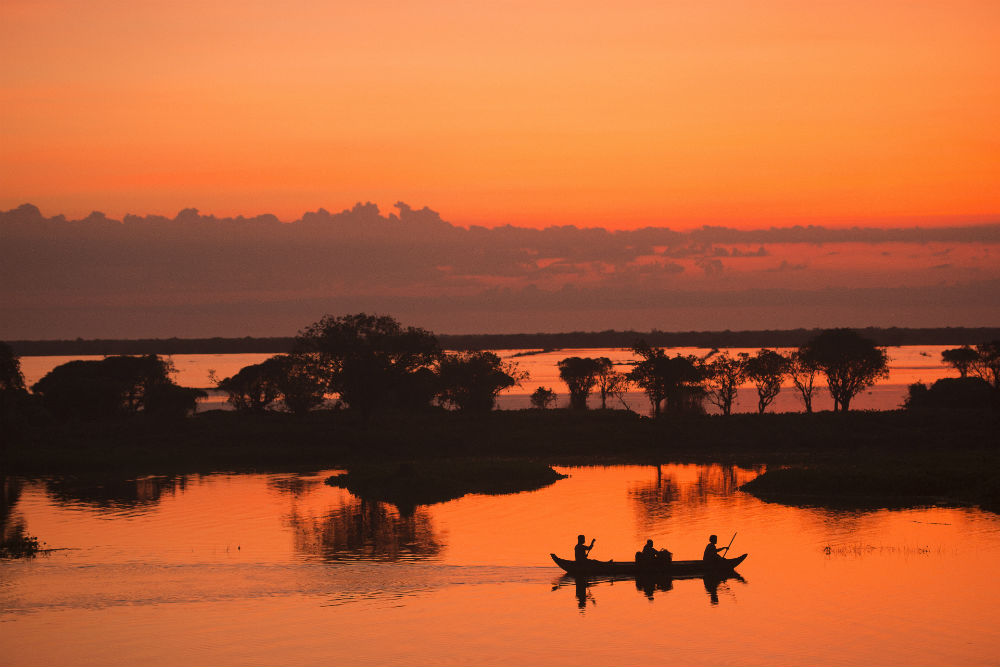 Fishermen on Tonlé Sap Lake at sunrise, Cambodia. Photo: Shutterstock
In some cases, Wendy has several trip-planning specialists she recommends for a destination and would like to connect with you directly to determine who would best meet your needs. This is one of those cases. Please click on the CONTACT button (below) to find out from Wendy which travel expert is best for your specific trip goals and challenges.

Where to Stay and Eat
Best bang-for-your-buck hotel
Knai Bang Chatt, a delightful, intimate boutique hotel in the coastal town of Kep, is one of the more interesting properties in Cambodia. Set across three restored modernist villas from the 1960s and 70s (designed by Cambodian students of Le Corbusier), the property has great service, a great aesthetic, and great food. Next door are the Sailing Club and Kep West, both excellent options for seafood and drinks.
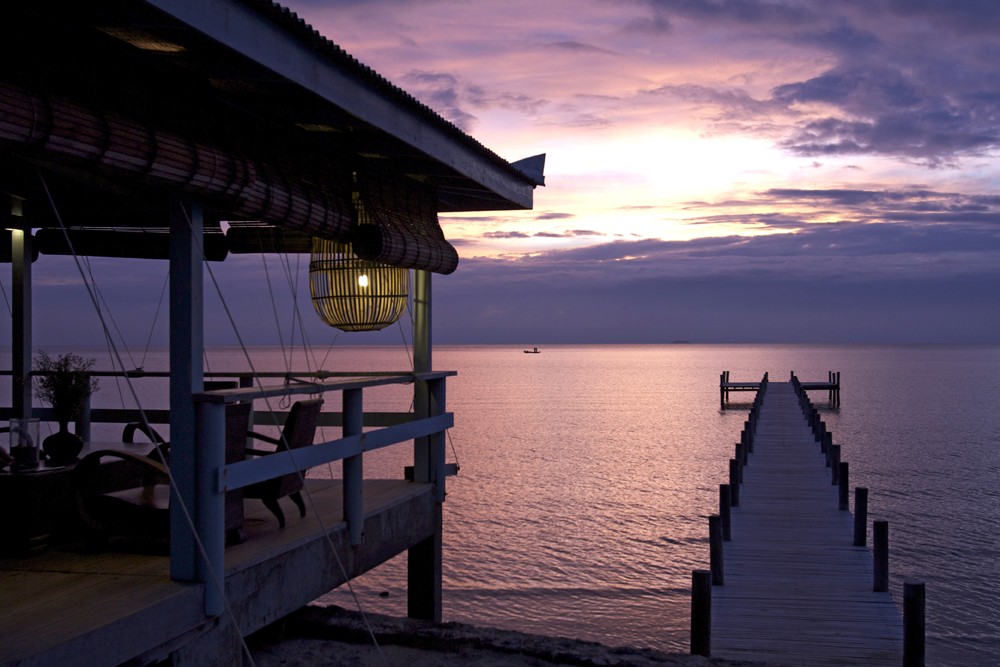
The seaside town of Kep was once known as the Saint-Tropez of Southeast Asia. Photo: Knai Bang Chatt
Best-value splurge hotel
Recent years have seen more island and coastal resorts opening in Cambodia, such as Six Senses Krabey Island, but Song Saa Private Island rises above for its authenticity and true Khmer vibe. Each of the 24 villas—all with private swimming pools, sea views, and expansive terraces—is built with reclaimed timber and local materials to blend seamlessly into the surroundings, and the resort is surrounded by a marine reserve established by the Song Saa Foundation to safeguard local marine life. The main bar and restaurant are perched just off the shoreline, offering 360-degree ocean views along with dramatic sunsets and seascapes. Come here for a casual vibe, authentic service, and Cambodian décor and ethos. Value seekers will want to book a Jungle Villa and take advantage of the frequent “Stay 4 Nights, Pay For 3” promotions.
Restaurant the locals love
Sovanna, in Phnom Penh (just off the main drag near to the Independence Monument), is a tremendously popular spot for Khmer BBQ, frequented by locals and expats alike. Skip the upstairs air-conditioned dining room for seating right on the street, near the grill. Don’t miss their specialty, marinated grilled beef, but also try the stuffed pork intestine.
Meal worth the splurge
Villa Chandara is not just a meal, it’s a full experience. Set in a small village on the edge of a quiet village outside Siem Reap, the venue is best accessed via boat across the West Baray reservoir—the journey is part of the destination. The village happens to be famous for musical talent, and so a small traditional Khmer orchestra performs during the evening. This intimate, al fresco dining experience features five-course tasting menu of traditional celebratory Khmer cuisine, plus free-flowing beer, wine, and cocktails.
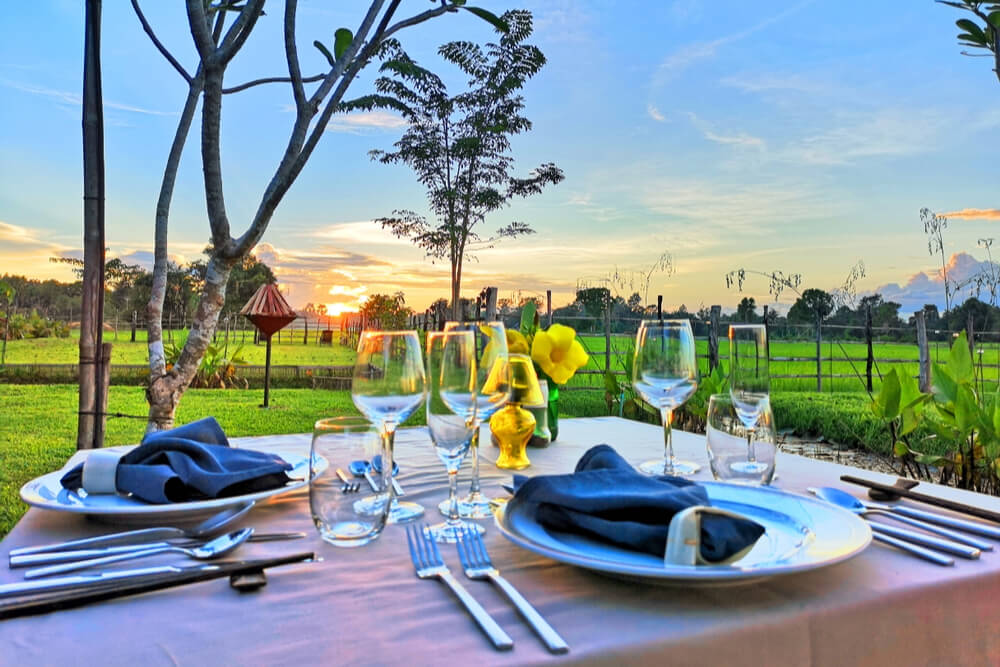
Dine amongst rice paddies at Villa Chandara. Photo: Shutterstock
Dish to try
Bay sach chruk, a breakfast (or lunch) classic, is arguably the unsung national dish of Cambodia: thin strips of marinated pork shoulder, marinated overnight and slow-barbecued over a charcoal grill right on the street, served over rice with pickled cucumbers. The dish is simple but delicious, with a delightful balance of flavors and textures. For a truly local meal, pair it with an iced coffee sweetened with condensed milk. You can find this dish on street corners throughout the country—highly recommended!
What to See and Do
Don’t miss
Phnom Penh! You can understand Cambodia’s history with a trip to Angkor Wat, but you can only understand modern Cambodia by visiting the capital. The city can get a bad rap by travel influencers and blogs—and admittedly it can be disappointing if you stay in the wrong spot and only visit the Genocide Museum. But the city has so much more to offer. Architecture lovers will be intrigued by the mixture of French colonial and 1960s modernist buildings, plus a top-notch food scene.

Make time to take in Phnom Penh’s history; this is the Royal Palace. Photo: Ethan Crowley
Don’t bother
The coastal town of Sihanoukville is overrun with cheap casinos and blingy hotels, with a very seedy feel—not at all conducive to relaxing on the beach. If you want to enjoy the beauty of the Cambodian coast, head instead to Koh Rong or Kep. The latter has a unique blend of art deco, French colonial, and New Khmer architecture, plus a youthful population, a great restaurant and bar scene, and good music.
Cheap thrill
Take the local train from Phnom Penh to Kampot. The train runs four times per week, using restored cars from the 1960s and passing through some truly beautiful scenery. Tickets are less than $10, but this slow roll through the bucolic countryside is priceless.
Bragging rights
We know trip planners who can snag you an invitation to a private villa owned by a well-known Cambodian chef. Escape the hustle and bustle of Phnom Penh and head up the Mekong by boat to spend a few hours with this chef, learning about Cambodian culture through its cuisine, as well as getting a firsthand understanding of how the war affected traditional recipes and what is being done to preserve them.
Evening buzz
In Siem Reap, drop by the Miss Wong Cocktail Bar for a pre-dinner cocktail. Set in a narrow shop house, the bar emits an old Shanghai-noir vibe and is a favorite of expats.
Phnom Penh’s Bassac Lane and the the area around Street 308 have developed into a lively zone with plenty of excellent micro-bars and casual outdoor dining—it’s a great place to meet local expats and upwardly-mobile young Cambodians.


Get a Personalized Trip Recommendation
For a travel solution tailored to your trip goals and preferences, click this green box.

Best Times to Go
November through March is considered the best time to visit, as the chances of rain are low. However, keep in mind that February and March can be quite dry—after all, the country won’t have seen rain in four or more months—so the sky can be hazy and the air quality poor.
June to early August is the beginning of the monsoon season. Expect afternoon showers (think Florida in the summer), but if you are a flexible traveler, you can find good value and fewer crowds.
Worst Time to Go
April and early May can be very dry and hot.
Biggest Rookie Mistake
Thinking of Cambodia as a two- or three-night addendum to Vietnam or Thailand. Cambodia is so much more than just Angkor Wat. Add a day or two to really understand the country, and to experience the warm hospitality of the local people.
The Inside Scoop
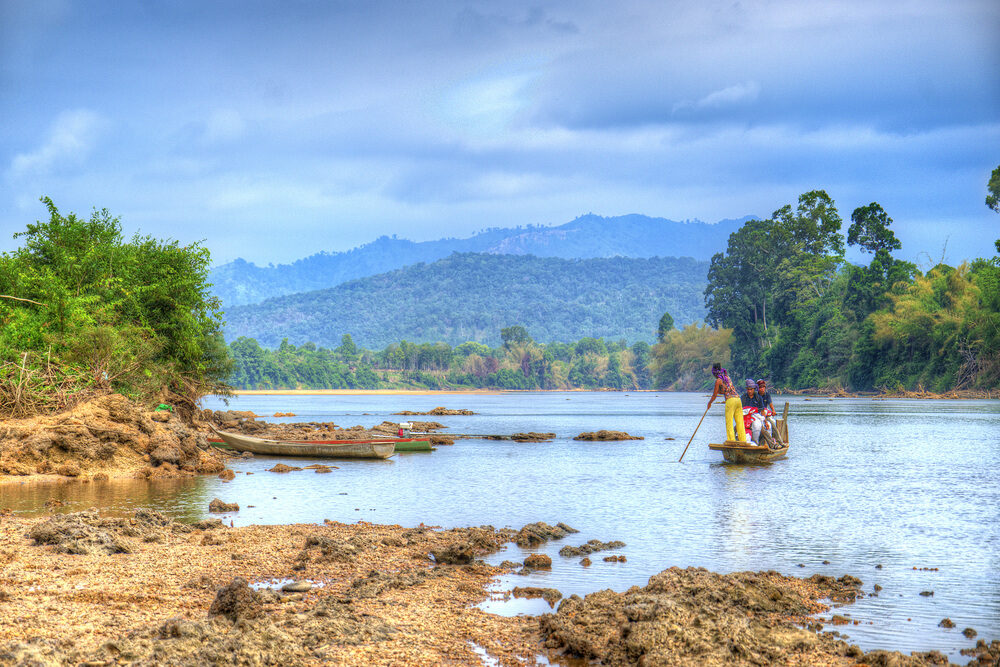
Tonlé Sap Lake is Cambodia’s heart, and the culture of those who spend their lives on the water in floating villages is absolutely worth experiencing. However, nearly all tours will take you to Chong Khneas, which typically has more tourists than locals and features crocodile farms, a massive Korean-built dock complex, and a gift shop.
Instead, head to one of the lesser-known floating villages at the margins of the lake, like Mechreay or Prek Toal. We know Cambodia specialists who can arrange for a specially-designed watercraft that allows you to venture far beyond the tourist haunts to Prek Toal, the largest floating village on the lake and home to more than 1,000 people.
Airport Intel
The visa-on-arrival process is a bit of a madhouse, and not very well organized. One can easily waste 30 minutes in the wrong line. Get an e-visa online before you travel, to skip the visa line entirely and head straight for Immigration.
Ask your trip planner about VIP arrival service; for not much more than $50, you will be whisked past the lines—very welcome off a long-haul flight!
Tipping Tip
Tipping is less ingrained in Cambodian culture than it is in the U.S., but with the average daily wage in the $10 range, a generous tip is very gratefully received. We suggest 10-20% at a restaurant, and $5-10 per day for a driver.
Don’t Forget to Pack
A shawl or a large scarf. You can easily cover your shoulders as needed at the temples, but keep it in your day bag without adding a lot of extra weight.
If traveling in the shoulder season, bring a lightweight, breathable rain jacket—great for afternoon pop-up showers.
The Souvenir
In Siem Reap, check out the exquisite lacquer bowls, vases, and artwork by Eric Stocker. Eric was instrumental in starting the famed Artisans Angkor and has trained hundreds of Cambodian youth over the years; his workshop currently trains and employs hearing-impaired Cambodians. The lacquerware is truly beautiful and steeped in traditional techniques.

Stay in the Know With Our Newsletter